PONARS Eurasia
  • About Us
    • Contact Us!
    • Membership
      • All Members
      • Core Members
      • Collegium Members
      • Associate Members
      • About Membership
    • Our Ukraine Experts
    • Executive Committee
  • Our Ukraine Experts
  • Policy Memos
    • List of Policy Memos
    • PONARS Eurasia’s Newest eBooks
    • Submissions
  • Online Academy
  • Events
    • Past Events
  • Recommended
  • Task Forces
    • Ukraine
      • PONARS Ukraine Task Force: Incontrovertible Truths
    • Amplifying Voices of Europe, the Caucasus, and Central Asia (AVECCA)
    • Russia in a Changing Climate
  • Podcasts
Contacts

Address
1957 E St NW,
Washington, DC 20052

[email protected]
202.994.5915

NEWSLETTER
Facebook
Twitter
YouTube
Podcast
PONARS Eurasia
PONARS Eurasia
  • About Us
    • Contact Us!
    • Membership
      • All Members
      • Core Members
      • Collegium Members
      • Associate Members
      • About Membership
    • Our Ukraine Experts
    • Executive Committee
  • Our Ukraine Experts
  • Policy Memos
    • List of Policy Memos
    • PONARS Eurasia’s Newest eBooks
    • Submissions
  • Online Academy
  • Events
    • Past Events
  • Recommended
  • Task Forces
    • Ukraine
      • PONARS Ukraine Task Force: Incontrovertible Truths
    • Amplifying Voices of Europe, the Caucasus, and Central Asia (AVECCA)
    • Russia in a Changing Climate
  • Podcasts
DIGITAL RESOURCES
digital resources

Bookstore 📚

Knowledge Hub

Course Syllabi

Point & Counterpoint

Policy Perspectives

RECOMMENDED
  • Peacemaking Russian Style: Negotiations as the Continuation of War by Other Means

    View
  • ‘DIY Warfare’: How Russia Crowdsources the Battlefield in Ukraine

    View
  • Russia’s Loss of Reputation and Status in the Middle East: Potential Consequences for Putin at Home and Abroad

    View
  • Where Concessions Meet Resolve: How Ukrainian Society Sees U.S. Efforts to End Russia’s War

    View
  • Hammering In the Last Nail: Georgian Dream Targets Universities

    View
RSS PONARS Eurasia Podcast
  • The Putin-Xi Summit: What's New In Their Joint Communique ? February 23, 2022
    In this week’s PONARS Eurasia Podcast, Maria Lipman speaks with Russian China experts Vita Spivak and Alexander Gabuev about the February meeting between Vladimir Putin and Xi Jinping, and what it may tell us about where the Russian-Chinese relationship is headed.
  • Exploring the Russian Courts' Ruling to Liquidate the Memorial Society January 28, 2022
    In this week’s PONARS Eurasia Podcast, Maria Lipman chats with scholars Kelly Smith and Benjamin Nathans about the history, achievements, and impending shutdown of the Memorial Society, Russia's oldest and most venerable civic organization, and what its imminent liquidation portends for the Russian civil society.
  • Russia's 2021 census and the Kremlin's nationalities policy [Lipman Series 2021] December 9, 2021
    In this week’s PONARS Eurasia Podcast, Maria Lipman chats with social scientist Andrey Shcherbak about the quality of the data collected in the recent population census and the goals of Vladimir Putin's government's nationalities policy
  • Active citizens of any kind are under threat [Lipman Series 2021] November 5, 2021
    In this week’s PONARS Eurasia Podcast, Maria Lipman chats with Alexander Verkhovsky about the Kremlin's ever expanding toolkit against political and civic activists, journalists, and other dissidents.
  • Russia's Legislative Elections followup [Lipman Series 2021] October 4, 2021
    In this week’s PONARS Eurasia Podcast, Maria Lipman chats with Tanya Lokot and Nikolay Petrov about the results of Russia’s legislative elections and about what comes next.
  • Why Is the Kremlin Nervous? [Lipman Series 2021] September 14, 2021
    In this week’s PONARS Eurasia Podcast, Maria Lipman chats with Ben Noble and Nikolay Petrov about Russia’s September 17-19 legislative elections, repressive measures against electoral challengers, and whether to expect anything other than preordained results.
  • Vaccine Hesitancy in Russia, France, and the United States [Lipman Series 2021] August 31, 2021
    In this week's PONARS Eurasia Podcast episode, Maria Lipman chats with Denis Volkov, Naira Davlashyan, and Peter Slevin about why COVID-19 vaccination rates are still so low across the globe, comparing vaccine hesitant constituencies across Russia, France, and the United States.  
  • Is Russia Becoming More Soviet? [Lipman Series 2021] July 26, 2021
      In a new PONARS Eurasia Podcast episode, Maria Lipman chats with Maxim Trudolyubov about the current tightening of the Russian political sphere, asking whether or not it’s helpful to draw comparisons to the late Soviet period.
  • The Evolution of Russia's Political Regime [Lipman Series 2021] June 21, 2021
    In this week's episode of the PONARS Eurasia Podcast, Maria Lipman chats with Grigory Golosov and Henry Hale about the evolution of Russia's political regime, and what to expect in the lead-up to September's Duma elections.
  • Volodymyr Zelensky: Year Two [Lipman Series 2021] May 24, 2021
    In this week's episode of the PONARS Eurasia Podcast, Maria Lipman chats with Sergiy Kudelia and Georgiy Kasianov about Ukrainian President Zelensky's second year in office, and how he has handled the political turbulence of the past year.
  • Recommended | Рекомендуем

Policy Memo: Russia and the Geopolitics of Natural Gas: Leveraging or Succumbing to Revolution?

  • November 18, 2013
  • Adam Stulberg

The changing natural gas landscape—driven by the rise of liquid natural gas (LNG) projects, unconventional boom in North America, protracted global economic slowdown, post-Fukushima recalibration in the nuclear sector, and shifting geography of demand and supply—has renewed debate over the geopolitics of Russia’s energy security. A common refrain is that the increasing interconnectedness and flexibility of global gas markets will introduce a welcome corrective to Russia’s energy policies at home and abroad, encouraging pragmatic commercial dealings and political accommodation with European and Asian partners. Recent steps toward supply diversification and price renegotiation across Europe—especially among heavily import-dependent Lithuania, Bulgaria, and Ukraine— are seen as harbingers of this power shift in Eurasian energy diplomacy. 

Others, including the leadership in Moscow, dismiss the enthusiasm for shale as a “soap bubble” destined to burst. They boast that Russia will continue to enjoy incremental supply advantages to promote political ambitions in relations with rival Eurasian producers and vulnerable transit states and European customers. They see new favorable long-term supply deals with Serbia and Armenia, the defeat of the Nabucco bypass pipeline, and the wooing of Gazprom in the sell-off of the insolvent Greek national gas company as suggestive of Moscow’s lingering prowess and as evidence that its pooh-poohing of a global gas revolution may be more than wishful thinking.

This debate is traced to an underlying controversy between realism and its critics over the significance of energy resource nationalism. Yet this formulation presents a false dichotomy between globalization and geopolitics and neglects Moscow’s mixed record with gas diplomacy. As well, talk of the demise of a petro-gas state counts Russia down prematurely by overlooking Gazprom’s lasting competitive advantages in established markets across Eurasia. It also treats the revolutionary effects of the LNG-shale nexus as a given, without fully appreciating either the uncertainties of the latest trends or how Moscow’s current choices can affect future opportunities. Jettisoning such blinders reveals the promise of elevating joint profit-seeking interests over atavistic power plays for Russian, European, and American energy security. […]

Russia and the Geopolitics of Natural Gas: Leveraging or Succumbing to Revolution?

PONARS Eurasia Policy Memo No. 296

By Adam Stulberg
View the Policy Memo (PDF)

Related Topics
  • Energy
  • Russia
  • Stulberg
Previous Article
  • In the News | Hовости

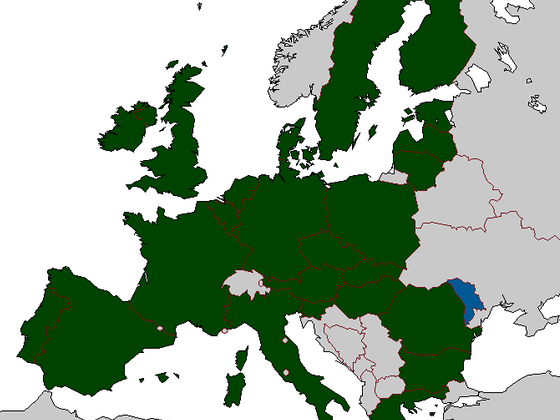
Молдаване смогут путешествовать в ЕС без виз к концу 2014

  • November 18, 2013
  • Nicu Popescu
View
Next Article
  • In the News | Hовости

Квазифеодализм в высшем образовании: Ректоры в российской политике

  • November 18, 2013
  • Serghei Golunov
View
You May Also Like
View
  • Policy Memos | Аналитика
  • Recommended | Рекомендуем

Peacemaking Russian Style: Negotiations as the Continuation of War by Other Means

  • Pavel Baev
  • January 26, 2026
View
  • Policy Memos | Аналитика
  • Recommended | Рекомендуем

‘DIY Warfare’: How Russia Crowdsources the Battlefield in Ukraine

  • Mariya Omelicheva
  • January 26, 2026
View
  • Policy Memos | Аналитика
  • Recommended | Рекомендуем

Russia’s Loss of Reputation and Status in the Middle East: Potential Consequences for Putin at Home and Abroad

  • Kimberly Marten
  • January 12, 2026
View
  • Policy Memos | Аналитика
  • Recommended | Рекомендуем

Where Concessions Meet Resolve: How Ukrainian Society Sees U.S. Efforts to End Russia’s War

  • Mikhail Alexseev and Serhii Dembitskyi
  • December 22, 2025
View
  • Policy Memos | Аналитика
  • Recommended | Рекомендуем

Hammering In the Last Nail: Georgian Dream Targets Universities

  • Stephen F. Jones
  • December 22, 2025
View
  • Policy Memos | Аналитика
  • Recommended | Рекомендуем

Security Implications of North Korea’s Support for Russia’s War on Ukraine

  • Elizabeth Wishnick
  • December 15, 2025
View
  • Policy Memos | Аналитика
  • Recommended | Рекомендуем

War on Screens: The Full-Scale Invasion of Ukraine in Russian State Media

  • Anton Shirikov
  • December 15, 2025
View
  • Policy Memos | Аналитика
  • Recommended | Рекомендуем

Voice of America, Radio Free Europe/Radio Liberty, and U.S. Strategic Interests in Central Asia

  • Eric McGlinchey
  • December 15, 2025

Leave a Reply Cancel reply

Your email address will not be published. Required fields are marked *

PONARS Eurasia
  • About Us
  • Membership
  • Policy Memos
  • Recommended
  • Events
Powered by narva.io

Permissions & Citation Guidelines

Input your search keywords and press Enter.