

PONARS Eurasia
  • About Us
    • Contact Us!
    • Membership
      • All Members
      • Core Members
      • Collegium Members
      • Associate Members
      • About Membership
    • Our Ukraine Experts
    • Executive Committee
  • Our Ukraine Experts
  • Policy Memos
    • List of Policy Memos
    • PONARS Eurasia’s Newest eBooks
    • Submissions
  • Online Academy
  • Events
    • Past Events
  • Recommended
  • Task Forces
    • Ukraine
      • PONARS Ukraine Task Force: Incontrovertible Truths
    • Amplifying Voices of Europe, the Caucasus, and Central Asia (AVECCA)
    • Russia in a Changing Climate
  • Podcasts
Contacts

Address
1957 E St NW,
Washington, DC 20052

[email protected]
202.994.5915

NEWSLETTER
Facebook
Twitter
YouTube
Podcast
PONARS Eurasia
PONARS Eurasia
  • About Us
    • Contact Us!
    • Membership
      • All Members
      • Core Members
      • Collegium Members
      • Associate Members
      • About Membership
    • Our Ukraine Experts
    • Executive Committee
  • Our Ukraine Experts
  • Policy Memos
    • List of Policy Memos
    • PONARS Eurasia’s Newest eBooks
    • Submissions
  • Online Academy
  • Events
    • Past Events
  • Recommended
  • Task Forces
    • Ukraine
      • PONARS Ukraine Task Force: Incontrovertible Truths
    • Amplifying Voices of Europe, the Caucasus, and Central Asia (AVECCA)
    • Russia in a Changing Climate
  • Podcasts
DIGITAL RESOURCES
digital resources

Bookstore 📚

Knowledge Hub

Course Syllabi

Point & Counterpoint

Policy Perspectives

RECOMMENDED
  • Misconceptions about Eastern Europe, the Caucasus, and Central Asia and Their Impact on Policy

    View
  • Five Years into the War, Ukraine Is Showing Grittiness, Rebounding Confidence in War Fortunes

    View
  • Russia’s Wartime Internet: A Contested Space with the Regime Still Predominant

    View
  • Why Georgians Need to Take Hungarian Lessons

    View
  • The ‘Don’t Lose Lukashenko’ Approach: Kyiv’s (Non-) Strategic Ambiguity Toward the Belarusian Opposition

    View
RSS PONARS Eurasia Podcast
  • The Putin-Xi Summit: What's New In Their Joint Communique ? February 23, 2022
    In this week’s PONARS Eurasia Podcast, Maria Lipman speaks with Russian China experts Vita Spivak and Alexander Gabuev about the February meeting between Vladimir Putin and Xi Jinping, and what it may tell us about where the Russian-Chinese relationship is headed.
  • Exploring the Russian Courts' Ruling to Liquidate the Memorial Society January 28, 2022
    In this week’s PONARS Eurasia Podcast, Maria Lipman chats with scholars Kelly Smith and Benjamin Nathans about the history, achievements, and impending shutdown of the Memorial Society, Russia's oldest and most venerable civic organization, and what its imminent liquidation portends for the Russian civil society.
  • Russia's 2021 census and the Kremlin's nationalities policy [Lipman Series 2021] December 9, 2021
    In this week’s PONARS Eurasia Podcast, Maria Lipman chats with social scientist Andrey Shcherbak about the quality of the data collected in the recent population census and the goals of Vladimir Putin's government's nationalities policy
  • Active citizens of any kind are under threat [Lipman Series 2021] November 5, 2021
    In this week’s PONARS Eurasia Podcast, Maria Lipman chats with Alexander Verkhovsky about the Kremlin's ever expanding toolkit against political and civic activists, journalists, and other dissidents.
  • Russia's Legislative Elections followup [Lipman Series 2021] October 4, 2021
    In this week’s PONARS Eurasia Podcast, Maria Lipman chats with Tanya Lokot and Nikolay Petrov about the results of Russia’s legislative elections and about what comes next.
  • Why Is the Kremlin Nervous? [Lipman Series 2021] September 14, 2021
    In this week’s PONARS Eurasia Podcast, Maria Lipman chats with Ben Noble and Nikolay Petrov about Russia’s September 17-19 legislative elections, repressive measures against electoral challengers, and whether to expect anything other than preordained results.
  • Vaccine Hesitancy in Russia, France, and the United States [Lipman Series 2021] August 31, 2021
    In this week's PONARS Eurasia Podcast episode, Maria Lipman chats with Denis Volkov, Naira Davlashyan, and Peter Slevin about why COVID-19 vaccination rates are still so low across the globe, comparing vaccine hesitant constituencies across Russia, France, and the United States.  
  • Is Russia Becoming More Soviet? [Lipman Series 2021] July 26, 2021
      In a new PONARS Eurasia Podcast episode, Maria Lipman chats with Maxim Trudolyubov about the current tightening of the Russian political sphere, asking whether or not it’s helpful to draw comparisons to the late Soviet period.
  • The Evolution of Russia's Political Regime [Lipman Series 2021] June 21, 2021
    In this week's episode of the PONARS Eurasia Podcast, Maria Lipman chats with Grigory Golosov and Henry Hale about the evolution of Russia's political regime, and what to expect in the lead-up to September's Duma elections.
  • Volodymyr Zelensky: Year Two [Lipman Series 2021] May 24, 2021
    In this week's episode of the PONARS Eurasia Podcast, Maria Lipman chats with Sergiy Kudelia and Georgiy Kasianov about Ukrainian President Zelensky's second year in office, and how he has handled the political turbulence of the past year.
  • Recommended | Рекомендуем

The Biopolitics of the Crisis

  • March 19, 2020
  • Andrey Makarychev

(PONARS Eurasia Commentary) The coronavirus pandemic seems to strongly confirm the growing tension between two types of global politics: territorial (geopolitics) and people-centric (biopolitics). The crisis has sharpened the deep conflict between traditional nation-state-based territoriality—with borders, checkpoints and other elements of security infrastructure—and the expanded space of the biopolitical agenda that is emerging beyond national jurisdictions. 

It is unmistakably apparent that viruses do not respect national borders. What deserves some attention is that the current global state of emergency, which is being largely administered by sovereign governments, has paradoxically unveiled the futility of the whole idea of sovereignty when it comes to exceptional circumstances. Discussions on this are not new, and there were plenty of voices in academia who, for decades, were skeptical about the ability of national governments to protect their citizens from terrorism, or properly take care of millions of refugees and internally displaced persons. 

This growing feeling of existential anxiety and insecurity has boosted the popularity of the concept of bare life, which was coined by the Italian political philosopher Giorgio Agamben and replicated by his multiple followers. The idea of bareness in the biopolitical context signifies a sense of unprotected life beyond legal and institutional arrangements, a physical existence always endangered by forces beyond our control from natural catastrophes to wars. Another one of Agamben’s favorite concepts is homo sacer, which metaphorically constructs a figure of a defenseless outcast whose life does not count much and whose potential death won’t be considered as something exceptional or unusual. And, finally, this biopolitical chain is complemented by the metaphor of the camp, as an exemplification of the permanent Ausnahmezustand, the global state of exception.

I always had the impression that Agamben goes too far with his gloomy predictions, claiming, for example, that we are all homines sacri, or real or potential “killable” human beings whose physical existence can’t be guaranteed by any laws, norms, or institutions. 

On the one hand, the coronavirus panic and its still-unknown, long-term repercussions give reason to take the concepts of bare life and the camp away from the realm of purely academic debate to the real life of millions of people. Indeed, over February–March 2020, we clearly saw how easily our normal lives, with their routine habits, pleasures, rules, and rights, were transformed into a constant concern about the very physicality of bare life with its focus on health care, medicine, nutrition, and alimentation. 

On the other hand, the lucidly exposed precariousness of bare lives is paralleled by the symmetrical vulnerability, if not evanescence, of sovereign power, and this is what is missing in Agamben’s theorizing. In times of crises, the real power belongs to practitioners on the ground such as medical doctors, health workers, epidemiologists, virus experts, volunteers, producers of medical equipment, etc. And it became evident that the bearers of sovereignty—presidents and prime ministers—are not immune from the virus just like any of us.  

What we can learn from the institutional perspective about the long-term effects of the pandemic is why many international organizations, from the EU to the WHO, failed to properly and timely respond to the deadly challenge. Biopolitical scholarship can offer something in this respect. Better than other disciplines, it grasps the crux of the “new normal”—a world in which lines of distinctions will be less and less defined by geopolitical considerations, and more and more by policies of protection and care-taking, both symbolic and practical. It is a world that would increasingly blur the lines between our individual bodies and the collective bodies of our communities and nations. In this world, the minds of the population will be even more heavily exposed to manipulations by the multifarious flows of information with different level of trustworthiness and credibility that will definitely further expand our “old” understanding of hybrid threats. 

In addition, of course, the current crisis will be a major shaper in the ongoing debate on the transformation of the liberal international order. Obviously, there will be many voices—from right-wing forces or from Putin’s Russia—who will keep (mis)representing the current crisis as a failure of the liberal order, while praising authoritarian regimes for better tackling situations of emergency. 

The political instrumentalization of the crisis is inevitable, yet what makes more sense from an academic perspective is to remember that practices of biopolitical control and regulation have always been part of liberal society. In the meantime, it also makes sense to re-actualize, from today’s perspective, what French political philosopher Michel Foucault dubbed “responsibilization”—the individual practices of ruling our bodies and managing our corporeal lives—something that is to remain a key element of a liberal polity.
Related Topics
  • Makarychev
Previous Article
  • Recommended | Рекомендуем

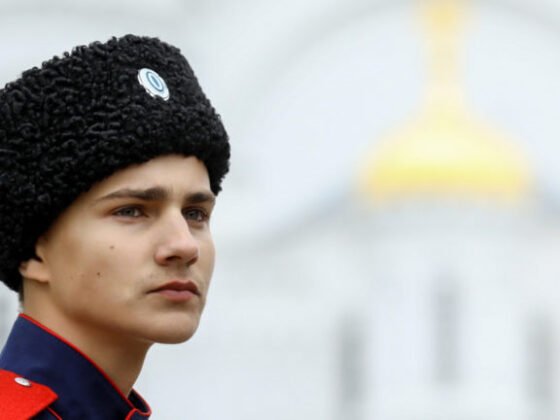
Russia’s Cossacks Battle Coronavirus and Promote Kremlin’s Foreign Policy

  • March 19, 2020
  • Richard Arnold
View
Next Article
  • Recommended | Рекомендуем

Trump’s “America first” energy policy, contingency and the reconfiguration of the global energy order

  • March 20, 2020
  • Farid Guliyev
View
You May Also Like
View
  • Policy Memos | Аналитика
  • Recommended | Рекомендуем

Misconceptions about Eastern Europe, the Caucasus, and Central Asia and Their Impact on Policy

  • Tomila Lankina, Kelly McMann, Mariya Omelicheva, Emil Dzhuraev, Paul Goode, Nona Shahnazarian, Ivan Gomza and Guzel Yusupova
  • August 26, 2026
View
  • Policy Memos | Аналитика
  • Recommended | Рекомендуем

Five Years into the War, Ukraine Is Showing Grittiness, Rebounding Confidence in War Fortunes

  • Henry Hale, Serhii Dembitskyi and Mikhail Alexseev
  • July 27, 2026
View
  • Policy Memos | Аналитика
  • Recommended | Рекомендуем

Russia’s Wartime Internet: A Contested Space with the Regime Still Predominant

  • Irina Busygina and Mikhail Filippov
  • June 24, 2026
View
  • Policy Memos | Аналитика
  • Recommended | Рекомендуем

Why Georgians Need to Take Hungarian Lessons

  • Stephen F. Jones
  • May 18, 2026
View
  • Policy Memos | Аналитика
  • Recommended | Рекомендуем

The ‘Don’t Lose Lukashenko’ Approach: Kyiv’s (Non-) Strategic Ambiguity Toward the Belarusian Opposition

  • Boris Ginzburg
  • February 23, 2026
View
  • Policy Memos | Аналитика
  • Recommended | Рекомендуем

Too Much, Too Late? The Impact of Secrecy on Efforts to Mediate an End to the Russia-Ukraine War

  • Mikhail Troitskiy
  • February 23, 2026
View
  • Policy Memos | Аналитика
  • Recommended | Рекомендуем

A Deal with the Devil: Lukashenko Navigates Domestic and External Vulnerabilities in Managing Relations with Russia

  • Ryhor Nizhnikau and Arkady Moshes
  • February 9, 2026
View
  • Policy Memos | Аналитика
  • Recommended | Рекомендуем

Peacemaking Russian Style: Negotiations as the Continuation of War by Other Means

  • Pavel Baev
  • January 26, 2026

Leave a Reply Cancel reply

Your email address will not be published. Required fields are marked *

PONARS Eurasia
  • About Us
  • Membership
  • Policy Memos
  • Recommended
  • Events
Powered by narva.io

Permissions & Citation Guidelines

Input your search keywords and press Enter.