How has the transformation of the Russian economy and society in response to the challenges posed by the invasion of Ukraine affected popular support for the war? Scholars puzzled by the consistent majority support for the “special military operation” have tried to explain it by reference to the low reliability of opinion polls in Russia, imperialist attitudes toward Ukraine ingrained in Russian culture, or the deep depoliticization characteristic of the Putin regime.
Looking at the development of the Russian war economy through the prism of the state-led macroeconomic policies known as “military Keynesianism,” however, we find that support for the war among at least part of Russian society may be rooted in material factors. The intensification of military production; the significant increase in payments to Russian soldiers, their relatives, and the police; the increase in military contracts; and import substitution in response to sanctions have all contributed to creating a conscious base of support among those groups benefiting materially from the war. If sustained over time, these effects could have significant consequences not only for the sustainability of support for a war of attrition and for Russia’s long-term confrontation with the West, but also for the transformation of the Russian economy and political regime, creating a positive feedback loop. However, the current economic and social effects of Russian military Keynesianism are contradictory—and some Russians who have seen their living standards decline due to its undesirable effects (like inflation) have become more critical of the war.
What Is Military Keynesianism?
Since the beginning of the full-scale invasion, there have been repeated predictions of Russian economic collapse. In the first months of the war, the auto industry ran out of parts, causing factories to close or shut down, while Russia’s ability to export oil and gas was threatened. Foreign investment has become riskier and will remain so for decades to come. But the Russian economy has survived—and is even on a growth trajectory.
One explanation for the resurgence of the Russian economy is the Kremlin’s “military Keynesianism” policies. Military Keynesianism is state-led macroeconomic policy that aims to increase aggregate demand by increasing military spending. The government spends money on military production and a variety of military-related income transfers, putting more money in people’s pockets and increasing demand for both military and civilian production. This stimulus helps to put the economy back on the path to growth.
Nazi Germany and the United States during the Cold War are considered to be the prime examples of military Keynesianism. However, there is much debate among scholars as to whether military Keynesianism actually works—and if it does, how sustainable it is. Some argue that spending on military production, as a form of high-tech production, develops the technological sector as a whole and sets the bar for a variety of economic indicators for civilian production. In parallel, this increased spending improves workers’ living conditions, thereby fueling economic growth by increasing aggregate demand. As such, the material interests of significant segments of the population are aligned with the state’s military endeavors. Skeptics respond that advances in military technology are often not transferable to civilian technology and that the military-industrial complex robs civilian economic sectors of workers and investment, thus harming the economy as a whole.
The Keynesian Dimension of the Russian War Economy
While some analysts question the validity of Russian government statistics, externally corroborated economic data such as import and export volumes and greenhouse gas emissions (which reflect industrial activity) all point to a modest decline in 2022 and a strong recovery in 2023. The unexpected resilience of the Russian economy is variously explained by reference to high energy prices (which have rendered financial sanctions ineffective), the successful readjustment of logistics, and the rapid rise in military and war-related spending. Indeed, federal spending on “national defense” stood at 4.7 trillion rubles (about $50 billion at current rates) in 2022, a 30% increase from the pre-war plan. The projected figures for 2023 and 2024 are 6.4 trillion rubles ($69 billion) and a staggering 10.8 trillion rubles ($116 billion), nearly triple the pre-war level. In 2022-2023, the war was financed by deficit spending: last year, the federal budget deficit stood at 2.3% of GDP, and the projected figure for 2023 is 2%.
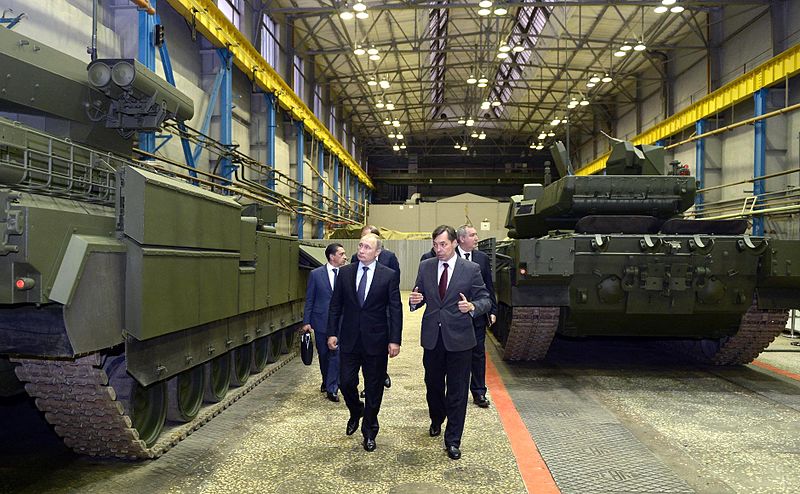
High military spending certainly contributes to economic growth. The industrial recovery has been led by such sectors as “finished metal products” and “computers, electronics, and optical products,” which are largely made up of military production. In addition, the high salaries paid to soldiers participating in the war, as well as the monetary transfers made to the families of those soldiers injured or killed, have almost certainly affected income and poverty levels nationally: the bulk of war-related transfers have been made to the poorest segments of society, from which soldiers are overwhelmingly recruited. According to Rosstat, real incomes fell modestly (by 1.5%) in 2022 and recovered quickly in 2023, while the poverty rate fell slightly in the first year of the war compared to the pre-war period (from 11.0% in 2021 to 9.8% in 2022).
Moreover, the Ministry of Finance increasingly seems to conceive of its fiscal policy in Keynesian terms. In 2023, the ministry provided a detailed discussion of the effects of deficit spending on the economy, including increasing household incomes and corporate profits—and thereby (indirectly) expanding the financial sector. According to the ministry, the goals of the current “expansionary” fiscal policy include “strengthening national defense” and “integrating new regions” (i.e., annexed Ukrainian territories).
Is Russian Military Keynesianism Sustainable?
However, it is too early to say whether this economic policy will be sustainable and successful in the long term. As a result of Western sanctions, Russia may encounter difficulties in advancing its high-tech sector. If advanced technology is not imported from other countries, such as China, nor is there a breakthrough in domestic R&D—and such a breakthrough cannot necessarily be expected, given the chronic underfunding of science for decades—expanding (particularly civilian) production could entail a drop in product quality and ultimately fail to foster long-term economic growth.
Notably, the Ministry of Finance considers its current Keynesian approach to be temporary. According to its most recent strategic policy document, despite record military spending in 2024, the budget deficit will be reduced by almost 50% in nominal terms that year, amounting to only 0.9% of GDP. This will be achieved by increasing budget revenues through various one-time payments that will bring in 2.5 trillion rubles ($27 billion, compared to 0.7 trillion rubles in 2023 [$7.5 billion]). In effect, the unprecedented increase in military spending will be achieved by redistributing resources from other sectors of the economy, not by increasing the deficit—a move that defies Keynesian logic.
Crucially, the expansionary fiscal policy is taking place in a context of severe labor shortages. Unemployment in Russia fell to just 3% in August 2023, when 60% of companies reported a shortage of workers. This stands in sharp contrast to the U.S. unemployment rate of 14.6% in 1940, when the American economy shifted to a war footing and finally overcame the lingering effects of the Great Depression (a classic example of military Keynesianism in action). Moreover, the Russian economy is already operating at full capacity, weakening the potential effect of Keynesian multipliers.
Military Keynesianism may work because it draws idle labor into the labor market, and if it does not, it risks emasculating the civilian sectors. In today’s Russia, there are now no unemployed to put back to work and no factories to reopen through massive government spending. The Central Bank and the Ministry of Finance are aware of this and are warning that the economy is overheating due to a combination of fiscal stimulus and a lack of spare productive capacity. Overheating can lead to inflation and erode the value of increased wages and social spending, a fact that has prompted the Central Bank to tighten monetary policy. Such solutions to the labor shortage as inviting immigration, utilizing teenage or prison labor, and outsourcing military production to allied states have already been attempted or discussed. But if they do not work, the Keynesian effects of the current spending spree are far from certain.
How Does It Affect Support for the War?
Since the very beginning of the full-scale invasion, polls have shown that people who are well-off support the “special military operation” more than the poor. The forthcoming results of Chronicles’ latest survey of a nationally representative sample of Russians, to which questionnaire the Public Sociology Laboratory (PS Lab) contributed, confirms and clarifies this pattern. People who are well-off are more willing to volunteer for the front than poorer respondents. At the same time, the survey shows that about 40% of Russian citizens claim that their material conditions have noticeably improved since the invasion began.
Russians are divided on the question of whether military spending improves the economy (37%) or harms it (35%), but the number of “optimists” is quite high. Among this group, only 12% are not prepared to go voluntarily to the front under any circumstances. Among the economic “pessimists,” meanwhile, this number is much higher—more than 50%. In sum, there is significant overlap between beneficiaries of the war (those who have benefited materially from the war-related changes), economic optimists, and active supporters of the “special military operation” (those who are prepared to do something to support the Russian armed forces, from transferring money to going to the front). In terms of their socio-economic profile, those supporters of the “special military operation” who have benefited from the war economically tend to be employees of state-owned enterprises, the IT sector, or companies that have been successful at import substitution, as well as people who are independently wealthy.
A preliminary analysis of the in-depth interviews with ordinary Russians collected by PS Lab in the spring of 2022 (about 200 interviews) and in the fall of 2022 (more than 80 interviews), i.e., when the first consequences of the war economic policies began to be felt, helps illuminate how visions of the war may be influenced by perceptions of Russia’s economic prospects and individual well-being. The several dozen interviews (mostly from the second wave) that discuss in detail the impact of the first year of the war on interviewees’ well-being confirm that well-off people are indeed more supportive of the war. More importantly, the interviews show that support for the war particularly increased among those whose well-being improved as a result of the wartime economy. Indeed, some of them explicitly link support for the war, defense of the homeland, and the well-being of their families and themselves.
Consider the following interviewee. His support for the Russian army and leadership grew between his interview in the spring and his interview in the fall, while his attitude toward Ukraine and Ukrainians became more aggressive. Speaking in the fall, he identifies defense of the homeland and defense of his family as core motivations for his readiness to go to the front:
I will take an automatic rifle and go kill those who attack us […] I have my mother here, I have my beloved wife here, I have to protect them […] If I could, I would have been there [at the front], it’s just that no one took me there. And not with the intention of killing anyone, just to protect the interests of my state. I have no other. (male, 27 years old, sound engineer, October 2022).
In the time between the two interviews, the interviewee managed to quit a job he had not liked and get an attractive position related to the field that was previously his hobby. In his new job, he uses Russia-made equipment produced under the import-substitution program. His position in society is improving, “not only because the salary is growing or something else, but some prospects are starting to flicker.” His personal experience of career development and professional success strengthens his conviction that Russia is improving economically as a result of the war. He believes in the success of import substitution and other measures to make the Russian economy independent of the “West.”
We also see the reverse relationship in the interviews. Those interviewees who feel that the war is harming their well-being and threatening their economic prospects begin to express skepticism about the “special military operation,” and their support (if it ever existed) wanes. Thus, one of our interviewees, who considers himself a Russian patriot and criticizes the alleged hostility of the West toward Russia, who is critical of the Ukrainian state, and who reads mainly Russian militaristic sources about the war, nevertheless, in the fall of 2022, began to criticize the war in Ukraine and the Kremlin’s foreign policy in general. He opines that “import substitution is not working for us” and assesses Russia’s economic prospects in rather gloomy terms. When asked about the main changes in the country since the beginning of the war, he says: “Actually, what has changed is that everywhere, first of all, prices have gone up as much as possible. […] And for us, young people, it hits our pockets.”(male, 34 years old, electric engineer, October 2022).
Our interviews indicate that military Keynesianism may produce not only supporters of the war, namely those who benefit directly from the new economic policies, but also opponents among those who suffer from its effects (such as inflation).
Conclusion
Russian military Keynesianism has been relatively successful in the short term. Along with the increase in military spending and social payments, the country has seen the explosive growth of the military-industrial complex and related sectors, such as microelectronics and electrical equipment. Another potential driver of growth is the reconstruction of destroyed cities in the annexed Ukrainian territories. The deficit-financed militarization of the economy certainly contributed to the country’s economic recovery in 2022-2023.
However, there are reasons to question the sustainability of military Keynesianism and the extent to which it can have a positive impact on the country’s economic growth in the medium and long term. These are related to Russia’s technology gap with the West, which has been exacerbated by sanctions, and especially to the current labor shortage. It is not clear whether the Russian government will be able to address these issues and mitigate the negative effects on the civilian sectors of the economy, as well as combat accelerating inflation. Indeed, the Ministry of Finance’s current plan to return to the policy of balanced budgets as soon as possible raises the question of whether Keynesian policies are even considered a long-term strategy.
Nevertheless, the militarization of the economy will continue (albeit by diverting resources from other sectors), producing visible changes in Russian society through the expansion of military-related employment and massive transfers to soldiers and their families. The available quantitative and qualitative data lead us to the tentative conclusion that military Keynesianism may be producing certain broad groups of beneficiaries of the war, who consciously combine the improvements to their own well-being, optimism about the prospects of the Russian economy and support for the “special military operation.” Meanwhile, other segments of Russian society appear to be suffering economically from the effects of military Keynesianism pursued under unfavorable conditions. This may be prompting them to become more pessimistic about Russia’s economic prospects and more critical of the war.
Volodymyr Ishchenko is a research associate at the Institute for East European Studies, Freie Universität Berlin.
Ilya Matveev is a Visiting Scholar at the University of California, Berkeley.
Oleg Zhuravlev is a research fellow at Scuola Normale Superiore, Florence.