The year 2023 was a challenging one for Georgia. In August, the Black Sea country was shaken by a dramatic landslide in the mountainous resort of Shovi, which left at least 32 dead and one missing. In September, landslides and floods hit the region of Guria in Western Georgia, killing three and forcing hundreds to relocate. Due to its location in a seismically active zone, Georgia often experiences earthquakes of varying magnitudes, on top of such natural hazards as frequent floods and droughts. These calamities not only damage the country’s infrastructure and result in human losses, but also have a negative impact on the economy. The agricultural sector, a major source of income for many Georgians, is particularly affected.
The impact of these natural hazards is frequently exacerbated by the country’s low level of preparedness for climate-related risks and poor governance practices. Despite being responsible for preserving lives and implementing the necessary safety measures, the Georgian government’s response is often inadequate, leading to further polarization of the political scene. In addition, there is still a shortage of technical capacities and expertise in the regions, as well as a glaring lack of public awareness regarding climate change. To navigate future environmental disruptions successfully and avoid the well-documented climate change–instability trap, Georgia must achieve a baseline level of preparedness and resilience by investing in monitoring, early warning systems, and disaster management.
The Shovi Landslide: Georgia’s Exposure to Climate Change
Rising average temperatures and melting glaciers are not a distant prospect but a very real threat in Georgia. Since 1980, the country has experienced an increasing number of natural disasters linked to climate change, with landslides, floods, and mudflows becoming recurring incidents. The natural disaster in Shovi, which escalated on August 3, 2023, was brought about by a complex constellation of meteorological and geological factors. There is no unanimity as to what exactly caused the masses of water to shift; several versions of events have been circulating.
According to some locals, part of the mountain broke off and dammed the river, which caused the dam to break through in a few hours and flood the valley. The National Environmental Agency rejects this narrative, explaining in a statement that the landslide was caused by melting of two glaciers (Buba and Tbilisa), which was exacerbated by intense precipitation in the preceding days. This apparently caused the solid sediments in the valley to shift while facilitating the erosion of nearby riverbanks, producing an extreme mudflow.
The recent landslides in Shovi and in Guria are just two extreme recent examples of Georgia’s vulnerability to climate change and natural hazards. Droughts and hail destroy agriculture in Eastern Georgia, while landslides, mudflows, and floods are commonplace in the western parts of the country and the highlands in the spring and early summer. Even small rivers carry masses of mud as they overflow their riverbanks, threatening villages in the valley. In fact, the Shovi resort area was previously hit by a glacial mudflow: in June 2010, in the aftermath of heavy rains, the Dghviora river washed out the bridge in Shovi, cutting off the village, flooding several houses, and destroying agricultural land. Luckily, the village was evacuated in a timely manner and there were no human losses. In light of occasional low-scale landslides, many locals have been urging local municipalities to strengthen the river embankments, a means of protecting the surrounding lands from being flooded. In the years running up to the 2023 landslide, the Ministry of Environmental Protection and Agriculture had repeatedly warned in its annual bulletins about the high risk of landslides in Shovi and recommended constant monitoring of the valley.
Nor is it only rural, mountainous regions that are grappling with these recurring natural disasters; urban areas are also being affected. One of the most large-scale disasters in the recent history of Georgia was the Tbilisi tragedy of June 15, 2015, which claimed 19 lives and gave rise to surreal images of wild animals lying dead in the mud or walking around the capital. The authorities were criticized for the inadequate response of the emergency services. In August 2023, the streets of the capital again filled with water: while there were fortunately no casualties, the incident raised serious concerns about Tbilisi’s drainage system.
Political Failures
Georgia is a mountainous country with numerous glacial rivers and valleys. It is therefore crucial to monitor the situation in high-risk areas, yet this represents a financial and logistical challenge—especially for a developing country. While the government cannot be held accountable for the occurrence of natural phenomena, it is responsible for preserving lives and upholding safety measures: not allowing people to settle in those valleys near glacial rivers, for instance, or strengthening river embankments.
However, not only the government’s reaction but even its communication is often inadequate, sowing further division in an already polarized society. In the aftermath of the Shovi landslide, Georgia’s National Environmental Agency, as well as politicians from the ruling party, repeatedly stated that it would have been impossible to predict a natural disaster of this scale and complexity and refused to admit to faulty management. Some representatives of the ruling Georgian Dream (GD) party pointed out that technologically more advanced countries have sometimes failed to evacuate their populations in similar situations, while another accused the survivors of the landslide of having lied about and exaggerated their suffering (though he did later issue an apology).
Deep Roots of Bad Environmental Governance
Hence, part of the blame for the damage in Shovi can be laid at the door of the current government, which failed to create a proper warning and alarm system, and lacked basic infrastructure such as rescue helicopters with night vision to rescue the stranded citizens. However, the foundational issues with Georgia’s environmental governance can be traced back to preceding governments.
Following the dissolution of the Soviet Union, the staff of the Geological Service of Georgia was reduced dramatically, making it more challenging to monitor all areas at risk. In the course of large-scale trade liberalization reforms in independent Georgia under Mikheil Saakashvili of the United National Movement (UNM) party, the environmental sector was further weakened through extensive deregulation and the capacities of the relevant agencies were reduced. On top of that, the National Environmental Action Plan (NEAP) for 2008-2012 was terminated, leaving the country without an operational strategy for disaster risk management.
In the run-up to the 2012 parliamentary elections, the nascent GD party declared environmental protection to be one of its highest priorities. Accordingly, following the party’s victory, the Ministry of Environmental Protection and Natural Resources[1] regained in 2013 almost all of its former functions; several key units were (re-)established and a new NEAP was adopted. The Association Agreement with the EU brought more clarity to Georgia’s environmental objectives and the new government began the process of alignment with EU and international practice.
Since then, there has been a certain amount of progress with regard to early warning and monitoring systems. Between 2018 and 2020, the Rioni river flood forecasting early warning (FFEW) system was established; the Georgian government also procured surveillance cameras and drones for topographic surveys, identification of avalanche-prone zones, and monitoring landslides and avalanches. A landslide monitoring system was installed in Tbilisi in 2018, after a crack appeared on the slope near the capital. Another such system is located at the Devdorak glacier, where a 2014 ice-rock avalanche blocked the Georgian Military Road.
These advances notwithstanding, Georgian disaster management and environmental governance in general remain insufficient. One of the keys here is decentralization to strengthen municipalities, which must be advanced further in accordance with the Decentralization Strategy. It is crucial that the financial and technical capacities necessary for disaster and risk management, as well as the relevant geological expertise, be present not only in the capital but also in the relevant municipal centers across the Georgian regions in order to ensure rapid responses as natural disasters unfold.
Another component of Georgia’s lack of preparedness for natural disasters is a glaring lack of public awareness. Climate change and natural disasters are not usually listed among the most pressing issues in public opinion surveys, as society is more concerned with the acute socio-economic and political challenges the country has been facing for decades. In a recent youth survey, for instance, only two percent of respondents mentioned environmental challenges as being among the most important problems facing the country. Climate change was not mentioned by a single respondent. On a positive note, however, 76 percent of surveyed respondents acknowledge that climate change is a global emergency and 53 percent would support the Georgian government imposing strong measures to fight it.
Mismanagement Leads to Instability
Like many other issues, the Shovi tragedy produced polarization, due not least to the abundance of semi-scientific assessments and the lack of a unified expert opinion. This has only enhanced the existing political crisis in the country, which is already paralyzed by polarization and party-led radicalization, a process involving the ruling party, its main rival (the UNM), and the latter’s proxies. The concomitant political crisis demonstrates that climate change and its expressions are rarely isolated (apolitical) phenomena, but rather are, as a rule, accompanied by political and social tensions. This interconnectedness between climate-related factors and political, economic, and social disruptions is well established globally: the impact of Chinese droughts on the Arab Spring protests and the conflicts related to water scarcity in many MENA countries are just a few examples.
Conclusion: The Way Forward
The Georgian experience of natural hazards illustrates how mismanagement and ignorance can exacerbate the impact of climate change. Georgia has demonstrated a low level of preparedness and governance capacity in dealing with natural hazards and weather variability. The country has long been marred by a lack of awareness and poor governance practices in mitigating climate-related risks, as well as in enhancing societal and state resilience against both known and unknown future risks.
To improve its environmental governance and avoid the climate change–instability trap, Georgia needs to draw on best practices from the EU and its member states and significantly boost its governance. The EU is already the major player enhancing its Eastern neighborhood’s resilience to climate change. Regional projects include EU4Climate, to help countries cut their GHG emissions and develop climate-friendly economies; PPRD East, to strengthen disaster risk reduction and crisis management in the Eastern Partnership; and bilateral projects. Inspired and assisted by the EU, in 2017 the government of Georgia issued Georgia’s first National Risk Reduction Strategy 2017-2020, which incorporated the goals of the key international framework documents on climate change and natural disasters,[2] as well as the commitments made under the Association Agreement. Since then, Georgia has updated its nationally determined contribution (NDC) to the Paris Agreement, as well as adopted a climate change strategy up to 2030 and an action plan for 2021–2023.
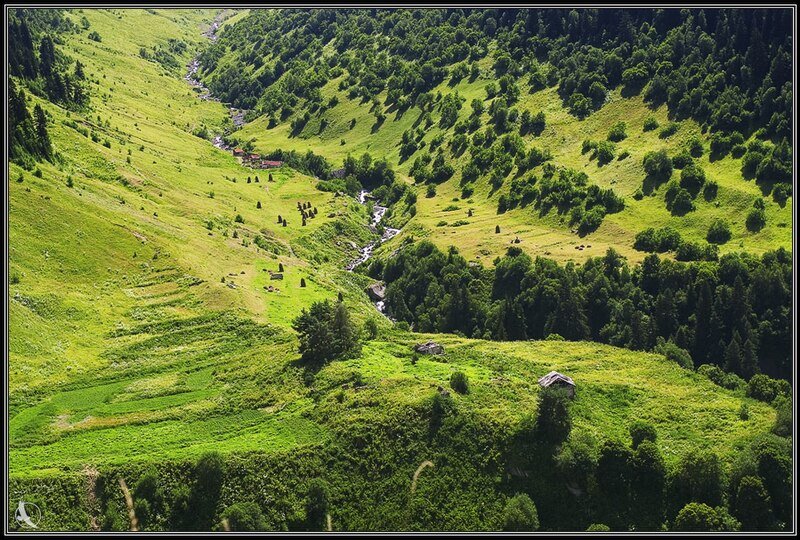
Still, more needs to be done on the ground to achieve a baseline level of preparedness that would buttress Georgia against the coming environmental hazards and disruptions. With the support of international partners and local non-state actors, the Georgian authorities must prioritize the safety of hundreds over short-term economic gains for a few elite groups; organize awareness campaigns; and increase preparedness for the inevitable. Behind the breathtaking scenery of the Georgian mountains, there is a constant risk which is sometimes unavoidable, but the damage can be mitigated. As the country’s glaciers continue to melt, a process that has accelerated in the last two decades, it is crucial to invest in monitoring, early warning systems, and disaster management. Natural disasters like Shovi may recur, but they are not destined to turn into catastrophes if the political will is there.
Irena Gonashvili is a doctoral researcher in the JENA-CAUC project at the Institute for Caucasus Studies in Jena. Her research focuses on the Europeanization of environmental policies in Georgia and Armenia.
Bidzina Lebanidze is a Research Fellow at the University of Jena and adjunct Associate Professor at Ilia State University.
[1] Now the Ministry of Environmental Protection and Agriculture (MEPA).
[2] The Sendai Framework for Disaster Risk Reduction 2015-2030, the Sustainable Development Goals (SDGs), and the 1992 United Nations Framework Convention on Climate Change (UNFCCC).