
PONARS Eurasia
  • About Us
    • Contact Us!
    • Membership
      • All Members
      • Core Members
      • Collegium Members
      • Associate Members
      • About Membership
    • Our Ukraine Experts
    • Executive Committee
  • Our Ukraine Experts
  • Policy Memos
    • List of Policy Memos
    • PONARS Eurasia’s Newest eBooks
    • Submissions
  • Online Academy
  • Events
    • Past Events
  • Recommended
  • Task Forces
    • Ukraine
      • PONARS Ukraine Task Force: Incontrovertible Truths
    • Amplifying Voices of Europe, the Caucasus, and Central Asia (AVECCA)
    • Russia in a Changing Climate
  • Podcasts
Contacts

Address
1957 E St NW,
Washington, DC 20052

[email protected]
202.994.5915

NEWSLETTER
Facebook
Twitter
YouTube
Podcast
PONARS Eurasia
PONARS Eurasia
  • About Us
    • Contact Us!
    • Membership
      • All Members
      • Core Members
      • Collegium Members
      • Associate Members
      • About Membership
    • Our Ukraine Experts
    • Executive Committee
  • Our Ukraine Experts
  • Policy Memos
    • List of Policy Memos
    • PONARS Eurasia’s Newest eBooks
    • Submissions
  • Online Academy
  • Events
    • Past Events
  • Recommended
  • Task Forces
    • Ukraine
      • PONARS Ukraine Task Force: Incontrovertible Truths
    • Amplifying Voices of Europe, the Caucasus, and Central Asia (AVECCA)
    • Russia in a Changing Climate
  • Podcasts
DIGITAL RESOURCES
digital resources

Bookstore 📚

Knowledge Hub

Course Syllabi

Point & Counterpoint

Policy Perspectives

RECOMMENDED
  • Misconceptions about Eastern Europe, the Caucasus, and Central Asia and Their Impact on Policy

    View
  • Five Years into the War, Ukraine Is Showing Grittiness, Rebounding Confidence in War Fortunes

    View
  • Russia’s Wartime Internet: A Contested Space with the Regime Still Predominant

    View
  • Why Georgians Need to Take Hungarian Lessons

    View
  • The ‘Don’t Lose Lukashenko’ Approach: Kyiv’s (Non-) Strategic Ambiguity Toward the Belarusian Opposition

    View
RSS PONARS Eurasia Podcast
  • The Putin-Xi Summit: What's New In Their Joint Communique ? February 23, 2022
    In this week’s PONARS Eurasia Podcast, Maria Lipman speaks with Russian China experts Vita Spivak and Alexander Gabuev about the February meeting between Vladimir Putin and Xi Jinping, and what it may tell us about where the Russian-Chinese relationship is headed.
  • Exploring the Russian Courts' Ruling to Liquidate the Memorial Society January 28, 2022
    In this week’s PONARS Eurasia Podcast, Maria Lipman chats with scholars Kelly Smith and Benjamin Nathans about the history, achievements, and impending shutdown of the Memorial Society, Russia's oldest and most venerable civic organization, and what its imminent liquidation portends for the Russian civil society.
  • Russia's 2021 census and the Kremlin's nationalities policy [Lipman Series 2021] December 9, 2021
    In this week’s PONARS Eurasia Podcast, Maria Lipman chats with social scientist Andrey Shcherbak about the quality of the data collected in the recent population census and the goals of Vladimir Putin's government's nationalities policy
  • Active citizens of any kind are under threat [Lipman Series 2021] November 5, 2021
    In this week’s PONARS Eurasia Podcast, Maria Lipman chats with Alexander Verkhovsky about the Kremlin's ever expanding toolkit against political and civic activists, journalists, and other dissidents.
  • Russia's Legislative Elections followup [Lipman Series 2021] October 4, 2021
    In this week’s PONARS Eurasia Podcast, Maria Lipman chats with Tanya Lokot and Nikolay Petrov about the results of Russia’s legislative elections and about what comes next.
  • Why Is the Kremlin Nervous? [Lipman Series 2021] September 14, 2021
    In this week’s PONARS Eurasia Podcast, Maria Lipman chats with Ben Noble and Nikolay Petrov about Russia’s September 17-19 legislative elections, repressive measures against electoral challengers, and whether to expect anything other than preordained results.
  • Vaccine Hesitancy in Russia, France, and the United States [Lipman Series 2021] August 31, 2021
    In this week's PONARS Eurasia Podcast episode, Maria Lipman chats with Denis Volkov, Naira Davlashyan, and Peter Slevin about why COVID-19 vaccination rates are still so low across the globe, comparing vaccine hesitant constituencies across Russia, France, and the United States.  
  • Is Russia Becoming More Soviet? [Lipman Series 2021] July 26, 2021
      In a new PONARS Eurasia Podcast episode, Maria Lipman chats with Maxim Trudolyubov about the current tightening of the Russian political sphere, asking whether or not it’s helpful to draw comparisons to the late Soviet period.
  • The Evolution of Russia's Political Regime [Lipman Series 2021] June 21, 2021
    In this week's episode of the PONARS Eurasia Podcast, Maria Lipman chats with Grigory Golosov and Henry Hale about the evolution of Russia's political regime, and what to expect in the lead-up to September's Duma elections.
  • Volodymyr Zelensky: Year Two [Lipman Series 2021] May 24, 2021
    In this week's episode of the PONARS Eurasia Podcast, Maria Lipman chats with Sergiy Kudelia and Georgiy Kasianov about Ukrainian President Zelensky's second year in office, and how he has handled the political turbulence of the past year.
  • Recommended | Рекомендуем

Marat: Post-Zhanaozen massacre in Kazakhstan, police focus on preempting protests before they can occur, both in rural areas and cities

  • April 16, 2019
  • PONARS Eurasia

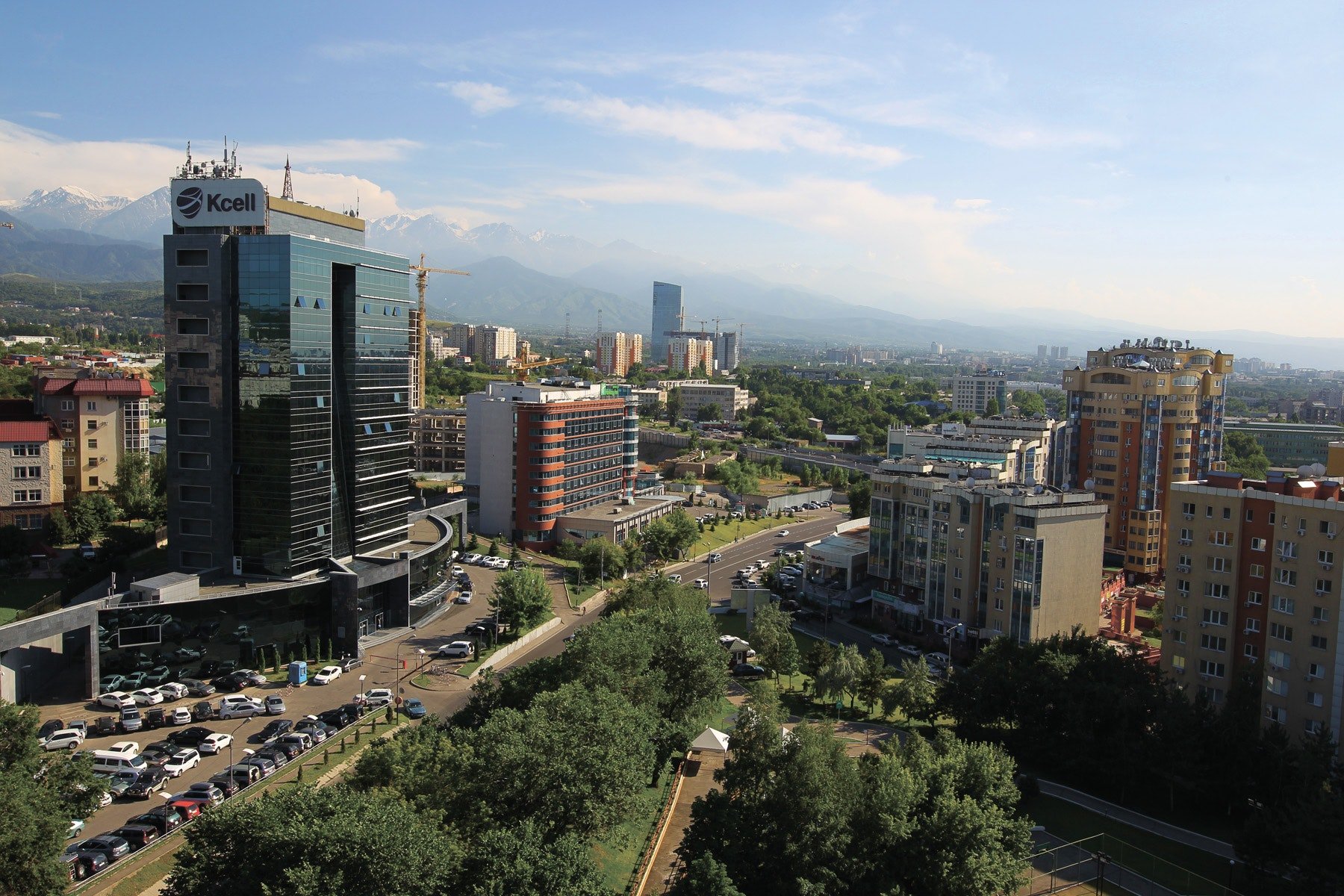
(openDemocracy) On 4 February, a house fire in Astana, Kazakhstan’s capital, killed five sisters aged between one and 13. Women campaigning for increased social and financial support for “hero mothers” – as mothers to six or more children are known – pointed to the fire as evidence that the state is failing to help families. Rallies were held on 11 February across Kazakhstan, from Aktobe to Karaganda, from Almaty to Shymkent.

Also in February residents of Zhanaozen, in Mangystau region, protested for work, and protestors in Astana and Almaty were detained during the ruling party Nur Otan congress and at the party office, respectively. In March, after Nursultan Nazarbayev’s resignation from the presidency, people in Almaty, Astana and Uralsk were arrested for protesting interim President Kassym-Jomart Tokayev’s decision to rename the capital Astana into Nur-Sultan, in honour of the outgoing “Leader of the Nation”. […]

In the aftermath of the 2011 clashes, the Kazakh government increased policing in rural areas to monitor anti-government sentiment, according to Erica Marat, professor at the National Defense University in Washington DC and author of a new book on police reform in post-Soviet states. “Post-Zhanaozen massacre, police focus on preempting protests before they can occur, both in rural areas and cities,” Marat told openDemocracy. “This involves a careful study of possible grievances in the population. When protests do occur, police are careful not to use excessive force, but, as often pointed out by analysts, extract the most active members of the public.” […]

Read More © openDemocracy
 

Related Topics
  • Kazakhstan
Previous Article
  • Recommended | Рекомендуем

Tkachenko: Assange has been in fact exchanged for an IMF loan of several billion dollars

  • April 16, 2019
  • Stanislav Tkachenko
View
Next Article
  • Policy Memos | Аналитика

Oligarchs and Western Sanctions: The Dilemmas Facing Russia’s Ultra Wealthy

  • April 17, 2019
  • Nigel Gould-Davies
View
You May Also Like
View
  • Policy Memos | Аналитика
  • Recommended | Рекомендуем

Misconceptions about Eastern Europe, the Caucasus, and Central Asia and Their Impact on Policy

  • Tomila Lankina, Kelly McMann, Mariya Omelicheva, Emil Dzhuraev, Paul Goode, Nona Shahnazarian, Ivan Gomza and Guzel Yusupova
  • August 26, 2026
View
  • Policy Memos | Аналитика
  • Recommended | Рекомендуем

Five Years into the War, Ukraine Is Showing Grittiness, Rebounding Confidence in War Fortunes

  • Henry Hale, Serhii Dembitskyi and Mikhail Alexseev
  • July 27, 2026
View
  • Policy Memos | Аналитика
  • Recommended | Рекомендуем

Russia’s Wartime Internet: A Contested Space with the Regime Still Predominant

  • Irina Busygina and Mikhail Filippov
  • June 24, 2026
View
  • Policy Memos | Аналитика
  • Recommended | Рекомендуем

Why Georgians Need to Take Hungarian Lessons

  • Stephen F. Jones
  • May 18, 2026
View
  • Policy Memos | Аналитика
  • Recommended | Рекомендуем

The ‘Don’t Lose Lukashenko’ Approach: Kyiv’s (Non-) Strategic Ambiguity Toward the Belarusian Opposition

  • Boris Ginzburg
  • February 23, 2026
View
  • Policy Memos | Аналитика
  • Recommended | Рекомендуем

Too Much, Too Late? The Impact of Secrecy on Efforts to Mediate an End to the Russia-Ukraine War

  • Mikhail Troitskiy
  • February 23, 2026
View
  • Policy Memos | Аналитика
  • Recommended | Рекомендуем

A Deal with the Devil: Lukashenko Navigates Domestic and External Vulnerabilities in Managing Relations with Russia

  • Ryhor Nizhnikau and Arkady Moshes
  • February 9, 2026
View
  • Policy Memos | Аналитика
  • Recommended | Рекомендуем

Peacemaking Russian Style: Negotiations as the Continuation of War by Other Means

  • Pavel Baev
  • January 26, 2026

Leave a Reply Cancel reply

Your email address will not be published. Required fields are marked *

PONARS Eurasia
  • About Us
  • Membership
  • Policy Memos
  • Recommended
  • Events
Powered by narva.io

Permissions & Citation Guidelines

Input your search keywords and press Enter.