The Eurasian Economic Union (EAEU) represented the culmination of Russia’s pursuit of regional integration with its post-Soviet neighbors. Although Russia had been negotiating with the leaders of post-Soviet states about a new integration organization since the early 2010s, it was the annexation of Crimea—and Moscow’s desire to prevent Russia from becoming internationally isolated in light of Western sanctions—that incentivized Moscow to intensify negotiations. By making significant concessions to smaller post-Soviet nations, Russia managed to motivate the leaders of five post-Soviet states to agree on establishing the Eurasian Economic Union in early 2015. Although Moscow failed in the subsequent seven years to achieve its goal of expanding the Union’s membership, the EAEU nevertheless functioned as a limited multilateral format in several economic and financial sectors.
But just as one crisis gave birth to the Union, another crisis could undermine its foundations. At the time of the annexation of Crimea, Russia’s ability to make bilateral deals with post-Soviet leaders and motivate them in various ways to join the EAEU represented an advantage: the Union was formed of bilateral arrangements dominated by Russia. Russia’s ongoing war against Ukraine—the outcome and duration of which are unclear, and which has triggered the imposition of unprecedented sanctions against Russia—has exposed the weakness of this construct. As the smaller post-Soviet nations reconsider the risks, costs, and benefits of closeness to Russia, the Union’s lack of real multilateralism represents a powerful constraint on its development and may even threaten its survival.
Creation of the Union: The “Crimea Effect”
Moscow opened negotiations to form the Eurasian Economic Union in the early 2010s, gradually making non-transparent bargains with potential post-Soviet member states, chief among them Ukraine (as incredible as that now seems). Before 2014, Moscow both offered benefits to and exerted pressure on political incumbents in these countries to encourage them to join the Union, but—generally speaking—without openly encroaching on the integrity and sovereignty of their nations.
The annexation of Crimea represented an open challenge to the system of international rules and expectations. Moreover, it triggered the rapid launch of the Eurasian Economic Union as a five-nation group (Armenia, Belarus, Kazakhstan, Kyrgyzstan, and Russia). Moscow skillfully used its available levers of influence and pressure—energy dependence (Belarus and Armenia), unfavorable geopolitical position (Armenia), the presence of a large Russian-speaking population (Kazakhstan), and a difficult labor-market situation (Kyrgyzstan)—to incentivize membership. In the process, however, Moscow was itself forced to make serious economic and political concessions. The leadership of potential member countries (primarily Kazakhstan and Belarus) insisted that the Union was possible only as an economic project, not a political one. Then-president of Kazakhstan Nursultan Nazarbayev insisted that the new organization be known as the “Eurasian Economic Union” instead of the “Eurasian Union.” Since then, the EAEU itself has repeatedly emphasized that its goals are purely economic.
Though the EAEU had relatively strong formal multilateral institutional structures, actual economic and political relations in the Union remained based on highly asymmetric bilateral relations between Russia and other member states. In practice, bilateral arrangements did not merely supplement, “but also often superseded the multilateral framework of the EAEU.”[1] After 2014, relations between EAEU members displayed a combination of formally signaling loyalty to Moscow while engaging in various forms of resistance to the growth of Russian influence in their political and public life. The leaders of the smaller EAEU states had serious reasons not to challenge Russian domination openly. In addition to the factors listed above, Russia was a huge market for these post-Soviet states, many of which relied heavily on Russian energy supplies and Russian investments to support their national economies. Moreover, the region’s authoritarian incumbents depended to varying degrees on Russia for political support and legitimacy.
Between 2015 and 2022, the Eurasian Economic Union focused on select pragmatic issues, such as a customs union and a single market, while “the more ambitious elements of supranational political integration were relegated to some indeterminate future.”[2] Indeed, the EAEU has enabled some internal trade liberalization as well as the movement of people and labor, although it has generally failed to tackle institutional barriers or promote growth and development policies.
The Implications of the War against Ukraine for the EAEU
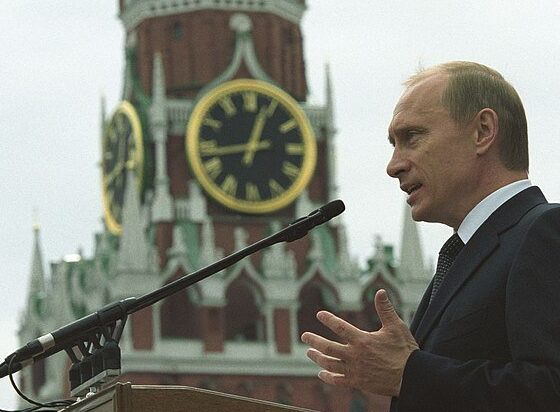
The war unleashed by Russia against Ukraine in 2022 has seriously undermined the expressly apolitical nature of the EAEU and its image as a purely economic association. Speaking in May 2023 at the EAEU summit in Moscow, Russian President Vladimir Putin made several proposals for the further development of the Union. These included establishing the Eurasian Rating Agency, which would provide assessment tools to serve economic activity in the EAEU; creating a climate and environmental club that could synchronize approaches to climate regulation; developing common priorities for technological development and creating technological alliances; and ensuring freedom of movement within the EAEU, “so that people coming to other states of the union would feel comfortable as if they were at home.”
On top of all this, Putin put forward the idea that the goal of the EAEU was to oppose “Western globalism.” The Russian president called for the Union’s member states to pursue not only their common economic interests, but also common civilizational meanings. Eurasian integration, he indicated, should be expanded to include ideology, common historical memory, and culture. Thus, even as Moscow claimed that the EAEU’s economic project was developing “according to plan,” the Kremlin simultaneously sought to inject into the Union a different meaning of Eurasian integration that could hardly be supported by the leaders of other member states.
The most important issue facing the EAEU relates to the sanctions that have been imposed on Russia and Belarus over the war in Ukraine. The sanctions have seriously challenged the Eurasian project: according to Davtyan, the EAEU must now not only consolidate its integration efforts, but also offset or at least mitigate the blow of the economic war. Since the beginning of the “sanctions war,” the EAEU member countries have made significant progress toward dedollarization. The share of settlements in the national currencies of EAEU countries has increased from 74 percent in 2021 to 90 percent in 2023.
At the same time, the imposition of sanctions has sharply increased the legal and reputational risks of interacting with Moscow for financial and trading companies that cooperate actively with Western firms. Foreign credit organizations have begun to refuse to accept credit cards affiliated with the Russian “Mir” payment system. In Kazakhstan, given the risk of secondary sanctions, most major banks have likewise stopped servicing cards of the Russian payment system for cross-border money transfers. On March 30, 2024, Armenian banks completely stopped working with the Russian payment system. In early April, a similar decision was made in Kyrgyzstan.
The EAEU countries are well aware that the rules of the sanctions game have changed even compared to five years ago, and the stakes have risen sharply. The vulnerability of member states has increased. Given the growing risks, they are not ready to be exposed to sanctions themselves, a fact that has negatively impacted the integration of national payment systems of the EAEU.
Country-Specific Implications
While some effects of the war—like sanctions—have affected all EAEU member states, others have been country-specific. This has required Russia to take an ad hoc approach to solving such problems. In addition, Russian domestic problems and problems related to Russia within other post-Soviet organizations (like the CIS and CSTO) have inevitably affected the situation within the EAEU.
In the case of Armenia, such issues have led to a complete erosion of trust in Russia. Yerevan believes that Russia failed to fulfill its obligations within the CSTO during Armenia’s conflict with Azerbaijan over Nagorno-Karabakh. In response, Armenia froze its membership in the CSTO. Armenian Foreign Minister Ararat Mirzoyan also refused to participate in a meeting of the Council of Foreign Ministers of the Commonwealth of Independent States. In November 2023, Armenian Prime Minister Nikol Pashinyan announced that the Armenian Armed Forces were undergoing large-scale reforms in light of “international experience.” In practice, this entails a departure from Russian army standards. In early April 2024, Mirzoyan said that Armenia seeks to deepen relations with the EU and the US; a trilateral meeting between Armenia, the United States and the European Union was held in Brussels on April 5, 2024. Commenting on this meeting, the Russian Foreign Ministry opined that Western countries wanted to “turn Armenia into an instrument for the realization of their extremely dangerous designs in the South Caucasus” and indicated that Moscow expected Armenia to clarify its agreements with the US and the EU.
Turning to Kyrgyzstan, the Crocus City terrorist attack (March 2024) has negatively affected the country’s migrant workers in Russia. In the wake of the attack, the Russian authorities returned migrants to their home country or kept them in airports. The Kyrgyz consulate urged Kyrgyz citizens to temporarily refrain from traveling to Russia and sent an official note to the Russian side. In addition, a family member of a Kyrgyz diplomat was injured during police checks of migrants’ compliance with the passport regime in Moscow.
In the regions, administrations have banned business owners from employing migrants on patents in many business sectors. Patents must be issued to citizens of countries with which Russia has a visa-free regime, with the exceptions of Kazakhstan, Belarus, Kyrgyzstan, and Armenia as members of the EAEU. However, employers prefer not to take risks and thus avoid hiring citizens of Central Asian countries, including citizens of Kyrgyzstan.
Belarus remains Russia’s only full-fledged ally within the EAEU. Like other post-Soviet states, Belarus has always declared itself to have a multi-vector foreign policy. However, the country’s heavy multi-level dependence on Russia has heavily restricted its room for maneuver. As Preiherman has argued, given deeply embedded geostrategic asymmetries and with a view to bypassing the structural restrictions of its foreign policy, Belarus pursued strategic hedging. Minsk chose to hedge to minimize the political and economic risks of relations with Russia, shape Moscow’s options and decisions, and increase its strategic room for maneuver. With the outbreak of war, the opportunities for strategic hedging were taken away. Although Belarus has not been drawn into the fighting directly thus far, Belarus has enabled its ally, Russia, to gain a major strategic advantage in the latter’s war against Ukraine. Indeed, almost from the very beginning, Putin made Lukashenka an accomplice in this war.
Conclusion
Can it be argued that Russia’s war against Ukraine and massive Western sanctions against Russia have weakened Russia’s economic and political position within post-Soviet Eurasia, thereby jeopardizing the EAEU’s ability to operate as an established actor in international relations and to expand its list of partners? I believe that such a claim can be made, but it would be too general. It would be more accurate to say that Russia’s economic and political position within the EAEU have changed as a result of both external circumstances and smaller member states reconsidering the risks and costs of membership, as well as the prospects of this organization.
In 2014–2015, Moscow’s ability to convince smaller nations to join the Eurasian Economic Union using a mixture of concessions and pressures was an advantage. The Union was created based on bilateral arrangements dominated by Russia. With the outbreak of war, this advantage has become a liability: Built as it is on Russian dominance, the EAEU construction is starting to crack. Moreover, the EAEU does not exist in a vacuum, and tensions between Russia and post-Soviet countries within other common organizations have had spillover effects for the Union.
Irina Busygina is a visiting scholar at the Davis Center for Russian and Eurasian Studies, Harvard University.
[1] Rilka Dragneva and Kataryna Wolczuk, The Eurasian Economic Union: Deals, Rules, and the Exercise of Power, Chatham House, 2017, p. 11.
[2] Richard Sakwa, The Putin Paradox, Bloomsbury, 2020, p. 168.