PONARS Eurasia
  • About Us
    • Contact Us!
    • Membership
      • All Members
      • Core Members
      • Collegium Members
      • Associate Members
      • About Membership
    • Our Ukraine Experts
    • Executive Committee
  • Our Ukraine Experts
  • Policy Memos
    • List of Policy Memos
    • PONARS Eurasia’s Newest eBooks
    • Submissions
  • Online Academy
  • Events
    • Past Events
  • Recommended
  • Task Forces
    • Ukraine
      • PONARS Ukraine Task Force: Incontrovertible Truths
    • Amplifying Voices of Europe, the Caucasus, and Central Asia (AVECCA)
    • Russia in a Changing Climate
  • Podcasts
Contacts

Address
1957 E St NW,
Washington, DC 20052

[email protected]
202.994.5915

NEWSLETTER
Facebook
Twitter
YouTube
Podcast
PONARS Eurasia
PONARS Eurasia
  • About Us
    • Contact Us!
    • Membership
      • All Members
      • Core Members
      • Collegium Members
      • Associate Members
      • About Membership
    • Our Ukraine Experts
    • Executive Committee
  • Our Ukraine Experts
  • Policy Memos
    • List of Policy Memos
    • PONARS Eurasia’s Newest eBooks
    • Submissions
  • Online Academy
  • Events
    • Past Events
  • Recommended
  • Task Forces
    • Ukraine
      • PONARS Ukraine Task Force: Incontrovertible Truths
    • Amplifying Voices of Europe, the Caucasus, and Central Asia (AVECCA)
    • Russia in a Changing Climate
  • Podcasts
DIGITAL RESOURCES
digital resources

Bookstore 📚

Knowledge Hub

Course Syllabi

Point & Counterpoint

Policy Perspectives

RECOMMENDED
  • Misconceptions about Eastern Europe, the Caucasus, and Central Asia and Their Impact on Policy

    View
  • Five Years into the War, Ukraine Is Showing Grittiness, Rebounding Confidence in War Fortunes

    View
  • Russia’s Wartime Internet: A Contested Space with the Regime Still Predominant

    View
  • Why Georgians Need to Take Hungarian Lessons

    View
  • The ‘Don’t Lose Lukashenko’ Approach: Kyiv’s (Non-) Strategic Ambiguity Toward the Belarusian Opposition

    View
RSS PONARS Eurasia Podcast
  • The Putin-Xi Summit: What's New In Their Joint Communique ? February 23, 2022
    In this week’s PONARS Eurasia Podcast, Maria Lipman speaks with Russian China experts Vita Spivak and Alexander Gabuev about the February meeting between Vladimir Putin and Xi Jinping, and what it may tell us about where the Russian-Chinese relationship is headed.
  • Exploring the Russian Courts' Ruling to Liquidate the Memorial Society January 28, 2022
    In this week’s PONARS Eurasia Podcast, Maria Lipman chats with scholars Kelly Smith and Benjamin Nathans about the history, achievements, and impending shutdown of the Memorial Society, Russia's oldest and most venerable civic organization, and what its imminent liquidation portends for the Russian civil society.
  • Russia's 2021 census and the Kremlin's nationalities policy [Lipman Series 2021] December 9, 2021
    In this week’s PONARS Eurasia Podcast, Maria Lipman chats with social scientist Andrey Shcherbak about the quality of the data collected in the recent population census and the goals of Vladimir Putin's government's nationalities policy
  • Active citizens of any kind are under threat [Lipman Series 2021] November 5, 2021
    In this week’s PONARS Eurasia Podcast, Maria Lipman chats with Alexander Verkhovsky about the Kremlin's ever expanding toolkit against political and civic activists, journalists, and other dissidents.
  • Russia's Legislative Elections followup [Lipman Series 2021] October 4, 2021
    In this week’s PONARS Eurasia Podcast, Maria Lipman chats with Tanya Lokot and Nikolay Petrov about the results of Russia’s legislative elections and about what comes next.
  • Why Is the Kremlin Nervous? [Lipman Series 2021] September 14, 2021
    In this week’s PONARS Eurasia Podcast, Maria Lipman chats with Ben Noble and Nikolay Petrov about Russia’s September 17-19 legislative elections, repressive measures against electoral challengers, and whether to expect anything other than preordained results.
  • Vaccine Hesitancy in Russia, France, and the United States [Lipman Series 2021] August 31, 2021
    In this week's PONARS Eurasia Podcast episode, Maria Lipman chats with Denis Volkov, Naira Davlashyan, and Peter Slevin about why COVID-19 vaccination rates are still so low across the globe, comparing vaccine hesitant constituencies across Russia, France, and the United States.  
  • Is Russia Becoming More Soviet? [Lipman Series 2021] July 26, 2021
      In a new PONARS Eurasia Podcast episode, Maria Lipman chats with Maxim Trudolyubov about the current tightening of the Russian political sphere, asking whether or not it’s helpful to draw comparisons to the late Soviet period.
  • The Evolution of Russia's Political Regime [Lipman Series 2021] June 21, 2021
    In this week's episode of the PONARS Eurasia Podcast, Maria Lipman chats with Grigory Golosov and Henry Hale about the evolution of Russia's political regime, and what to expect in the lead-up to September's Duma elections.
  • Volodymyr Zelensky: Year Two [Lipman Series 2021] May 24, 2021
    In this week's episode of the PONARS Eurasia Podcast, Maria Lipman chats with Sergiy Kudelia and Georgiy Kasianov about Ukrainian President Zelensky's second year in office, and how he has handled the political turbulence of the past year.
  • Commentary | Комментарии

История о потерянном времени: Можно ли вылечить национальные травмы пропагандой

  • October 23, 2017
  • Konstantin Sonin

Одним из проклятий информационной эпохи стало то, что мы слишком много времени проводим, обсуждая то, что заслуживает короткого разговора, или то, что не стоит внимания вообще. А на то, что заслуживает серьезного обсуждения, внимания не хватает.

На прошлой неделе вся страна наблюдала за заседанием президиума ВАК, органа, который призван следить за соблюдением процедур присуждения научных степеней. Президиум ВАК решал, стоит ли оставить докторскую степень по истории министру культуры Владимиру Мединскому. По ходу подготовки вскрылся подлог в документах, пропали оригиналы, которые должны храниться в архивах, стало непонятно – было ли вообще заседание, на котором диссертация якобы обсуждалась, и тем не менее президиум рекомендовал, большинством голосов, сохранить степень. В этом нет ничего интересного: кто бы сомневался, что министр – это важный чиновник, для которого правила не писаны? Мы же не удивляемся, что они ездят на красный свет и по встречке…

Но никакое административное решение не может изменить существа дела. Диссертация Мединского ненаучна: это обосновано анализом специалистов, это подтверждено решением экспертного совета ВАК по истории – высшего профессионального органа. Это, собственно, подтверждено всеми историками страны. Ни один профессиональный историк не высказался в защиту научной ценности работы министра.

Вот только жалко потраченного времени – конечно, каждый человек имеет право свободно высказывать свои соображения и издавать книги, но, если бы не борьба за чистоту российской науки, почему бы нужно было читать произведения Мединского? Там простой рецепт: придумывается тезис, что «иностранцы» (это еще вопрос, есть ли такая категория в научном смысле) плохо писали о России на протяжении столетий. Понятно, что надергать нужных цитат из русских переводов нетрудно: гениальность Мединского в том, что он очень ловко подверстал свой тезис к «новой холодной войне» последних лет. Доказал, так сказать, что «план Даллеса» активно выполнялся за много лет до рождения Даллеса…

А еще в октябре вышла книга живущей в Лондоне американки Энн Эппельбаум, историка и журналиста, «Красный голод» – история Голодомора 1931–1933 гг., крупнейшей гуманитарной катастрофы в истории нашей страны, когда от голода в южно-европейской части (в основном на территории современной Украины) умерло 4–5 млн человек. Целые деревни вымерли от голода в Европе в ХХ в.! Эта тема сложна не столько для историков – с раскрытием архивов стали видны и механизмы принятия решений, приведшие к катастрофе, и пропагандистские кампании, которые прикрывали трагедию. Она сложна для современного автора, потому что многим хочется использовать трагедии прошлого в качестве материала для сегодняшней пропаганды. И Энн Эппельбаум справляется: «Красный голод» – выдающаяся история трагических событий, которая оценивает поступки и слова действующих лиц не в интересах сегодняшнего дня, а в интересах исторической правды.

Можно построить собственную карьеру, расковыривая национальные травмы. А можно, даже не ставя такой цели, травмы лечить – просто профессионально занимаясь своим делом. Первое, конечно, привлекает гораздо больше внимания.
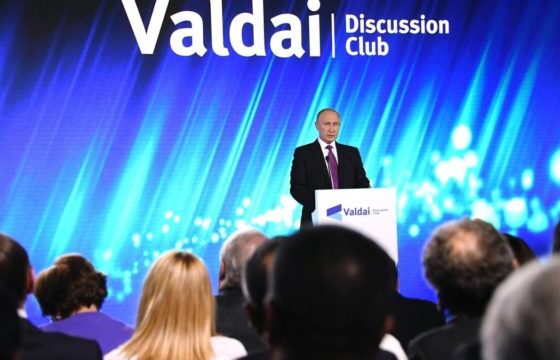
Читать статью | © Ведомости


Related Topics
  • Россия
  • Сонин
Previous Article
  • Commentary | Комментарии

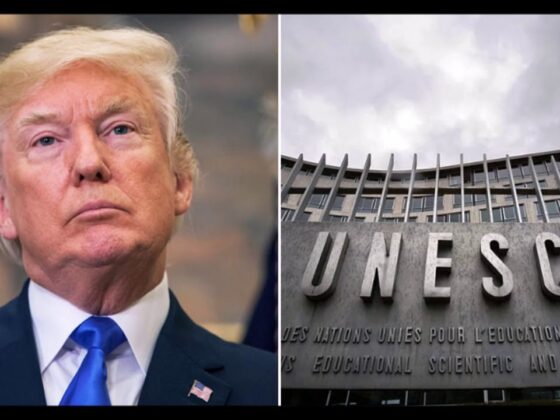
Why Is Trump Withdrawing from UNESCO?

  • October 23, 2017
  • Ivan Kurilla
View
Next Article
  • Commentary | Комментарии

Putin Hosts Another Valdai to Draw Attention Away From Russia’s Stagnation

  • October 24, 2017
  • Pavel Baev
View
You May Also Like
View
  • Commentary | Комментарии
  • Recommended | Рекомендуем

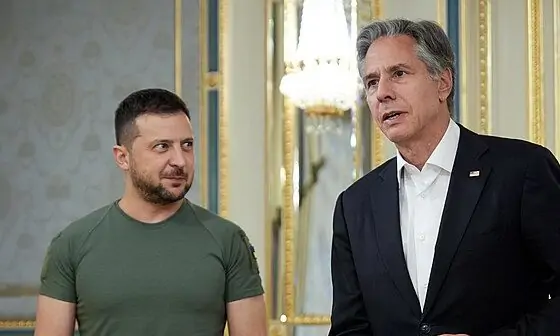
Clearing the Air: Secretary Blinken Visits Ukraine

  • Volodymyr Dubovyk
  • September 19, 2023
View
  • Commentary | Комментарии
  • Recommended | Рекомендуем

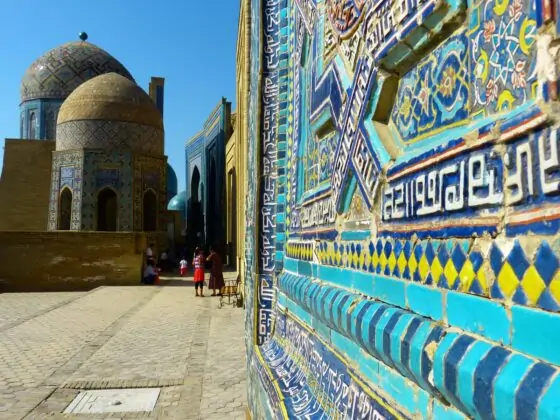
Ensuring Genuine Results? A New Electoral Design in Uzbekistan

  • Akrom Avezov
  • May 19, 2023
View
  • Commentary | Комментарии
  • Recommended | Рекомендуем

Ukraine, Taiwan, and Macron’s “Strategic Autonomy”

  • Maurizio Delli Santi
  • April 30, 2023
View
  • Commentary | Комментарии
  • Recommended | Рекомендуем

Russia’s Regional Governors: Backing the War, Upholding the Status Quo

  • Irina Busygina and Mikhail Filippov
  • April 7, 2023
View
  • Commentary | Комментарии
  • Recommended | Рекомендуем

The Desire to Possess: Russia’s War for Territory

  • Irina Busygina
  • February 8, 2023
View
  • Commentary | Комментарии
  • Recommended | Рекомендуем

Kyiv-Washington Relations in Times of Colossal War: The Ultimate Test of a Strategic Partnership

  • Volodymyr Dubovyk
  • January 11, 2023
View
  • Commentary | Комментарии
  • Recommended | Рекомендуем

Prevailing Soviet Legacies

  • Irina Busygina and Mikhail Filippov
  • December 27, 2022
View
  • Commentary | Комментарии
  • Recommended | Рекомендуем

In Russia’s Nuclear Messaging to West and Ukraine, Putin Plays Both Bad and Good Cop

  • Simon Saradzhyan
  • December 23, 2022

Leave a Reply Cancel reply

Your email address will not be published. Required fields are marked *

PONARS Eurasia
  • About Us
  • Membership
  • Policy Memos
  • Recommended
  • Events
Powered by narva.io

Permissions & Citation Guidelines

Input your search keywords and press Enter.