PONARS Eurasia
  • About Us
    • Contact Us!
    • Membership
      • All Members
      • Core Members
      • Collegium Members
      • Associate Members
      • About Membership
    • Our Ukraine Experts
    • Executive Committee
  • Our Ukraine Experts
  • Policy Memos
    • List of Policy Memos
    • PONARS Eurasia’s Newest eBooks
    • Submissions
  • Online Academy
  • Events
    • Past Events
  • Recommended
  • Task Forces
    • Ukraine
      • PONARS Ukraine Task Force: Incontrovertible Truths
    • Amplifying Voices of Europe, the Caucasus, and Central Asia (AVECCA)
    • Russia in a Changing Climate
  • Podcasts
Contacts

Address
1957 E St NW,
Washington, DC 20052

[email protected]
202.994.5915

NEWSLETTER
Facebook
Twitter
YouTube
Podcast
PONARS Eurasia
PONARS Eurasia
  • About Us
    • Contact Us!
    • Membership
      • All Members
      • Core Members
      • Collegium Members
      • Associate Members
      • About Membership
    • Our Ukraine Experts
    • Executive Committee
  • Our Ukraine Experts
  • Policy Memos
    • List of Policy Memos
    • PONARS Eurasia’s Newest eBooks
    • Submissions
  • Online Academy
  • Events
    • Past Events
  • Recommended
  • Task Forces
    • Ukraine
      • PONARS Ukraine Task Force: Incontrovertible Truths
    • Amplifying Voices of Europe, the Caucasus, and Central Asia (AVECCA)
    • Russia in a Changing Climate
  • Podcasts
DIGITAL RESOURCES
digital resources

Bookstore 📚

Knowledge Hub

Course Syllabi

Point & Counterpoint

Policy Perspectives

RECOMMENDED
  • Misconceptions about Eastern Europe, the Caucasus, and Central Asia and Their Impact on Policy

    View
  • Five Years into the War, Ukraine Is Showing Grittiness, Rebounding Confidence in War Fortunes

    View
  • Russia’s Wartime Internet: A Contested Space with the Regime Still Predominant

    View
  • Why Georgians Need to Take Hungarian Lessons

    View
  • The ‘Don’t Lose Lukashenko’ Approach: Kyiv’s (Non-) Strategic Ambiguity Toward the Belarusian Opposition

    View
RSS PONARS Eurasia Podcast
  • The Putin-Xi Summit: What's New In Their Joint Communique ? February 23, 2022
    In this week’s PONARS Eurasia Podcast, Maria Lipman speaks with Russian China experts Vita Spivak and Alexander Gabuev about the February meeting between Vladimir Putin and Xi Jinping, and what it may tell us about where the Russian-Chinese relationship is headed.
  • Exploring the Russian Courts' Ruling to Liquidate the Memorial Society January 28, 2022
    In this week’s PONARS Eurasia Podcast, Maria Lipman chats with scholars Kelly Smith and Benjamin Nathans about the history, achievements, and impending shutdown of the Memorial Society, Russia's oldest and most venerable civic organization, and what its imminent liquidation portends for the Russian civil society.
  • Russia's 2021 census and the Kremlin's nationalities policy [Lipman Series 2021] December 9, 2021
    In this week’s PONARS Eurasia Podcast, Maria Lipman chats with social scientist Andrey Shcherbak about the quality of the data collected in the recent population census and the goals of Vladimir Putin's government's nationalities policy
  • Active citizens of any kind are under threat [Lipman Series 2021] November 5, 2021
    In this week’s PONARS Eurasia Podcast, Maria Lipman chats with Alexander Verkhovsky about the Kremlin's ever expanding toolkit against political and civic activists, journalists, and other dissidents.
  • Russia's Legislative Elections followup [Lipman Series 2021] October 4, 2021
    In this week’s PONARS Eurasia Podcast, Maria Lipman chats with Tanya Lokot and Nikolay Petrov about the results of Russia’s legislative elections and about what comes next.
  • Why Is the Kremlin Nervous? [Lipman Series 2021] September 14, 2021
    In this week’s PONARS Eurasia Podcast, Maria Lipman chats with Ben Noble and Nikolay Petrov about Russia’s September 17-19 legislative elections, repressive measures against electoral challengers, and whether to expect anything other than preordained results.
  • Vaccine Hesitancy in Russia, France, and the United States [Lipman Series 2021] August 31, 2021
    In this week's PONARS Eurasia Podcast episode, Maria Lipman chats with Denis Volkov, Naira Davlashyan, and Peter Slevin about why COVID-19 vaccination rates are still so low across the globe, comparing vaccine hesitant constituencies across Russia, France, and the United States.  
  • Is Russia Becoming More Soviet? [Lipman Series 2021] July 26, 2021
      In a new PONARS Eurasia Podcast episode, Maria Lipman chats with Maxim Trudolyubov about the current tightening of the Russian political sphere, asking whether or not it’s helpful to draw comparisons to the late Soviet period.
  • The Evolution of Russia's Political Regime [Lipman Series 2021] June 21, 2021
    In this week's episode of the PONARS Eurasia Podcast, Maria Lipman chats with Grigory Golosov and Henry Hale about the evolution of Russia's political regime, and what to expect in the lead-up to September's Duma elections.
  • Volodymyr Zelensky: Year Two [Lipman Series 2021] May 24, 2021
    In this week's episode of the PONARS Eurasia Podcast, Maria Lipman chats with Sergiy Kudelia and Georgiy Kasianov about Ukrainian President Zelensky's second year in office, and how he has handled the political turbulence of the past year.
  • Commentary | Комментарии

Бюрократия победила науку

  • October 20, 2017
  • Ivan Kurilla

Президиум ВАК рекомендовал оставить Мединскому ученую степень. Такое решение вызвало неоднозначную реакцию в научных кругах. Историк Иван Курилла высказал свое мнение. 

Какие научные основания были для такого решения, мне сказать сложно. Я слышал только, что несколько раз некоторые члены президиума ВАК говорили о том, что они рассматривают не содержательную часть, а формальную, а содержательная — это не их дело. Но это, в общем, тоже лукавство, потому что мы видим, что в последнее время появились серьёзные сомнения, что вообще диссертацию Мединский защищал, или были разные авторефераты. То есть это всё говорит о том, что диссертация не только содержательно не отвечает требованиям к научной работе, но и формально. Вообще я вижу ситуацию, которая сложилась сегодня: решение принято ВАК не на основе научных каких-то критериев. На самом деле принято бюрократическое решение, которое таким образом фиксирует то, что у нас в науке главные — не учёные, а бюрократы. У нас раковая опухоль, бюрократия, расползлась по науке и образованию, в конце концов это и привело к такому решению. Это мы видим на многих примерах, к сожалению, в университетах, в академии наук и т.д.

Мы видим, как бюрократы пожирают просто пространство вокруг себя. На примере сегодняшнего решения мы видим, что и в ВАКе восторжествовала бюрократическая логика, потому что научный совет по истории, где действительно историки заседают, принял решение о том, что это не диссертация, что этот текст нельзя было считать научной диссертацией, а президиум ВАК своим решением перечеркнул решение высшего исторического органа, доказав или показав, что наука у нас подчинена бюрократии.

Это очень плохо, это разрушительно для науки. Мы лишний раз увидели, что история — не наука, а пропаганда. Во-вторых, это разрушительно для самого ВАКа, Как учёному теперь относиться к любому решению ВАКа, даже самому правильному? То есть ВАК потерял репутацию, подорвал собственную репутацию как комиссии, которая являлась высшим органом, определяющим научные степени. Вот как теперь к нему относиться? Уже несколько лет идут дебаты в научном сообществе о том, что надо переносить защиты в университеты, то есть ВАК вообще не нужен, надо его ликвидировать. И уже несколько университетов получили право самостоятельно присуждать степени. ВАК таким решением просто приблизил свою кончину. Тогда, действительно, давайте делиться по тем университетам, которые будут присуждать степени за такие тексты, как у Мединского и те, которые не будут. Это сложно, это становление института репутации, но, видимо, уже без ВАКа. Опять же, к сожалению, потому что до недавнего времени казалось, что ВАК является неким последним столпом, последней оградой, забором, препятствием для всяких манипуляций, которые иногда в науку пытаются проникнуть. Но вот сегодня оказалось, что нет, что бюрократы важнее, чем учёные. Увы, это очень печальный день для науки, и для исторической науки конкретно, и для институтов науки, к которым ещё недавно относили ВАК. Теперь уже ВАК институтом научным считать нельзя, это теперь институт бюрократический. 

Читать статью | © Актуальные комментарии


Related Topics
  • Курилла
  • Россия
Previous Article
  • In the News | Hовости

Kakachia: Brit campaigning by bike in Tbilisi “is a very new thing for Georgian society”

  • October 20, 2017
  • PONARS Eurasia
View
Next Article
  • Recommended | Рекомендуем
  • Russia

Putin’s Farmer – Agriculture and Business in Russia

  • October 21, 2017
  • PONARS Eurasia
View
You May Also Like
View
  • Commentary | Комментарии
  • Recommended | Рекомендуем

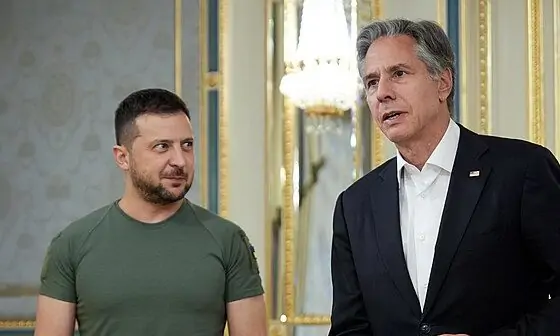
Clearing the Air: Secretary Blinken Visits Ukraine

  • Volodymyr Dubovyk
  • September 19, 2023
View
  • Commentary | Комментарии
  • Recommended | Рекомендуем

Ensuring Genuine Results? A New Electoral Design in Uzbekistan

  • Akrom Avezov
  • May 19, 2023
View
  • Commentary | Комментарии
  • Recommended | Рекомендуем

Ukraine, Taiwan, and Macron’s “Strategic Autonomy”

  • Maurizio Delli Santi
  • April 30, 2023
View
  • Commentary | Комментарии
  • Recommended | Рекомендуем

Russia’s Regional Governors: Backing the War, Upholding the Status Quo

  • Irina Busygina and Mikhail Filippov
  • April 7, 2023
View
  • Commentary | Комментарии
  • Recommended | Рекомендуем

The Desire to Possess: Russia’s War for Territory

  • Irina Busygina
  • February 8, 2023
View
  • Commentary | Комментарии
  • Recommended | Рекомендуем

Kyiv-Washington Relations in Times of Colossal War: The Ultimate Test of a Strategic Partnership

  • Volodymyr Dubovyk
  • January 11, 2023
View
  • Commentary | Комментарии
  • Recommended | Рекомендуем

Prevailing Soviet Legacies

  • Irina Busygina and Mikhail Filippov
  • December 27, 2022
View
  • Commentary | Комментарии
  • Recommended | Рекомендуем

In Russia’s Nuclear Messaging to West and Ukraine, Putin Plays Both Bad and Good Cop

  • Simon Saradzhyan
  • December 23, 2022

Leave a Reply Cancel reply

Your email address will not be published. Required fields are marked *

PONARS Eurasia
  • About Us
  • Membership
  • Policy Memos
  • Recommended
  • Events
Powered by narva.io

Permissions & Citation Guidelines

Input your search keywords and press Enter.