PONARS Eurasia
  • About Us
    • Contact Us!
    • Membership
      • All Members
      • Core Members
      • Collegium Members
      • Associate Members
      • About Membership
    • Our Ukraine Experts
    • Executive Committee
  • Our Ukraine Experts
  • Policy Memos
    • List of Policy Memos
    • PONARS Eurasia’s Newest eBooks
    • Submissions
  • Online Academy
  • Events
    • Past Events
  • Recommended
  • Task Forces
    • Ukraine
      • PONARS Ukraine Task Force: Incontrovertible Truths
    • Amplifying Voices of Europe, the Caucasus, and Central Asia (AVECCA)
    • Russia in a Changing Climate
  • Podcasts
Contacts

Address
1957 E St NW,
Washington, DC 20052

[email protected]
202.994.5915

NEWSLETTER
Facebook
Twitter
YouTube
Podcast
PONARS Eurasia
PONARS Eurasia
  • About Us
    • Contact Us!
    • Membership
      • All Members
      • Core Members
      • Collegium Members
      • Associate Members
      • About Membership
    • Our Ukraine Experts
    • Executive Committee
  • Our Ukraine Experts
  • Policy Memos
    • List of Policy Memos
    • PONARS Eurasia’s Newest eBooks
    • Submissions
  • Online Academy
  • Events
    • Past Events
  • Recommended
  • Task Forces
    • Ukraine
      • PONARS Ukraine Task Force: Incontrovertible Truths
    • Amplifying Voices of Europe, the Caucasus, and Central Asia (AVECCA)
    • Russia in a Changing Climate
  • Podcasts
DIGITAL RESOURCES
digital resources

Bookstore 📚

Knowledge Hub

Course Syllabi

Point & Counterpoint

Policy Perspectives

RECOMMENDED
  • Misconceptions about Eastern Europe, the Caucasus, and Central Asia and Their Impact on Policy

    View
  • Five Years into the War, Ukraine Is Showing Grittiness, Rebounding Confidence in War Fortunes

    View
  • Russia’s Wartime Internet: A Contested Space with the Regime Still Predominant

    View
  • Why Georgians Need to Take Hungarian Lessons

    View
  • The ‘Don’t Lose Lukashenko’ Approach: Kyiv’s (Non-) Strategic Ambiguity Toward the Belarusian Opposition

    View
RSS PONARS Eurasia Podcast
  • The Putin-Xi Summit: What's New In Their Joint Communique ? February 23, 2022
    In this week’s PONARS Eurasia Podcast, Maria Lipman speaks with Russian China experts Vita Spivak and Alexander Gabuev about the February meeting between Vladimir Putin and Xi Jinping, and what it may tell us about where the Russian-Chinese relationship is headed.
  • Exploring the Russian Courts' Ruling to Liquidate the Memorial Society January 28, 2022
    In this week’s PONARS Eurasia Podcast, Maria Lipman chats with scholars Kelly Smith and Benjamin Nathans about the history, achievements, and impending shutdown of the Memorial Society, Russia's oldest and most venerable civic organization, and what its imminent liquidation portends for the Russian civil society.
  • Russia's 2021 census and the Kremlin's nationalities policy [Lipman Series 2021] December 9, 2021
    In this week’s PONARS Eurasia Podcast, Maria Lipman chats with social scientist Andrey Shcherbak about the quality of the data collected in the recent population census and the goals of Vladimir Putin's government's nationalities policy
  • Active citizens of any kind are under threat [Lipman Series 2021] November 5, 2021
    In this week’s PONARS Eurasia Podcast, Maria Lipman chats with Alexander Verkhovsky about the Kremlin's ever expanding toolkit against political and civic activists, journalists, and other dissidents.
  • Russia's Legislative Elections followup [Lipman Series 2021] October 4, 2021
    In this week’s PONARS Eurasia Podcast, Maria Lipman chats with Tanya Lokot and Nikolay Petrov about the results of Russia’s legislative elections and about what comes next.
  • Why Is the Kremlin Nervous? [Lipman Series 2021] September 14, 2021
    In this week’s PONARS Eurasia Podcast, Maria Lipman chats with Ben Noble and Nikolay Petrov about Russia’s September 17-19 legislative elections, repressive measures against electoral challengers, and whether to expect anything other than preordained results.
  • Vaccine Hesitancy in Russia, France, and the United States [Lipman Series 2021] August 31, 2021
    In this week's PONARS Eurasia Podcast episode, Maria Lipman chats with Denis Volkov, Naira Davlashyan, and Peter Slevin about why COVID-19 vaccination rates are still so low across the globe, comparing vaccine hesitant constituencies across Russia, France, and the United States.  
  • Is Russia Becoming More Soviet? [Lipman Series 2021] July 26, 2021
      In a new PONARS Eurasia Podcast episode, Maria Lipman chats with Maxim Trudolyubov about the current tightening of the Russian political sphere, asking whether or not it’s helpful to draw comparisons to the late Soviet period.
  • The Evolution of Russia's Political Regime [Lipman Series 2021] June 21, 2021
    In this week's episode of the PONARS Eurasia Podcast, Maria Lipman chats with Grigory Golosov and Henry Hale about the evolution of Russia's political regime, and what to expect in the lead-up to September's Duma elections.
  • Volodymyr Zelensky: Year Two [Lipman Series 2021] May 24, 2021
    In this week's episode of the PONARS Eurasia Podcast, Maria Lipman chats with Sergiy Kudelia and Georgiy Kasianov about Ukrainian President Zelensky's second year in office, and how he has handled the political turbulence of the past year.
  • Commentary | Комментарии

French elections: No Russian influence, and so far an unknown policy toward Moscow

  • May 8, 2017
  • Marlene Laruelle

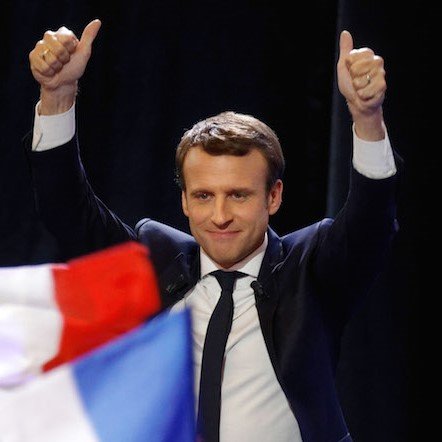
France concluded a highly divisive presidential election campaign. Emmanuel Macron (En Marche!) won 66% of the vote against Marine Le Pen (National Front). The campaign will be seen by historians as having expelled in the first round the traditional parties (Les Républicains, Socialist Party).

The left-right divide, which is so deeply rooted in French history, became a secondary issue compared to a choice between a centrist, pro-European, and liberal position, and a nativist narrative focusing on anti-European and anti-immigration arguments.

The campaign was marked by a debate about the alleged influence of Russia. Le Pen, who has always been the darling of Russian media (and especially of Russia Today), was received on several occasions by senior Russian officials such as Sergei Naryshkin, then Chairman of the State Duma, and then by President Putin himself in March. An endorsement by a foreign leader is not an issue per se. Barack Obama made a small video clip expressing his support for Macron.

The Russian funds given to the National Front through the First Czech Russian Bank in 2014 did not develop into larger financial support. The emergence of Les Républicains candidate Francois Fillon, known for his pro-Russian stance, created new competition for the National Front in getting Moscow’s attention. It was a reminder that many among Les Républicains hope for improving relations with Moscow, both because of tight economic links with Russia, but also because they believe in a kind of Gaullist alliance with Russia and support Moscow’s vision of stability in the Middle-East.

Claims that Russia was interfering in the French political campaign were a repetition of U.S. hysteria on that topic. But just because the Russian media showed preference for Le Pen against Macron does not mean they had any solid way to influence the voters. Yesterdays’ results show that Le Pen, even with 10 million voters behind her, failed to rally the broader majority.

The massive leak of thousands of hacked documents from Macron’s campaign (released on Friday) also did not end up having influence. Cybersecurity pundits said the hack came from Russia-affiliated groups. While this remains to be confirmed, we now see that the leak did not play a role. Contrary to the “Russian threat” narrative spread by some experts during the campaign, Moscow was not able to lead discussions to shape the national political debate. It is thus time to deflate the supersized narrative about Russia’s influence stemming from “Kremlin meddling.”

What will be the new French president’s policy toward Russia? It is too early to say. New in politics and without a structured political party, Macron’s policy will be built depending on his forthcoming government. Macron will seek to build a presidential majority along with members of the Socialist Party, the centrists, and Les Républicains, which leaves the door open for adjustments both in terms of domestic and foreign policy.

We do know that Macron has always displayed a resolute pro-European and pro-NATO stance. Trying to relaunch the European project and work closely with Germany will be one of his main goals. He will probably not show any specific inclination to soften France’s relationship with Russia, but he will have to adapt depending on Russia’s actions in the Syrian theater, the potential spillover effects of which may impact Europe far more than the Ukrainian conflict.

Related Topics
  • France
  • Laruelle
  • Russia
Previous Article
  • In the News | Hовости

В Україну їде американський професор Джошуа Такер, промінентний експерт із виборів і соцмереж

  • May 5, 2017
  • Joshua Tucker
View
Next Article
  • Commentary | Комментарии

Moscow Conference on International Security 2017 – missile defense slides

  • May 8, 2017
  • Dmitry Gorenburg
View
You May Also Like
View
  • Commentary | Комментарии
  • Recommended | Рекомендуем

Clearing the Air: Secretary Blinken Visits Ukraine

  • Volodymyr Dubovyk
  • September 19, 2023
View
  • Commentary | Комментарии
  • Recommended | Рекомендуем

Ensuring Genuine Results? A New Electoral Design in Uzbekistan

  • Akrom Avezov
  • May 19, 2023
View
  • Commentary | Комментарии
  • Recommended | Рекомендуем

Ukraine, Taiwan, and Macron’s “Strategic Autonomy”

  • Maurizio Delli Santi
  • April 30, 2023
View
  • Commentary | Комментарии
  • Recommended | Рекомендуем

Russia’s Regional Governors: Backing the War, Upholding the Status Quo

  • Irina Busygina and Mikhail Filippov
  • April 7, 2023
View
  • Commentary | Комментарии
  • Recommended | Рекомендуем

The Desire to Possess: Russia’s War for Territory

  • Irina Busygina
  • February 8, 2023
View
  • Commentary | Комментарии
  • Recommended | Рекомендуем

Kyiv-Washington Relations in Times of Colossal War: The Ultimate Test of a Strategic Partnership

  • Volodymyr Dubovyk
  • January 11, 2023
View
  • Commentary | Комментарии
  • Recommended | Рекомендуем

Prevailing Soviet Legacies

  • Irina Busygina and Mikhail Filippov
  • December 27, 2022
View
  • Commentary | Комментарии
  • Recommended | Рекомендуем

In Russia’s Nuclear Messaging to West and Ukraine, Putin Plays Both Bad and Good Cop

  • Simon Saradzhyan
  • December 23, 2022

Leave a Reply Cancel reply

Your email address will not be published. Required fields are marked *

PONARS Eurasia
  • About Us
  • Membership
  • Policy Memos
  • Recommended
  • Events
Powered by narva.io

Permissions & Citation Guidelines

Input your search keywords and press Enter.