Image credit/license
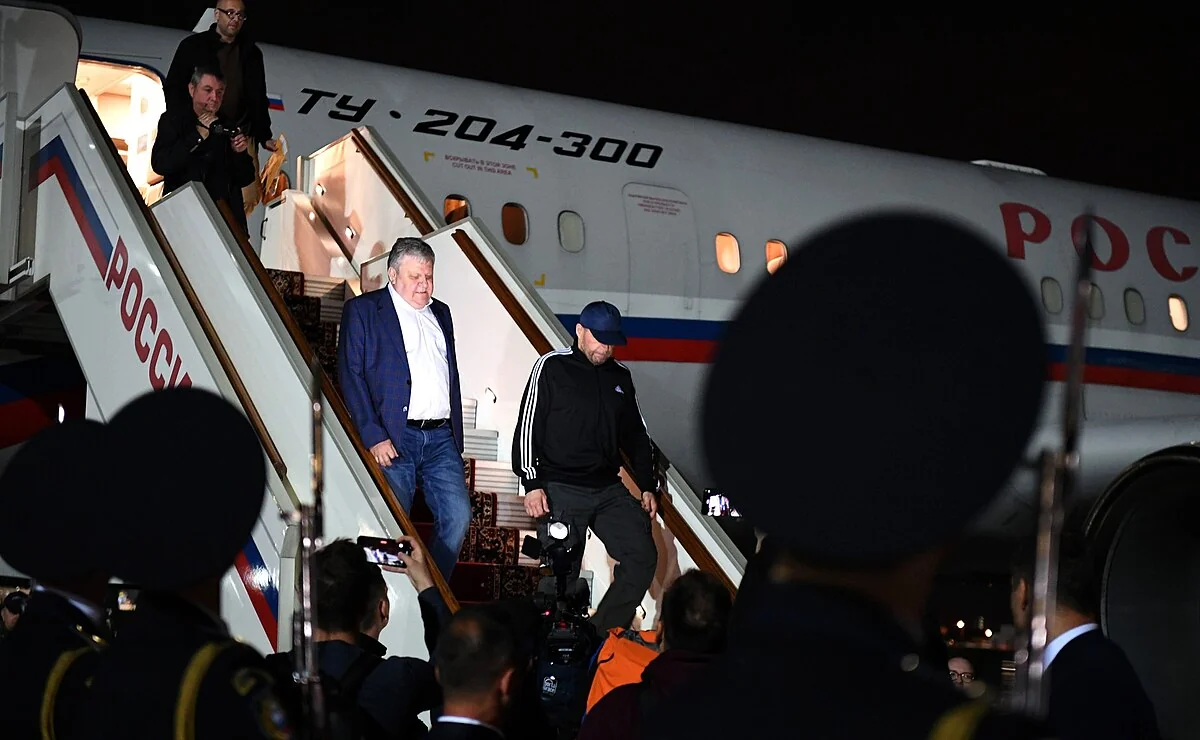
On August 1, 2024, 26 individuals were exchanged in the largest East-West prisoner swap since the end of the Cold War. It included U.S. citizens Paul Whelan, Evan Gershkovich, and Alsu Kurmasheva, as well as many prominent Russian political activists, such as Vladimir Kara-Murza, Ilya Yashin, and Andrei Pivovarov, who had been imprisoned in Russia. In exchange, Russia received convicted murderer Vadim Krasikov and hacker Roman Seleznev, along with several others accused of espionage or other crimes.
After the initial relief and joy at the political prisoners held by Russia being reunited with their family and friends abroad, analysts began to consider the broader implications of the deal. Many worried that the prisoner exchange may incentivize authoritarian regimes like Russia to engage in hostage taking through arbitrary detention. Others argued that the return of hardened criminals to Russia is a miscarriage of justice for victims and their families.
Yet there is little to no discussion of what the prisoner swap means for the growing number of exiled Russian activists. On the one hand, the newly free political prisoners could inject much-needed hope into this global community, providing new leaders who can unite activists outside of Russia. On the other hand, the exchange of political prisoners for assassins and spies could embolden the Kremlin to engage in espionage and transnational persecution of dissidents abroad.
Drawing on in-depth interviews with Russian activists-in-exile in summer 2022 and 2023, as well as previous research on exiled Russian environmentalists, this memo examines the opportunities and challenges of activism-in-exile after the prisoner exchange, with a focus on the renewed challenge of protecting Russian activists abroad from the long arm of Russian transnational repression.
Opportunities and Challenges for Russian Activists-in-Exile
After Russia’s full-scale invasion of Ukraine in February 2022, Russians against the war or fearful of its consequences, or both, scrambled to flee the country. Several scholars have studied this wave of emigration to gain a better understanding of the characteristics of antiwar emigrants and their needs within their new host societies. In my research, I focus on the subset of individuals in this broader wave who were politically active before emigration and ended up leaving Russia due to fear of persecution. Although this has given them the freedom to continue their activism, they now must deal with new constraints and challenges.
My previous research on this population with coauthor Laura Henry has highlighted that Russian activists abroad have more opportunities for “vertical voice” toward the authorities in their host country and international institutions. At the same time, their “horizontal voice” toward their compatriots still in Russia has been diminished. This trade-off underscores the dilemma that many Russian activists face—by leaving Russia, they can remain free and continue their activism from abroad, but they also compromise their legitimacy and limit any connections back home.
The Russian activists recently freed in the August prisoner exchange are a case in point. Yashin told reporters that he did not want to leave Russia but went along with the prisoner swap so as not to jeopardize the release of others. He justified his insistence on staying in the country—despite his 8.5–year prison sentence—by arguing that fleeing would have undermined his legitimacy as a Russian politician. Now that he is abroad, however, Yashin has the opportunity to become part of the broader constellation of exiled Russian opposition activists. A week after his release, he met with over 2,000 supporters in Berlin’s Mauerpark, where he pledged to continue his advocacy from outside of Russia. Even though he has started to mobilize the antiwar Russian diaspora, he remains skeptical that opposition politicians can be effective from abroad.
Other exiled Russian activists have drawn different conclusions. In interviews in summer 2022 and 2023, many of them described having been confronted with the same choice—prison or exile—and said that they ultimately fled Russia because they could be more effective from abroad than from inside of a Russian prison. My research with Russian activists-in-exile in Germany and Estonia shows the many ways that they remain active: Besides continuing their original activities, they engage in antiwar activism and help other Russians and Ukrainians to flee. In Germany, where many Russian activists have received humanitarian visas, they are starting to unite for more coordinated action, evidenced by the Congress of Antiwar Initiatives in Berlin in December 2022 and a gathering of former Russian municipal deputies in Bonn in June 2023.
Despite this nascent coordination and coalition-building, there are still major challenges to uniting the myriad antiwar projects and the worldviews undergirding them. In interviews in 2022 and 2023, activists often lamented the tension between older organizations, founded by exiled opposition politicians who had left in earlier waves, such as the Free Russia Forum, and newer grassroots antiwar initiatives. In addition, by summer 2023, many activists were beginning to show signs of burnout after organizing nonstop for a year with few resources. For this reason, some analysts expect the prisoner swap to reignite the Russian opposition movement abroad by infusing it with new leaders, like Yashin and Kara-Murza, who might help unite the Russian opposition and antiwar activists across the globe.
Among Russia’s exiled activists, reactions to the prisoner exchange were bittersweet. On the one hand, many relished in the joy of the moment, seeing friends and colleagues released, which injected much-needed hope into a downtrodden community. On the other hand, the event brought home the tragic reality that Alexei Navalny had been close to being freed in such a swap before his untimely death in February 2024. Besides this mix of joy and mourning, a third reaction has gripped dissident circles: fear for their personal safety.
Russia’s Activists-in-Exile Fear Transnational Repression
Russian activists-in-exile are on edge for good reason. During the negotiations for the prisoner exchange—as early as 2022—Germany’s leaders were reluctant to release assassin Vadim Krasikov. Krasikov was convicted of murdering a Chechen dissident in broad daylight in Berlin’s Tiergarten Park. The German government was previously praised for its handling of the case in particular and for its awareness of transnational repression and protection of at-risk individuals in general.
The release of Krasikov sent an unwelcome message to exiled Russian activists, who fear for their personal safety, even abroad. In a media interview and video released after the prisoner swap, Yevgeniya Chirikova, one such activist-in-exile, expressed concern that her chances of meeting a similar fate as the Chechen dissident gunned down by Krasikov had gone up. Chirikova, along with many other high-profile Russian opposition activists abroad, has already been affected by transnational repression: Now living in Estonia, she was added to the Russian government’s list of “extremists and terrorists” in February 2024, arrested in absentia in April 2024, and charged with spreading false information about the Russian army in June 2024 because of her pro-Ukraine advocacy abroad.
The Krasikov case was just the latest cause for concern for Russian activists-in-exile. Since the start of Russia’s full-scale invasion of Ukraine in February 2022, several Russian activists and journalists abroad have been victims of poisoning attacks suspected to be linked to the Kremlin. Elena Kostyuchenko, an independent Russian journalist, was poisoned in Munich in October 2022. A week later, former Ekho Moskvy broadcaster Irina Babloyan was poisoned in Georgia. Natalia Arno, the US-based president of the Free Russia Foundation, was poisoned in Prague in May 2023.
When these poisonings were publicized in late 2023, they sent shockwaves through the Russian activist-in-exile community. Even before, Russian activists in Germany and Estonia with knowledge of the poisonings spoke of them in hushed tones in interviews in summer 2023. They provided details of other suspected cases that had yet to be publicized as well. Owing to these fears, activists described sometimes engaging in self-censorship or otherwise taking care not to air publicly their more radical forms of activism from abroad, such as direct support for Ukraine’s war effort. In the words of one interviewee, there is the sense among activists-in-exile that “Russian [government] eyes are all around.”
Evaluating Security Concerns for Exiled Russian Activists
This is not simply paranoia. Russia is well known as a major source of transnational repression, frequently resorting to assassinations and abusing the Interpol system.
The prisoner swap also brought to light the use of “illegals” in Russian spy efforts abroad. Spanish-Russian freelance reporter Pablo Gonzalez, arrested in Poland in 2022 for spying, had gathered information on Russian opposition groups. Undoubtedly, his return to Russia in the exchange further worries Russian exiled activists, like Boris Nemtsov’s daughter Zhanna Nemtsova and Yashin, who were targets of such espionage.
Finally, the Kremlin has made clear that Russian activists abroad are in the regime’s crosshairs. From calling them “traitors” and arresting them in absentia to officially listing them as “terrorist and extremists,” it is clear that the Russian government sees activists-in-exile as a threat. As scholar Alexander Dukalskis and colleagues conclude, if states repress what they deem threatening, then engagement in transnational repression “suggests that authoritarian states include transnational exiles in their perception of threat.”
Steps to Protect Exiled Activists
Although the prisoner swap could potentially inject optimism and new leaders into the Russian activist-in-exile community, the fact is that activists abroad are increasingly vulnerable to transnational repression. Former Russian President Dmitri Medvedev even went so far as to warn the recently freed Russian political prisoners to “disguise themselves” and enlist in witness protection.
Having effected what U.S. President Joe Biden called a “feat of diplomacy” with the prisoner swap, the United States and its European allies now need to invest the time, energy, and resources into protecting activists abroad and reducing the risk of transnational repression. Thus far, the policy response has focused on preventing arbitrary detention and opportunistic hostage taking in Russia, even though Western policymakers have little control over what happens inside a foreign authoritarian state. In contrast, they have much greater control over what happens to Russian activists living within their own borders. The interviews with exiled activists suggest several paths forward. First, reporting mechanisms should be strengthened. Activists describe not knowing how to report suspected cases of transnational repression and harassment, often finding it difficult to convince local police to take their concerns seriously. Local law enforcement officials need training to raise their awareness of the issue and how to report it to the appropriate authorities. Second, those higher-level authorities should monitor and track incidents of transnational repression, coordinating and sharing this information with relevant agencies at all levels of government. Third, NGOs and government agencies that monitor transnational repression should engage in outreach to targeted activists and communities to better understand their concerns and vulnerabilities. This outreach could also include training on digital security to reduce the risk of surveillance and doxing campaigns. While some activists-in-exile are aware of transnational repression and more careful in their online communications, others are less vigilant. Taking these steps would bolster the safety of Russian activists-in-exile and reduce the risk of transnational repression, giving them the opportunity to organize freely and securely in their new democratic host states.
Elizabeth Plantan is an assistant professor of political science at Stetson University.
Image credit/license