PONARS Eurasia
  • About Us
    • Contact Us!
    • Membership
      • All Members
      • Core Members
      • Collegium Members
      • Associate Members
      • About Membership
    • Our Ukraine Experts
    • Executive Committee
  • Our Ukraine Experts
  • Policy Memos
    • List of Policy Memos
    • PONARS Eurasia’s Newest eBooks
    • Submissions
  • Online Academy
  • Events
    • Past Events
  • Recommended
  • Task Forces
    • Ukraine
      • PONARS Ukraine Task Force: Incontrovertible Truths
    • Amplifying Voices of Europe, the Caucasus, and Central Asia (AVECCA)
    • Russia in a Changing Climate
  • Podcasts
Contacts

Address
1957 E St NW,
Washington, DC 20052

[email protected]
202.994.5915

NEWSLETTER
Facebook
Twitter
YouTube
Podcast
PONARS Eurasia
PONARS Eurasia
  • About Us
    • Contact Us!
    • Membership
      • All Members
      • Core Members
      • Collegium Members
      • Associate Members
      • About Membership
    • Our Ukraine Experts
    • Executive Committee
  • Our Ukraine Experts
  • Policy Memos
    • List of Policy Memos
    • PONARS Eurasia’s Newest eBooks
    • Submissions
  • Online Academy
  • Events
    • Past Events
  • Recommended
  • Task Forces
    • Ukraine
      • PONARS Ukraine Task Force: Incontrovertible Truths
    • Amplifying Voices of Europe, the Caucasus, and Central Asia (AVECCA)
    • Russia in a Changing Climate
  • Podcasts
DIGITAL RESOURCES
digital resources

Bookstore 📚

Knowledge Hub

Course Syllabi

Point & Counterpoint

Policy Perspectives

RECOMMENDED
  • Misconceptions about Eastern Europe, the Caucasus, and Central Asia and Their Impact on Policy

    View
  • Five Years into the War, Ukraine Is Showing Grittiness, Rebounding Confidence in War Fortunes

    View
  • Russia’s Wartime Internet: A Contested Space with the Regime Still Predominant

    View
  • Why Georgians Need to Take Hungarian Lessons

    View
  • The ‘Don’t Lose Lukashenko’ Approach: Kyiv’s (Non-) Strategic Ambiguity Toward the Belarusian Opposition

    View
RSS PONARS Eurasia Podcast
  • The Putin-Xi Summit: What's New In Their Joint Communique ? February 23, 2022
    In this week’s PONARS Eurasia Podcast, Maria Lipman speaks with Russian China experts Vita Spivak and Alexander Gabuev about the February meeting between Vladimir Putin and Xi Jinping, and what it may tell us about where the Russian-Chinese relationship is headed.
  • Exploring the Russian Courts' Ruling to Liquidate the Memorial Society January 28, 2022
    In this week’s PONARS Eurasia Podcast, Maria Lipman chats with scholars Kelly Smith and Benjamin Nathans about the history, achievements, and impending shutdown of the Memorial Society, Russia's oldest and most venerable civic organization, and what its imminent liquidation portends for the Russian civil society.
  • Russia's 2021 census and the Kremlin's nationalities policy [Lipman Series 2021] December 9, 2021
    In this week’s PONARS Eurasia Podcast, Maria Lipman chats with social scientist Andrey Shcherbak about the quality of the data collected in the recent population census and the goals of Vladimir Putin's government's nationalities policy
  • Active citizens of any kind are under threat [Lipman Series 2021] November 5, 2021
    In this week’s PONARS Eurasia Podcast, Maria Lipman chats with Alexander Verkhovsky about the Kremlin's ever expanding toolkit against political and civic activists, journalists, and other dissidents.
  • Russia's Legislative Elections followup [Lipman Series 2021] October 4, 2021
    In this week’s PONARS Eurasia Podcast, Maria Lipman chats with Tanya Lokot and Nikolay Petrov about the results of Russia’s legislative elections and about what comes next.
  • Why Is the Kremlin Nervous? [Lipman Series 2021] September 14, 2021
    In this week’s PONARS Eurasia Podcast, Maria Lipman chats with Ben Noble and Nikolay Petrov about Russia’s September 17-19 legislative elections, repressive measures against electoral challengers, and whether to expect anything other than preordained results.
  • Vaccine Hesitancy in Russia, France, and the United States [Lipman Series 2021] August 31, 2021
    In this week's PONARS Eurasia Podcast episode, Maria Lipman chats with Denis Volkov, Naira Davlashyan, and Peter Slevin about why COVID-19 vaccination rates are still so low across the globe, comparing vaccine hesitant constituencies across Russia, France, and the United States.  
  • Is Russia Becoming More Soviet? [Lipman Series 2021] July 26, 2021
      In a new PONARS Eurasia Podcast episode, Maria Lipman chats with Maxim Trudolyubov about the current tightening of the Russian political sphere, asking whether or not it’s helpful to draw comparisons to the late Soviet period.
  • The Evolution of Russia's Political Regime [Lipman Series 2021] June 21, 2021
    In this week's episode of the PONARS Eurasia Podcast, Maria Lipman chats with Grigory Golosov and Henry Hale about the evolution of Russia's political regime, and what to expect in the lead-up to September's Duma elections.
  • Volodymyr Zelensky: Year Two [Lipman Series 2021] May 24, 2021
    In this week's episode of the PONARS Eurasia Podcast, Maria Lipman chats with Sergiy Kudelia and Georgiy Kasianov about Ukrainian President Zelensky's second year in office, and how he has handled the political turbulence of the past year.
  • Commentary | Комментарии

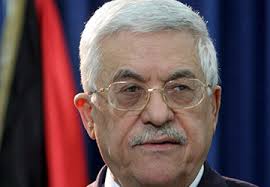
Mahmoud Abbas’ Visit to Karachay-Cherkessia

  • March 22, 2013
  • Sufian Zhemukhov

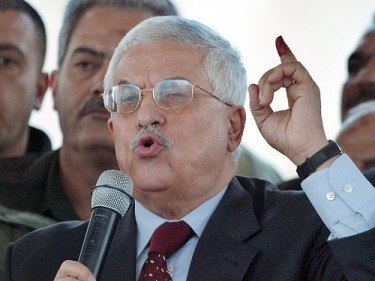
Mahmoud Abbas, President of the Palestinian National Authority, recently visited Karachay-Cherkessia, a Russian republic in the North Caucasus, and met with republican head Rashid Temrezov. I asked three prominent experts to comment on the meeting:

Valeriy Dzutsev, North Caucasus analyst –

Mahmoud Abbas' visit to Karachay-Cherkessia shows that Moscow would like to make use of its allies in the Middle East to pacify the North Caucasus. The ideal figure for such a role is ostensibly pro-Russian and religiously not Orthodox. The criteria for acceptable foreign visitors to the North Caucasus is thus so narrow that there will never be too many of them. Another important feature in the pattern of foreign visits to the North Caucasus is that Moscow promotes the visit of moderate leaders from Islamic countries, while at the same time barring Westerners,  associated with the danger of democratization, "Orange Revolution," and separatism, from having contacts in the region. It seems as if Moscow prefers the North Caucasus to have ties to the Islamic world than to encourage democratization which, in the minds of Russia’s leaders, inevitably leads to separatist demands.

Boris Urusiv, journalist, IA REGNUM –

Mahmoud Abbas has visited Russia about ten times, including to Tatarstan, Bashkortostan, Dagestan, Chechnya, and Chuvashia. On this latest visit, the Palestinian leader was awarded with medals and visited tourist sites and some prosperous companies. Though it has been declared that Palestine and Karachay-Cherkessia will interact in the economic sphere, no documents for economic partnership have been signed. It seems that the only real impact of such a meeting is in the context of Russian policy in the Middle East. I see it as a message from the Kremlin to Arab states – Russia is showing off its policy towards its Muslim minority to a distinguished representative of the Arab elite. That is why the Kremlin choose Karachay-Cherkessia, the most stable region in the North Caucasus, which does not have a radical Islamic insurgency and where the Kremlin has invested successfully in local business, including building the Arkhyz resort. The visit also enables Moscow to demonstrate support for Palestine in its conflict with Israel, which is supposed to balance the differences that the Kremlin has with most Arab regimes concerning the Syrian crisis. Reminding observers about Russia’s traditional support to Palestine, Moscow shows that it is still a friend to the Arab world, in spite of disagreement on the Syrian question. 

Akhmet Yarlykapov, senior scholar, Institute of Ethnology and Anthropology, Russian Academy of Sciences –

It is not the first time that Mahmoud Abbas visited the North Caucasus. During his visit to Dagestan in 2009, Abbas stressed the religious similarities that connect that republic to the people of Palestine. We also have to keep in mind the presence of the rather influential Middle Eastern diaspora of Circassians and other North Caucasians, which might also attract Abbas’ attention to the region. In general, cultural connections between Palestine and the North Caucasus – and Russia’s moral support for Palestine – appear more serious than any anticipated economic partnership between Palestine and Karachay-Cherkessia.
Related Topics
  • Zhemukhov
Previous Article
  • Commentary | Комментарии

Moscow’s Relations with the Palestinian Authority

  • March 22, 2013
  • Sergei Markedonov
View
Next Article
  • In the News | Hовости

“Despite all the drama, it’s been a decent start”

  • March 22, 2013
View
You May Also Like
View
  • Commentary | Комментарии
  • Recommended | Рекомендуем

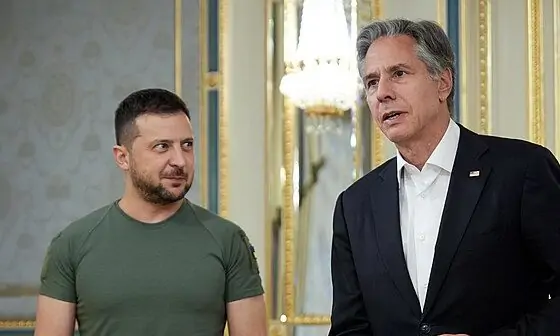
Clearing the Air: Secretary Blinken Visits Ukraine

  • Volodymyr Dubovyk
  • September 19, 2023
View
  • Commentary | Комментарии
  • Recommended | Рекомендуем

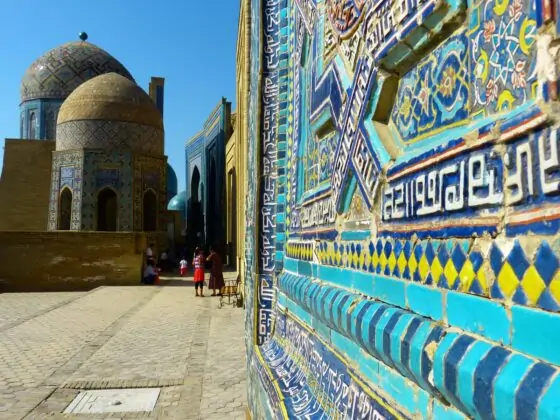
Ensuring Genuine Results? A New Electoral Design in Uzbekistan

  • Akrom Avezov
  • May 19, 2023
View
  • Commentary | Комментарии
  • Recommended | Рекомендуем

Ukraine, Taiwan, and Macron’s “Strategic Autonomy”

  • Maurizio Delli Santi
  • April 30, 2023
View
  • Commentary | Комментарии
  • Recommended | Рекомендуем

Russia’s Regional Governors: Backing the War, Upholding the Status Quo

  • Irina Busygina and Mikhail Filippov
  • April 7, 2023
View
  • Commentary | Комментарии
  • Recommended | Рекомендуем

The Desire to Possess: Russia’s War for Territory

  • Irina Busygina
  • February 8, 2023
View
  • Commentary | Комментарии
  • Recommended | Рекомендуем

Kyiv-Washington Relations in Times of Colossal War: The Ultimate Test of a Strategic Partnership

  • Volodymyr Dubovyk
  • January 11, 2023
View
  • Commentary | Комментарии
  • Recommended | Рекомендуем

Prevailing Soviet Legacies

  • Irina Busygina and Mikhail Filippov
  • December 27, 2022
View
  • Commentary | Комментарии
  • Recommended | Рекомендуем

In Russia’s Nuclear Messaging to West and Ukraine, Putin Plays Both Bad and Good Cop

  • Simon Saradzhyan
  • December 23, 2022

Leave a Reply Cancel reply

Your email address will not be published. Required fields are marked *

PONARS Eurasia
  • About Us
  • Membership
  • Policy Memos
  • Recommended
  • Events
Powered by narva.io

Permissions & Citation Guidelines

Input your search keywords and press Enter.