PONARS Eurasia
  • About Us
    • Contact Us!
    • Membership
      • All Members
      • Core Members
      • Collegium Members
      • Associate Members
      • About Membership
    • Our Ukraine Experts
    • Executive Committee
  • Our Ukraine Experts
  • Policy Memos
    • List of Policy Memos
    • PONARS Eurasia’s Newest eBooks
    • Submissions
  • Online Academy
  • Events
    • Past Events
  • Recommended
  • Task Forces
    • Ukraine
      • PONARS Ukraine Task Force: Incontrovertible Truths
    • Amplifying Voices of Europe, the Caucasus, and Central Asia (AVECCA)
    • Russia in a Changing Climate
  • Podcasts
Contacts

Address
1957 E St NW,
Washington, DC 20052

[email protected]
202.994.5915

NEWSLETTER
Facebook
Twitter
YouTube
Podcast
PONARS Eurasia
PONARS Eurasia
  • About Us
    • Contact Us!
    • Membership
      • All Members
      • Core Members
      • Collegium Members
      • Associate Members
      • About Membership
    • Our Ukraine Experts
    • Executive Committee
  • Our Ukraine Experts
  • Policy Memos
    • List of Policy Memos
    • PONARS Eurasia’s Newest eBooks
    • Submissions
  • Online Academy
  • Events
    • Past Events
  • Recommended
  • Task Forces
    • Ukraine
      • PONARS Ukraine Task Force: Incontrovertible Truths
    • Amplifying Voices of Europe, the Caucasus, and Central Asia (AVECCA)
    • Russia in a Changing Climate
  • Podcasts
DIGITAL RESOURCES
digital resources

Bookstore 📚

Knowledge Hub

Course Syllabi

Point & Counterpoint

Policy Perspectives

RECOMMENDED
  • Misconceptions about Eastern Europe, the Caucasus, and Central Asia and Their Impact on Policy

    View
  • Five Years into the War, Ukraine Is Showing Grittiness, Rebounding Confidence in War Fortunes

    View
  • Russia’s Wartime Internet: A Contested Space with the Regime Still Predominant

    View
  • Why Georgians Need to Take Hungarian Lessons

    View
  • The ‘Don’t Lose Lukashenko’ Approach: Kyiv’s (Non-) Strategic Ambiguity Toward the Belarusian Opposition

    View
RSS PONARS Eurasia Podcast
  • The Putin-Xi Summit: What's New In Their Joint Communique ? February 23, 2022
    In this week’s PONARS Eurasia Podcast, Maria Lipman speaks with Russian China experts Vita Spivak and Alexander Gabuev about the February meeting between Vladimir Putin and Xi Jinping, and what it may tell us about where the Russian-Chinese relationship is headed.
  • Exploring the Russian Courts' Ruling to Liquidate the Memorial Society January 28, 2022
    In this week’s PONARS Eurasia Podcast, Maria Lipman chats with scholars Kelly Smith and Benjamin Nathans about the history, achievements, and impending shutdown of the Memorial Society, Russia's oldest and most venerable civic organization, and what its imminent liquidation portends for the Russian civil society.
  • Russia's 2021 census and the Kremlin's nationalities policy [Lipman Series 2021] December 9, 2021
    In this week’s PONARS Eurasia Podcast, Maria Lipman chats with social scientist Andrey Shcherbak about the quality of the data collected in the recent population census and the goals of Vladimir Putin's government's nationalities policy
  • Active citizens of any kind are under threat [Lipman Series 2021] November 5, 2021
    In this week’s PONARS Eurasia Podcast, Maria Lipman chats with Alexander Verkhovsky about the Kremlin's ever expanding toolkit against political and civic activists, journalists, and other dissidents.
  • Russia's Legislative Elections followup [Lipman Series 2021] October 4, 2021
    In this week’s PONARS Eurasia Podcast, Maria Lipman chats with Tanya Lokot and Nikolay Petrov about the results of Russia’s legislative elections and about what comes next.
  • Why Is the Kremlin Nervous? [Lipman Series 2021] September 14, 2021
    In this week’s PONARS Eurasia Podcast, Maria Lipman chats with Ben Noble and Nikolay Petrov about Russia’s September 17-19 legislative elections, repressive measures against electoral challengers, and whether to expect anything other than preordained results.
  • Vaccine Hesitancy in Russia, France, and the United States [Lipman Series 2021] August 31, 2021
    In this week's PONARS Eurasia Podcast episode, Maria Lipman chats with Denis Volkov, Naira Davlashyan, and Peter Slevin about why COVID-19 vaccination rates are still so low across the globe, comparing vaccine hesitant constituencies across Russia, France, and the United States.  
  • Is Russia Becoming More Soviet? [Lipman Series 2021] July 26, 2021
      In a new PONARS Eurasia Podcast episode, Maria Lipman chats with Maxim Trudolyubov about the current tightening of the Russian political sphere, asking whether or not it’s helpful to draw comparisons to the late Soviet period.
  • The Evolution of Russia's Political Regime [Lipman Series 2021] June 21, 2021
    In this week's episode of the PONARS Eurasia Podcast, Maria Lipman chats with Grigory Golosov and Henry Hale about the evolution of Russia's political regime, and what to expect in the lead-up to September's Duma elections.
  • Volodymyr Zelensky: Year Two [Lipman Series 2021] May 24, 2021
    In this week's episode of the PONARS Eurasia Podcast, Maria Lipman chats with Sergiy Kudelia and Georgiy Kasianov about Ukrainian President Zelensky's second year in office, and how he has handled the political turbulence of the past year.
  • Commentary | Комментарии

Moscow Conference on International Security 2017: Cooperation lost in translation

  • May 10, 2017
  • Dmitry Gorenburg

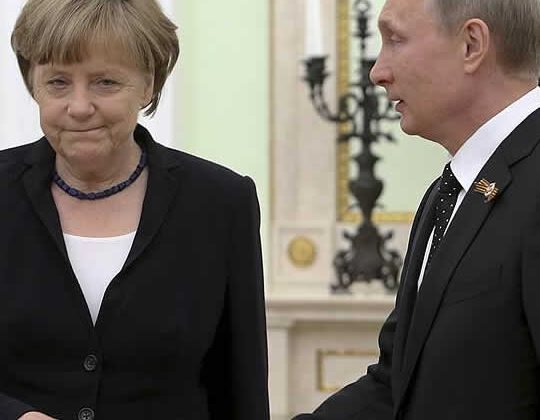
(The National Interest) (Co-authored with Michael Kofman) May is a busy time in Moscow, from tanks drilling on the city’s main thoroughfares in preparation for the annual World War II victory parade to the cavalcade of defense ministers flying in for Russia’s annual Moscow Conference on International Security (MCIS). Since 2012, the Russian Ministry of Defense has endeavored to host its own showpiece conference on international security, an homage to the well-known Munich Security Conference in Germany. Russia’s MCIS is a mix of official diplomacy, international spectacle, and a reason for Russia’s national-security elite to meet with the defense ministers of what are chiefly non-Western countries. In recent years it has become institutionalized, a forum for Russia to advance its policy agenda, present the party line on new issues in international security and, of course, rehash familiar grievances.

Read More © The National Interest

– – – – – – –

Related post on the Russian Military Reform blog:

Mike Kofman and I wrote up our joint impressions of the 2017 MCIS conference for The National Interest. Here’s a taste of the key points.

This year the conference attempted to balance a confrontational tone with offerings of cooperation, in particular on counterterrorism, which was the overall theme for the event. But judging from much of the discussion, the real topic should have been information warfare, which not only made its debut at this conference, but permeated many of the talking points. “Fake news,” “post-truth world” and numerous other terms in the modern discourse on information warfare were sprinkled throughout speeches, with a separate panel dedicated to the topic. “Information war” had clearly arrived in a big way, and not just because nobody could stop looking at their smartphone during the conference.

MCIS 2017 proved another interesting foray into the minds of Russia’s national-security aristocracy, with a veritable lineup of who’s who in terms of leadership, including Nikolai Patrushev, Sergei Shoigu, Sergey Lavrov, Alexander Bortnikov, Sergei Naryshkin and, of course, Chief of the General Staff Valery Gerasimov. However, from the very opening it was clear that Russian leadership was somewhat out of practice when it came to speaking about a cooperative agenda, and while their rancor over long-standing problems with the West came through, the willingness to work together was much less apparent. In general, they had trouble holding back sincerely held sentiments on NATO’s activities in Europe, missile defense and the United States’ foreign policy writ large, which got in the way of the desire to extend an olive branch to the West.

Despite the fire and brimstone, the Russian leadership did signal a desire to reengage with the United States, while compartmentalizing other issues in the relationship, but it was presented on a take-it-or-leave-it basis. Moscow did not come off as desperate to cooperate, but if anything as more firm. Fighting ISIS together was the focal point of Russian commentary on prospective cooperation with the United States, but these points came with reproaches on violating countries’ sovereignty, and the recent cruise missile strike in Syria, which was termed a crude violation of international law. It seemed that Russian officials were trying to speak from a position of strength.

Related Topics
  • Gorenburg
  • Russian Military Reform
Previous Article
  • Recommended | Рекомендуем

Book Review: Identities and Foreign Policies in Russia, Ukraine and Belarus: The Other Europes

  • May 9, 2017
  • Andrey Makarychev
View
Next Article
  • Commentary | Комментарии

Новая сакральная победа для Путина

  • May 11, 2017
  • Pavel Baev
View
You May Also Like
View
  • Commentary | Комментарии
  • Recommended | Рекомендуем

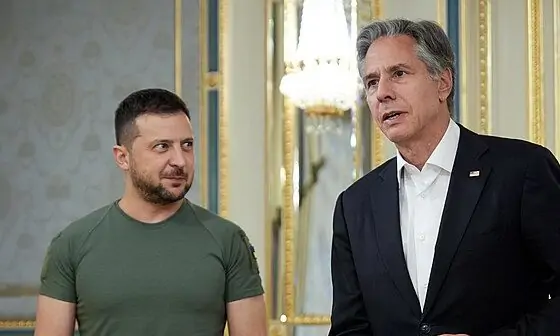
Clearing the Air: Secretary Blinken Visits Ukraine

  • Volodymyr Dubovyk
  • September 19, 2023
View
  • Commentary | Комментарии
  • Recommended | Рекомендуем

Ensuring Genuine Results? A New Electoral Design in Uzbekistan

  • Akrom Avezov
  • May 19, 2023
View
  • Commentary | Комментарии
  • Recommended | Рекомендуем

Ukraine, Taiwan, and Macron’s “Strategic Autonomy”

  • Maurizio Delli Santi
  • April 30, 2023
View
  • Commentary | Комментарии
  • Recommended | Рекомендуем

Russia’s Regional Governors: Backing the War, Upholding the Status Quo

  • Irina Busygina and Mikhail Filippov
  • April 7, 2023
View
  • Commentary | Комментарии
  • Recommended | Рекомендуем

The Desire to Possess: Russia’s War for Territory

  • Irina Busygina
  • February 8, 2023
View
  • Commentary | Комментарии
  • Recommended | Рекомендуем

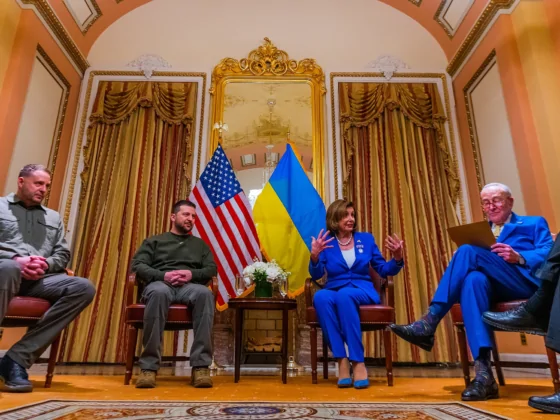
Kyiv-Washington Relations in Times of Colossal War: The Ultimate Test of a Strategic Partnership

  • Volodymyr Dubovyk
  • January 11, 2023
View
  • Commentary | Комментарии
  • Recommended | Рекомендуем

Prevailing Soviet Legacies

  • Irina Busygina and Mikhail Filippov
  • December 27, 2022
View
  • Commentary | Комментарии
  • Recommended | Рекомендуем

In Russia’s Nuclear Messaging to West and Ukraine, Putin Plays Both Bad and Good Cop

  • Simon Saradzhyan
  • December 23, 2022

Leave a Reply Cancel reply

Your email address will not be published. Required fields are marked *

PONARS Eurasia
  • About Us
  • Membership
  • Policy Memos
  • Recommended
  • Events
Powered by narva.io

Permissions & Citation Guidelines

Input your search keywords and press Enter.