PONARS Eurasia
  • About Us
    • Contact Us!
    • Membership
      • All Members
      • Core Members
      • Collegium Members
      • Associate Members
      • About Membership
    • Our Ukraine Experts
    • Executive Committee
  • Our Ukraine Experts
  • Policy Memos
    • List of Policy Memos
    • PONARS Eurasia’s Newest eBooks
    • Submissions
  • Online Academy
  • Events
    • Past Events
  • Recommended
  • Task Forces
    • Ukraine
      • PONARS Ukraine Task Force: Incontrovertible Truths
    • Amplifying Voices of Europe, the Caucasus, and Central Asia (AVECCA)
    • Russia in a Changing Climate
  • Podcasts
Contacts

Address
1957 E St NW,
Washington, DC 20052

[email protected]
202.994.5915

NEWSLETTER
Facebook
Twitter
YouTube
Podcast
PONARS Eurasia
PONARS Eurasia
  • About Us
    • Contact Us!
    • Membership
      • All Members
      • Core Members
      • Collegium Members
      • Associate Members
      • About Membership
    • Our Ukraine Experts
    • Executive Committee
  • Our Ukraine Experts
  • Policy Memos
    • List of Policy Memos
    • PONARS Eurasia’s Newest eBooks
    • Submissions
  • Online Academy
  • Events
    • Past Events
  • Recommended
  • Task Forces
    • Ukraine
      • PONARS Ukraine Task Force: Incontrovertible Truths
    • Amplifying Voices of Europe, the Caucasus, and Central Asia (AVECCA)
    • Russia in a Changing Climate
  • Podcasts
DIGITAL RESOURCES
digital resources

Bookstore 📚

Knowledge Hub

Course Syllabi

Point & Counterpoint

Policy Perspectives

RECOMMENDED
  • Misconceptions about Eastern Europe, the Caucasus, and Central Asia and Their Impact on Policy

    View
  • Five Years into the War, Ukraine Is Showing Grittiness, Rebounding Confidence in War Fortunes

    View
  • Russia’s Wartime Internet: A Contested Space with the Regime Still Predominant

    View
  • Why Georgians Need to Take Hungarian Lessons

    View
  • The ‘Don’t Lose Lukashenko’ Approach: Kyiv’s (Non-) Strategic Ambiguity Toward the Belarusian Opposition

    View
RSS PONARS Eurasia Podcast
  • The Putin-Xi Summit: What's New In Their Joint Communique ? February 23, 2022
    In this week’s PONARS Eurasia Podcast, Maria Lipman speaks with Russian China experts Vita Spivak and Alexander Gabuev about the February meeting between Vladimir Putin and Xi Jinping, and what it may tell us about where the Russian-Chinese relationship is headed.
  • Exploring the Russian Courts' Ruling to Liquidate the Memorial Society January 28, 2022
    In this week’s PONARS Eurasia Podcast, Maria Lipman chats with scholars Kelly Smith and Benjamin Nathans about the history, achievements, and impending shutdown of the Memorial Society, Russia's oldest and most venerable civic organization, and what its imminent liquidation portends for the Russian civil society.
  • Russia's 2021 census and the Kremlin's nationalities policy [Lipman Series 2021] December 9, 2021
    In this week’s PONARS Eurasia Podcast, Maria Lipman chats with social scientist Andrey Shcherbak about the quality of the data collected in the recent population census and the goals of Vladimir Putin's government's nationalities policy
  • Active citizens of any kind are under threat [Lipman Series 2021] November 5, 2021
    In this week’s PONARS Eurasia Podcast, Maria Lipman chats with Alexander Verkhovsky about the Kremlin's ever expanding toolkit against political and civic activists, journalists, and other dissidents.
  • Russia's Legislative Elections followup [Lipman Series 2021] October 4, 2021
    In this week’s PONARS Eurasia Podcast, Maria Lipman chats with Tanya Lokot and Nikolay Petrov about the results of Russia’s legislative elections and about what comes next.
  • Why Is the Kremlin Nervous? [Lipman Series 2021] September 14, 2021
    In this week’s PONARS Eurasia Podcast, Maria Lipman chats with Ben Noble and Nikolay Petrov about Russia’s September 17-19 legislative elections, repressive measures against electoral challengers, and whether to expect anything other than preordained results.
  • Vaccine Hesitancy in Russia, France, and the United States [Lipman Series 2021] August 31, 2021
    In this week's PONARS Eurasia Podcast episode, Maria Lipman chats with Denis Volkov, Naira Davlashyan, and Peter Slevin about why COVID-19 vaccination rates are still so low across the globe, comparing vaccine hesitant constituencies across Russia, France, and the United States.  
  • Is Russia Becoming More Soviet? [Lipman Series 2021] July 26, 2021
      In a new PONARS Eurasia Podcast episode, Maria Lipman chats with Maxim Trudolyubov about the current tightening of the Russian political sphere, asking whether or not it’s helpful to draw comparisons to the late Soviet period.
  • The Evolution of Russia's Political Regime [Lipman Series 2021] June 21, 2021
    In this week's episode of the PONARS Eurasia Podcast, Maria Lipman chats with Grigory Golosov and Henry Hale about the evolution of Russia's political regime, and what to expect in the lead-up to September's Duma elections.
  • Volodymyr Zelensky: Year Two [Lipman Series 2021] May 24, 2021
    In this week's episode of the PONARS Eurasia Podcast, Maria Lipman chats with Sergiy Kudelia and Georgiy Kasianov about Ukrainian President Zelensky's second year in office, and how he has handled the political turbulence of the past year.
  • Commentary | Комментарии

Only Bracketed Islands of Interaction between Russia and its Neighbors

  • October 31, 2013
  • Andrey Makarychev

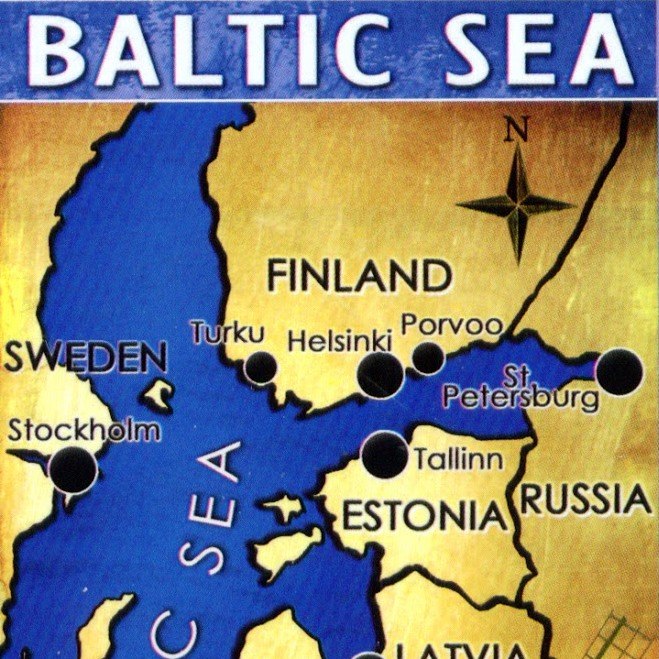
The Baltic Sea region is definitely one of the best examples of region-building in Europe. It is home to such world leaders in innovation as Denmark, Finland, Sweden, and Germany and the region has become an attractive international brand. Baltic studies is a popular research field since this is the region where such fashionable concepts as de-bordering, overlapping identities, governance without government, de-securitization, and other similar concepts and policies were either conceived or tested. Some even think that the Baltic Sea region is on its way to acquiring the key component of any successful regional community—its own identity.

Yet is this indeed happening? If we choose to measure the progress of region-building with established identity criteria, we ought to admit that this region is deeply split, with the EU member states on one side and Russia on the other. For example, the EU's Baltic policies have always been ecologically friendly, making the Kremlin's offensive against Greenpeace activists in northern Russia an especially sensitive issue for Baltic and Nordic countries. A Sunday mass in a Helsinki cathedral even included a prayer for the environmental activists who have been accused of piracy by the Russian court.

Russia's recent presidency in the Council of Baltic Sea States did not improve the country’s credentials. As a colleague of mine mentioned during an informal exchange of views following the “Frameworks for University Cooperation in the Baltic Sea Region Conference” held in Turku (Finland), Russia was mainly interested in avoiding direct clashes with the West during its presidency (as was also the case during its G20 chairmanship) and, likewise, was also not concerned with promoting any kind of coherent vision for the future.

Of course, there are some islands of interaction between Russia and its Baltic neighbors – the Euro Faculty in Pskov being one example. Yet, as some commentators in Turku assumed, it is hard to measure the degree of success of such projects beyond the formal figures meant for reporting purposes. As the case of Kaliningrad State University shows, on the surface one might see multiple signs of openness to Europe, but in substance, some politically relevant issues are being bracketed off. Based on my personal experience, I can refer, for example, to discussions on Germany's policies toward this enclave, an issue considered too politically sensitive for the Russian officialdom to give a green light to.

One more example of a successful university-based cooperation given at the conference in Turku was the experience of the Stockholm School of Economics in Moscow. However, while figures may be impressive, operating in the Russian educational market is unfortunately possible only under the condition of "keeping close and good ties to the Russian establishment." After all the nice talks about alleged common values, Professor Anders Liljenberg expressed the simple formula for success: "As soon as Putin wants us to stay, we will.” Of course, this sets limitations on the content of academic programs. I asked Professor Liljenberg if it would ever be possible to offer a course on corruption in Russia in Moscow and invite independent experts as guest lecturers to talk about the political economy of mega-events in Russia such as the Sochi Olympics. I received a very telling answer: "Of course we have to be cautious. I myself, for example, started telling my Russian students stories of corruption in Sweden.” At that remark, some people in the audience started giggling ironically.

Without relinquishing the very debates on Russia's engagement with its Baltic partners in educational and academic projects, we have to face what is for many the harsh and unpleasant reality that the Russian educational system is increasingly criticized within the country itself for its gross mismanagement, declining professional standards (with mass-scale plagiarism as the best evidence for this), widespread corruption, and huge gaps in salaries between university bosses and ordinary staff. The creeping politicization of education, the growth of clerical trends, and brain drain add more skepticism to the overall picture.

Some colleagues from St. Petersburg and Pskov suggested that such a scenario is much too gloomy and that there is no direct linkage between the authoritarian devolution of the Putin regime and the country’s deteriorating educational situation. I personally doubt that they are correct. Of course, one may try to dub Russia's troubles as simply "challenges" that we all need to overcome at some point, yet one should also remember that such challenges usually have authors and consequences. One of the Russian participants suggested that perhaps those in Europe who want to further cooperate with Russian universities should refrain from referring to such concepts as soft power and public diplomacy. The reason? They have mostly negative connotations in the Kremlin. Do we need any better proof for the growing alienation between Russia and its western neighbors?


Related Topics
  • Baltics
  • EU
  • Makarychev
  • Russia
Previous Article
  • Recommended | Рекомендуем

New Policy Memo: The Politics of Sports Mega-Events in Russia: Kazan, Sochi, and Beyond

  • October 29, 2013
  • Andrey Makarychev
View
Next Article
  • Recommended | Рекомендуем

Policy Memo: Managing the Threat of an Olympics Boycott: International Pressure and Russia’s Response

  • October 31, 2013
  • Sufian Zhemukhov
View
You May Also Like
View
  • Commentary | Комментарии
  • Recommended | Рекомендуем

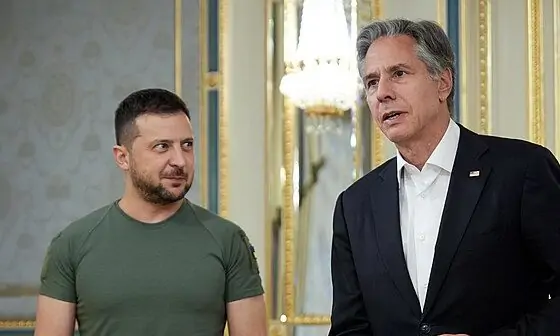
Clearing the Air: Secretary Blinken Visits Ukraine

  • Volodymyr Dubovyk
  • September 19, 2023
View
  • Commentary | Комментарии
  • Recommended | Рекомендуем

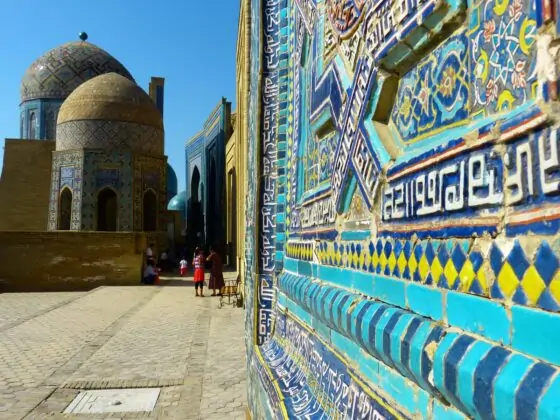
Ensuring Genuine Results? A New Electoral Design in Uzbekistan

  • Akrom Avezov
  • May 19, 2023
View
  • Commentary | Комментарии
  • Recommended | Рекомендуем

Ukraine, Taiwan, and Macron’s “Strategic Autonomy”

  • Maurizio Delli Santi
  • April 30, 2023
View
  • Commentary | Комментарии
  • Recommended | Рекомендуем

Russia’s Regional Governors: Backing the War, Upholding the Status Quo

  • Irina Busygina and Mikhail Filippov
  • April 7, 2023
View
  • Commentary | Комментарии
  • Recommended | Рекомендуем

The Desire to Possess: Russia’s War for Territory

  • Irina Busygina
  • February 8, 2023
View
  • Commentary | Комментарии
  • Recommended | Рекомендуем

Kyiv-Washington Relations in Times of Colossal War: The Ultimate Test of a Strategic Partnership

  • Volodymyr Dubovyk
  • January 11, 2023
View
  • Commentary | Комментарии
  • Recommended | Рекомендуем

Prevailing Soviet Legacies

  • Irina Busygina and Mikhail Filippov
  • December 27, 2022
View
  • Commentary | Комментарии
  • Recommended | Рекомендуем

In Russia’s Nuclear Messaging to West and Ukraine, Putin Plays Both Bad and Good Cop

  • Simon Saradzhyan
  • December 23, 2022

Leave a Reply Cancel reply

Your email address will not be published. Required fields are marked *

PONARS Eurasia
  • About Us
  • Membership
  • Policy Memos
  • Recommended
  • Events
Powered by narva.io

Permissions & Citation Guidelines

Input your search keywords and press Enter.