PONARS Eurasia
  • About Us
    • Contact Us!
    • Membership
      • All Members
      • Core Members
      • Collegium Members
      • Associate Members
      • About Membership
    • Our Ukraine Experts
    • Executive Committee
  • Our Ukraine Experts
  • Policy Memos
    • List of Policy Memos
    • PONARS Eurasia’s Newest eBooks
    • Submissions
  • Online Academy
  • Events
    • Past Events
  • Recommended
  • Task Forces
    • Ukraine
      • PONARS Ukraine Task Force: Incontrovertible Truths
    • Amplifying Voices of Europe, the Caucasus, and Central Asia (AVECCA)
    • Russia in a Changing Climate
  • Podcasts
Contacts

Address
1957 E St NW,
Washington, DC 20052

[email protected]
202.994.5915

NEWSLETTER
Facebook
Twitter
YouTube
Podcast
PONARS Eurasia
PONARS Eurasia
  • About Us
    • Contact Us!
    • Membership
      • All Members
      • Core Members
      • Collegium Members
      • Associate Members
      • About Membership
    • Our Ukraine Experts
    • Executive Committee
  • Our Ukraine Experts
  • Policy Memos
    • List of Policy Memos
    • PONARS Eurasia’s Newest eBooks
    • Submissions
  • Online Academy
  • Events
    • Past Events
  • Recommended
  • Task Forces
    • Ukraine
      • PONARS Ukraine Task Force: Incontrovertible Truths
    • Amplifying Voices of Europe, the Caucasus, and Central Asia (AVECCA)
    • Russia in a Changing Climate
  • Podcasts
DIGITAL RESOURCES
digital resources

Bookstore 📚

Knowledge Hub

Course Syllabi

Point & Counterpoint

Policy Perspectives

RECOMMENDED
  • Misconceptions about Eastern Europe, the Caucasus, and Central Asia and Their Impact on Policy

    View
  • Five Years into the War, Ukraine Is Showing Grittiness, Rebounding Confidence in War Fortunes

    View
  • Russia’s Wartime Internet: A Contested Space with the Regime Still Predominant

    View
  • Why Georgians Need to Take Hungarian Lessons

    View
  • The ‘Don’t Lose Lukashenko’ Approach: Kyiv’s (Non-) Strategic Ambiguity Toward the Belarusian Opposition

    View
RSS PONARS Eurasia Podcast
  • The Putin-Xi Summit: What's New In Their Joint Communique ? February 23, 2022
    In this week’s PONARS Eurasia Podcast, Maria Lipman speaks with Russian China experts Vita Spivak and Alexander Gabuev about the February meeting between Vladimir Putin and Xi Jinping, and what it may tell us about where the Russian-Chinese relationship is headed.
  • Exploring the Russian Courts' Ruling to Liquidate the Memorial Society January 28, 2022
    In this week’s PONARS Eurasia Podcast, Maria Lipman chats with scholars Kelly Smith and Benjamin Nathans about the history, achievements, and impending shutdown of the Memorial Society, Russia's oldest and most venerable civic organization, and what its imminent liquidation portends for the Russian civil society.
  • Russia's 2021 census and the Kremlin's nationalities policy [Lipman Series 2021] December 9, 2021
    In this week’s PONARS Eurasia Podcast, Maria Lipman chats with social scientist Andrey Shcherbak about the quality of the data collected in the recent population census and the goals of Vladimir Putin's government's nationalities policy
  • Active citizens of any kind are under threat [Lipman Series 2021] November 5, 2021
    In this week’s PONARS Eurasia Podcast, Maria Lipman chats with Alexander Verkhovsky about the Kremlin's ever expanding toolkit against political and civic activists, journalists, and other dissidents.
  • Russia's Legislative Elections followup [Lipman Series 2021] October 4, 2021
    In this week’s PONARS Eurasia Podcast, Maria Lipman chats with Tanya Lokot and Nikolay Petrov about the results of Russia’s legislative elections and about what comes next.
  • Why Is the Kremlin Nervous? [Lipman Series 2021] September 14, 2021
    In this week’s PONARS Eurasia Podcast, Maria Lipman chats with Ben Noble and Nikolay Petrov about Russia’s September 17-19 legislative elections, repressive measures against electoral challengers, and whether to expect anything other than preordained results.
  • Vaccine Hesitancy in Russia, France, and the United States [Lipman Series 2021] August 31, 2021
    In this week's PONARS Eurasia Podcast episode, Maria Lipman chats with Denis Volkov, Naira Davlashyan, and Peter Slevin about why COVID-19 vaccination rates are still so low across the globe, comparing vaccine hesitant constituencies across Russia, France, and the United States.  
  • Is Russia Becoming More Soviet? [Lipman Series 2021] July 26, 2021
      In a new PONARS Eurasia Podcast episode, Maria Lipman chats with Maxim Trudolyubov about the current tightening of the Russian political sphere, asking whether or not it’s helpful to draw comparisons to the late Soviet period.
  • The Evolution of Russia's Political Regime [Lipman Series 2021] June 21, 2021
    In this week's episode of the PONARS Eurasia Podcast, Maria Lipman chats with Grigory Golosov and Henry Hale about the evolution of Russia's political regime, and what to expect in the lead-up to September's Duma elections.
  • Volodymyr Zelensky: Year Two [Lipman Series 2021] May 24, 2021
    In this week's episode of the PONARS Eurasia Podcast, Maria Lipman chats with Sergiy Kudelia and Georgiy Kasianov about Ukrainian President Zelensky's second year in office, and how he has handled the political turbulence of the past year.
  • Recommended | Рекомендуем

PONARS Eurasia Policy Conference 2016

  • September 1, 2016
  • PONARS Eurasia
 

September 23-24, 2016

GW Elliott School of International Affairs

1957 E Street NW, Washington, DC


Agenda


Day 1 – Friday, September 23, 2016

8:30-9:00 am   Registration  (1957 E St. NW, Ground Floor Lobby)


9:00-11:00 am   Welcome & Panel 1: Russia’s 2016 Parliamentary Elections

Lindner Commons, Elliott School, 6th Floor

   Vladimir Gel’man, European University at St. Petersburg & University of Helsinki

   Correction of Errors: How the Kremlin Re-equilibrated Authoritarian Elections in 2016

   Tomila Lankina, London School of Economics

   The Kremlin-controlled Media’s Coverage of Protest in Russia and Ukraine

   Nikolay Petrov, Higher School of Economics, Moscow

   The End of the Chapter: 2016 State Duma Elections and Political Development

   Regina Smyth, Indiana University

   Russia's 2016-2018 Election Cycle: Popular Engagement and Protest Potential


11:00-11:15 am  Coffee Break


11:15-1:00 pm   Panel 2A: Russia’s Strategic Outlook

Lindner Commons, Elliott School, 6th Floor (Breakout session)

   Samuel Charap, International Institute for Strategic Studies

   Russia’s Use of Military Force as a Foreign Policy Tool

   Dmitry Gorenburg, CNA & Harvard University

   Russia's Strategic Calculus

   Mikhail Rykhtik, N. I. Lobachevsky State University of Nizhni Novgorod

   Values in Contemporary Foreign Policy: Russian Perspectives

   Mikhail Troitskiy, Moscow State Institute of International Relations (MGIMO)

   Massaging Egos: Can Status Politics Facilitate US-Russia Cooperation?


11:15-1:00 pm   Panel 2B: Economy and Society in Eurasia

State Room, Elliott School, 7th Floor (Breakout session)

   Andrew Barnes, Kent State University

   Beyond the IMF and “Political Will”: The Emerging Political Economy of Ukraine

   Natalie Koch, Syracuse University and Anar Valiyev, Azerbaijan Diplomatic

   Academy, Baku

   Restructuring Extractive Economies in the Caspian Basin: Too Little, too Late?

   Eric McGlinchey, George Mason University

   Succession in Uzbekistan

   Georgi Derluguian, New York University Abu Dhabi (NYUAD)

   Ending the Post-Soviet Restoration in Armenia


1:00-2:00 pm   Lunch Served, 7th floor lobby


2:00-3:30 pm   Panel 3A: Countering Terrorism and Violent Extremism

Lindner Commons, Elliott School, 6th Floor (Breakout session)

   George Gavrilis, independent consultant

   Counter-Radicalization Policies in Central Asia: The Good, the Bad, and the Ugly

   Mariya Omelicheva, University of Kansas

   CSTO and SCO: Stuck on the Old Ways of Dealing with Security Threats

   Ekaterina Stepanova, Institute of the World Economy & International

   Relations (IMEMO), Moscow

   Directions for the US-Russia Cooperation on Countering Violent Extremism


2:00-3:30 pm   Panel 3B: Assessing European and Eurasian Partnerships

State Room, Elliott School, 7th Floor (Breakout session)

   Kornely Kakachia, Ivane Javakhishvili Tbilisi State University & Georgian

   Institute of Politics

   Reluctant Partner: Georgian-German Relations Revisited

   Arkady Moshes, Finnish Institute of International Affairs

   Lukashenko’s ”Drift to the West”: Why Moscow Does Not Need to Be Worried

   Scott Radnitz, University of Washington

   Strategic Solidarity: How Central Asia Responds to the Kremlin's Exhortations


3:30-3:45 pm  Coffee Break


3:45-5:30 pm   Panel 4: Taking Stock of Ukraine Today

Lindner Commons, Elliott School, 6th Floor

   Mikhail Alexseev, San Diego State University

   A Poisoned Chalice: How the Minsk Accords Destabilize Ukraine

   Volodymyr Dubovyk, Mechnikov National University, Odessa

   Is Ukraine Becoming a Client State of the United States?

   Oleksandr Fisun, Kharkiv National University

   The Changing Nature of Ukrainian Politics

   Volodymyr Kulyk, National Academy of Sciences of Ukraine, Kyiv

   Memory and Language: Explaining the Post-Maidan Ukrainian Government’s

   Different Policies on Two Controversial Issues

   Oleksandr Sushko, Institute for Euro-Atlantic Cooperation, Kyiv

   Two Years after the First Minsk Agreements: Is There a Way Out of the Deadlock?


Day 2 – Saturday, September 24, 2016

8:30-9:00 am   Registration  1957 E St. NW, 6th Floor


9:00-10:45 am   Panel 1: Russia’s Foreign Relations

Lindner Commons, Elliott School, 6th Floor

   Pavel Baev, Peace Research Institute Oslo

   Mistrust Sets Low Ceiling for Russia-China Partnership

   Serghei Golunov, Kyushu University

   Russia's Cross-border Cooperation with Kazakhstan, Mongolia, and

   North Korea: China as a Third Force

   Elizabeth Wishnick, Montclair University

   Russians Are Coming, the Russians Are Coming…US-Russia Relations in the Arctic

   Ayşe Zarakol, University of Cambridge

   Turkey and Russia, Erdoğan and Putin


10:45-11:00 am   Coffee Break


11:00-12:30 pm   Panel 2: Trends in Russian Strategic Approaches

Lindner Commons, Elliott School, 6th Floor

   Sergey Minasyan, Caucasus Institute, Yerevan

   Russian Conventional Deterrence: from Warfighting to Political Strategy

   (There and Back Again?)

   Polina Sinovets, Mechnikov National University, Odessa

   European Missile Defense and Russia: Any Chance for a Dialogue?

   Nikolai Sokov, Middlebury Institute of International Studies at Monterey

   Emerging Russian Modern Conventional Strike Capability: Implications for Eurasia


12:30-1:00 pm   Lunch Served, 6th Floor Lobby


1:00-2:45 pm   Panel 3: Political Culture and Identity in Russia

Lindner Commons, Elliott School, 6th Floor

   Theodore Gerber, University of Wisconsin-Madison

   Political and Social Attitudes of Russia’s Muslims: Caliphate, Kadyrovism, or Kasha?

   J. Paul Goode, University of Bath

   Patriotism without Patriots? The Limits of Patriotic Mobilization in Russia

   Mark Kramer, Harvard University

   Public Sentiment in Russia about the Status of Chechnya

   Marlene Laruelle, George Washington University

   The Kremlin’s New Headache: How to Celebrate the 1917 Commemorations?


Please note: Slight changes may be made to the Agenda. Abstracts of the proceedings, based on Policy Memos authored by panelists, will be available at the conference. Policy Memos will be published in full over the next few months. 


For more information, please contact: [email protected]


Related Topics
  • Annual Conference
Previous Article
  • In the News | Hовости

Фильм о «Нацдвижении»: чтобы помнили

  • September 1, 2016
  • Kornely Kakachia
View
Next Article
  • Recommended | Рекомендуем

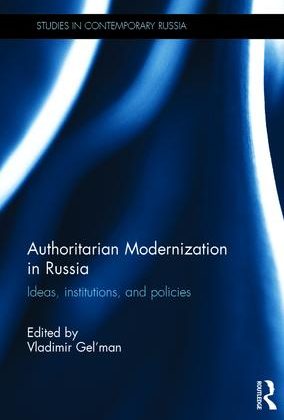
Authoritarian Modernization in Russia

  • September 1, 2016
  • Vladimir Gel'man
View
You May Also Like
View
  • Policy Memos | Аналитика
  • Recommended | Рекомендуем

Misconceptions about Eastern Europe, the Caucasus, and Central Asia and Their Impact on Policy

  • Tomila Lankina, Kelly McMann, Mariya Omelicheva, Emil Dzhuraev, Paul Goode, Nona Shahnazarian, Ivan Gomza and Guzel Yusupova
  • August 26, 2026
View
  • Policy Memos | Аналитика
  • Recommended | Рекомендуем

Five Years into the War, Ukraine Is Showing Grittiness, Rebounding Confidence in War Fortunes

  • Henry Hale, Serhii Dembitskyi and Mikhail Alexseev
  • July 27, 2026
View
  • Policy Memos | Аналитика
  • Recommended | Рекомендуем

Russia’s Wartime Internet: A Contested Space with the Regime Still Predominant

  • Irina Busygina and Mikhail Filippov
  • June 24, 2026
View
  • Policy Memos | Аналитика
  • Recommended | Рекомендуем

Why Georgians Need to Take Hungarian Lessons

  • Stephen F. Jones
  • May 18, 2026
View
  • Policy Memos | Аналитика
  • Recommended | Рекомендуем

The ‘Don’t Lose Lukashenko’ Approach: Kyiv’s (Non-) Strategic Ambiguity Toward the Belarusian Opposition

  • Boris Ginzburg
  • February 23, 2026
View
  • Policy Memos | Аналитика
  • Recommended | Рекомендуем

Too Much, Too Late? The Impact of Secrecy on Efforts to Mediate an End to the Russia-Ukraine War

  • Mikhail Troitskiy
  • February 23, 2026
View
  • Policy Memos | Аналитика
  • Recommended | Рекомендуем

A Deal with the Devil: Lukashenko Navigates Domestic and External Vulnerabilities in Managing Relations with Russia

  • Ryhor Nizhnikau and Arkady Moshes
  • February 9, 2026
View
  • Policy Memos | Аналитика
  • Recommended | Рекомендуем

Peacemaking Russian Style: Negotiations as the Continuation of War by Other Means

  • Pavel Baev
  • January 26, 2026

Leave a Reply Cancel reply

Your email address will not be published. Required fields are marked *

PONARS Eurasia
  • About Us
  • Membership
  • Policy Memos
  • Recommended
  • Events
Powered by narva.io

Permissions & Citation Guidelines

Input your search keywords and press Enter.