PONARS Eurasia
  • About Us
    • Contact Us!
    • Membership
      • All Members
      • Core Members
      • Collegium Members
      • Associate Members
      • About Membership
    • Our Ukraine Experts
    • Executive Committee
  • Our Ukraine Experts
  • Policy Memos
    • List of Policy Memos
    • PONARS Eurasia’s Newest eBooks
    • Submissions
  • Online Academy
  • Events
    • Past Events
  • Recommended
  • Task Forces
    • Ukraine
      • PONARS Ukraine Task Force: Incontrovertible Truths
    • Amplifying Voices of Europe, the Caucasus, and Central Asia (AVECCA)
    • Russia in a Changing Climate
  • Podcasts
Contacts

Address
1957 E St NW,
Washington, DC 20052

[email protected]
202.994.5915

NEWSLETTER
Facebook
Twitter
YouTube
Podcast
PONARS Eurasia
PONARS Eurasia
  • About Us
    • Contact Us!
    • Membership
      • All Members
      • Core Members
      • Collegium Members
      • Associate Members
      • About Membership
    • Our Ukraine Experts
    • Executive Committee
  • Our Ukraine Experts
  • Policy Memos
    • List of Policy Memos
    • PONARS Eurasia’s Newest eBooks
    • Submissions
  • Online Academy
  • Events
    • Past Events
  • Recommended
  • Task Forces
    • Ukraine
      • PONARS Ukraine Task Force: Incontrovertible Truths
    • Amplifying Voices of Europe, the Caucasus, and Central Asia (AVECCA)
    • Russia in a Changing Climate
  • Podcasts
DIGITAL RESOURCES
digital resources

Bookstore 📚

Knowledge Hub

Course Syllabi

Point & Counterpoint

Policy Perspectives

RECOMMENDED
  • Misconceptions about Eastern Europe, the Caucasus, and Central Asia and Their Impact on Policy

    View
  • Five Years into the War, Ukraine Is Showing Grittiness, Rebounding Confidence in War Fortunes

    View
  • Russia’s Wartime Internet: A Contested Space with the Regime Still Predominant

    View
  • Why Georgians Need to Take Hungarian Lessons

    View
  • The ‘Don’t Lose Lukashenko’ Approach: Kyiv’s (Non-) Strategic Ambiguity Toward the Belarusian Opposition

    View
RSS PONARS Eurasia Podcast
  • The Putin-Xi Summit: What's New In Their Joint Communique ? February 23, 2022
    In this week’s PONARS Eurasia Podcast, Maria Lipman speaks with Russian China experts Vita Spivak and Alexander Gabuev about the February meeting between Vladimir Putin and Xi Jinping, and what it may tell us about where the Russian-Chinese relationship is headed.
  • Exploring the Russian Courts' Ruling to Liquidate the Memorial Society January 28, 2022
    In this week’s PONARS Eurasia Podcast, Maria Lipman chats with scholars Kelly Smith and Benjamin Nathans about the history, achievements, and impending shutdown of the Memorial Society, Russia's oldest and most venerable civic organization, and what its imminent liquidation portends for the Russian civil society.
  • Russia's 2021 census and the Kremlin's nationalities policy [Lipman Series 2021] December 9, 2021
    In this week’s PONARS Eurasia Podcast, Maria Lipman chats with social scientist Andrey Shcherbak about the quality of the data collected in the recent population census and the goals of Vladimir Putin's government's nationalities policy
  • Active citizens of any kind are under threat [Lipman Series 2021] November 5, 2021
    In this week’s PONARS Eurasia Podcast, Maria Lipman chats with Alexander Verkhovsky about the Kremlin's ever expanding toolkit against political and civic activists, journalists, and other dissidents.
  • Russia's Legislative Elections followup [Lipman Series 2021] October 4, 2021
    In this week’s PONARS Eurasia Podcast, Maria Lipman chats with Tanya Lokot and Nikolay Petrov about the results of Russia’s legislative elections and about what comes next.
  • Why Is the Kremlin Nervous? [Lipman Series 2021] September 14, 2021
    In this week’s PONARS Eurasia Podcast, Maria Lipman chats with Ben Noble and Nikolay Petrov about Russia’s September 17-19 legislative elections, repressive measures against electoral challengers, and whether to expect anything other than preordained results.
  • Vaccine Hesitancy in Russia, France, and the United States [Lipman Series 2021] August 31, 2021
    In this week's PONARS Eurasia Podcast episode, Maria Lipman chats with Denis Volkov, Naira Davlashyan, and Peter Slevin about why COVID-19 vaccination rates are still so low across the globe, comparing vaccine hesitant constituencies across Russia, France, and the United States.  
  • Is Russia Becoming More Soviet? [Lipman Series 2021] July 26, 2021
      In a new PONARS Eurasia Podcast episode, Maria Lipman chats with Maxim Trudolyubov about the current tightening of the Russian political sphere, asking whether or not it’s helpful to draw comparisons to the late Soviet period.
  • The Evolution of Russia's Political Regime [Lipman Series 2021] June 21, 2021
    In this week's episode of the PONARS Eurasia Podcast, Maria Lipman chats with Grigory Golosov and Henry Hale about the evolution of Russia's political regime, and what to expect in the lead-up to September's Duma elections.
  • Volodymyr Zelensky: Year Two [Lipman Series 2021] May 24, 2021
    In this week's episode of the PONARS Eurasia Podcast, Maria Lipman chats with Sergiy Kudelia and Georgiy Kasianov about Ukrainian President Zelensky's second year in office, and how he has handled the political turbulence of the past year.
  • Commentary | Комментарии

Sergei Ryabkov hopes for continued cooperation

  • June 17, 2014
  • Dmitry Gorenburg

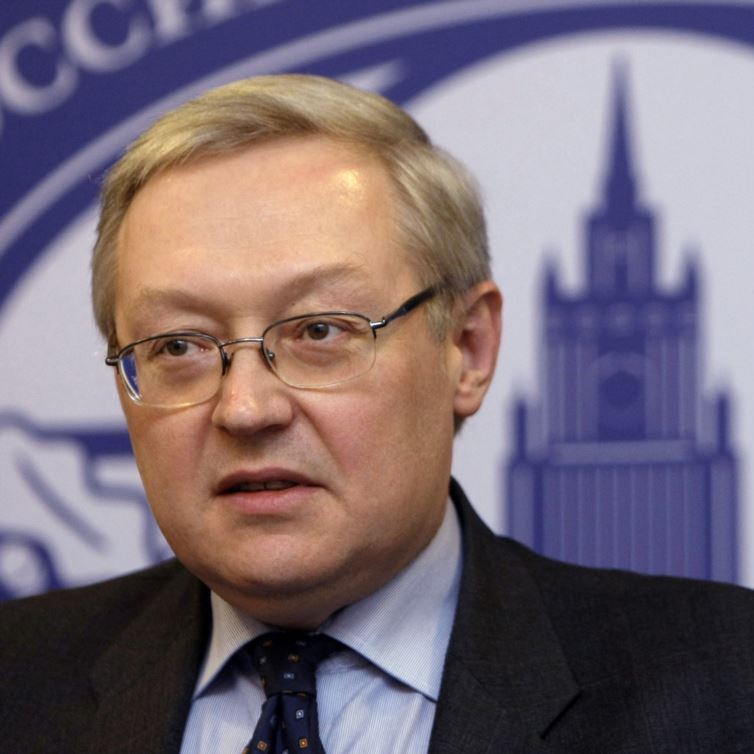
While in Moscow a few weeks ago, I was part of a group of U.S. scholars that met with Sergei Ryabkov, Russia’s Deputy Foreign Minister and BRICS sherpa, who has particular expertise in arms control and European cooperation. The meeting with Ryabkov was in many ways the complete antithesis of the Russian speeches at MCIS, which took place the next day. He said that Russia did not want to remove anything from the bilateral relationship with the United States, expressed concern that the push for sanctions in the U.S. had taken on its own dynamics while perceptions of the other on both sides were only consolidating, and declared Russia’s intention to maintain all possible channels of dialog.

He mentioned three possible areas for bilateral cooperation, including Syria’s chemical disarmament, limits on the Iranian nuclear program, and management of climate change. In particular, he highlighted the danger of nuclear proliferation, especially in the Middle East,  depending on how the Iranian negotiations turn out. U.S. and Russian interests on this issue are very close, so prospects for cooperation are good. However, given the current state of relations, Russia will not seek to develop a new agenda for cooperation with the U.S. until after the dust settles on the current crisis — 12-18 months. Until then, Russian leaders will simply try to manage the situation to limit the damage to the relationship. At the same time, there is no plan to revise Russia’s fundamental foreign policy approach toward the U.S.

He said that there is no need for Moscow to backpedal on its Ukraine policy. Russian leaders truly believe in their explanation for why the crisis in Ukraine occurred and subsequent developments in the crisis will depend on further events in Ukraine. He wanted to make sure that we got the message that Russia has no ambition to further deteriorate the situation in Ukraine. He noted that Ukrainian plans for dialog were a step in the right direction. Russia would like to ensure that there is a new division of powers in Ukraine and to secure the status of the Russian language. He stated that a quest for establishing Novorossiya, either as an independent state or as part of Russia was out of the question and was not being considered by the Russian leadership in any way. He said that there was no risk of further deterioration in Ukraine and that therefore there was no basis for sectoral Western sanctions on Russia. At the same time, Ryabkov ruled out the possibility of any kind of negotiation with Ukraine over Crimea, since Russia considers the issue closed. Though he did not exclude the possibility of compensation of individuals or businesses for lost property, he said there would be no settlement on a government level.

The public tends to perceive the current state of relations with the U.S. as a natural outcome of past events and therefore unavoidable. Many people don’t care about or about how American political elites think of Russia. There’s no obvious vision on how build a different kind of relationship. As for the annexation of Crimea, most people see it through the prism of the collapse of the Soviet Union in 1991 and believe that one part of that historical injustice has now been remedied. References to Kosovo among some Russian commentators are to some extent artificial. The trope of “if others can do it, why can’t we?” only emerged after several cases of Western intervention. But at the same time, each case is unique, one can’t draw parallels even with the intervention in South Ossetia in 2008.

Given this divergence in views between Russians and Americans, it would be better to focus on less politically loaded issues. Russia needs to try to communicate in a more focused way with those who work Russia issues in Washington. John Kerry and Sergei Lavrov have been speaking almost daily on the crisis. This has helped a more reasonable direction to emerge, including the involvement of the OSCE and international observers, as well as the withdrawal of Russian troops in late May. He believed that the situation in late May was much better in a political sense than it had been 2-3 weeks earlier.

I asked a question about the possibility of U.S.-Russian cooperation on the Arctic once the current crisis is less acute. Ryabkov noted that contacts are still being maintained on practical questions, including monitoring fisheries limitation agreements and channels on environmental issues such as oil spill cleanup and protection of polar bears. Work in the Arctic Council is continuing, with a gradual consolidation of approaches by the Arctic littoral states. While competing claims to sectors on the continental shelf may produce some difficult motives, all sides have been trying to keep the dialog open and to keep it low key.

Another question was asked about other areas of cooperation. Ryabkov highlighted the importance of maintaining cooperative programs in peaceful nuclear energy. Although the U.S. canceled its participation in a June meeting in Russia on how to use spent fuel in energy production, the meeting was simply shifted to France. He mentioned cooperation with GE in this field and said that it was unfortunate that the U.S. government was influencing U.S. businesses against engaging with Russian economic actors.

 

This post can also be found at Russian Military Reform

Related Topics
  • Gorenburg
  • Russia
Previous Article
  • Recommended | Рекомендуем

Putin’s Move: The Collapse of Ukraine’s Faustian Bargain

  • June 17, 2014
  • Lucan Way
View
Next Article
  • Commentary | Комментарии

Don’t Trample on my Strawberries! The Micro-Sociology of the Geopolitics in Lugansk

  • June 17, 2014
  • Georgi Derluguian
View
You May Also Like
View
  • Commentary | Комментарии
  • Recommended | Рекомендуем

Clearing the Air: Secretary Blinken Visits Ukraine

  • Volodymyr Dubovyk
  • September 19, 2023
View
  • Commentary | Комментарии
  • Recommended | Рекомендуем

Ensuring Genuine Results? A New Electoral Design in Uzbekistan

  • Akrom Avezov
  • May 19, 2023
View
  • Commentary | Комментарии
  • Recommended | Рекомендуем

Ukraine, Taiwan, and Macron’s “Strategic Autonomy”

  • Maurizio Delli Santi
  • April 30, 2023
View
  • Commentary | Комментарии
  • Recommended | Рекомендуем

Russia’s Regional Governors: Backing the War, Upholding the Status Quo

  • Irina Busygina and Mikhail Filippov
  • April 7, 2023
View
  • Commentary | Комментарии
  • Recommended | Рекомендуем

The Desire to Possess: Russia’s War for Territory

  • Irina Busygina
  • February 8, 2023
View
  • Commentary | Комментарии
  • Recommended | Рекомендуем

Kyiv-Washington Relations in Times of Colossal War: The Ultimate Test of a Strategic Partnership

  • Volodymyr Dubovyk
  • January 11, 2023
View
  • Commentary | Комментарии
  • Recommended | Рекомендуем

Prevailing Soviet Legacies

  • Irina Busygina and Mikhail Filippov
  • December 27, 2022
View
  • Commentary | Комментарии
  • Recommended | Рекомендуем

In Russia’s Nuclear Messaging to West and Ukraine, Putin Plays Both Bad and Good Cop

  • Simon Saradzhyan
  • December 23, 2022

Leave a Reply Cancel reply

Your email address will not be published. Required fields are marked *

PONARS Eurasia
  • About Us
  • Membership
  • Policy Memos
  • Recommended
  • Events
Powered by narva.io

Permissions & Citation Guidelines

Input your search keywords and press Enter.