PONARS Eurasia
  • About Us
    • Contact Us!
    • Membership
      • All Members
      • Core Members
      • Collegium Members
      • Associate Members
      • About Membership
    • Our Ukraine Experts
    • Executive Committee
  • Our Ukraine Experts
  • Policy Memos
    • List of Policy Memos
    • PONARS Eurasia’s Newest eBooks
    • Submissions
  • Online Academy
  • Events
    • Past Events
  • Recommended
  • Task Forces
    • Ukraine
      • PONARS Ukraine Task Force: Incontrovertible Truths
    • Amplifying Voices of Europe, the Caucasus, and Central Asia (AVECCA)
    • Russia in a Changing Climate
  • Podcasts
Contacts

Address
1957 E St NW,
Washington, DC 20052

[email protected]
202.994.5915

NEWSLETTER
Facebook
Twitter
YouTube
Podcast
PONARS Eurasia
PONARS Eurasia
  • About Us
    • Contact Us!
    • Membership
      • All Members
      • Core Members
      • Collegium Members
      • Associate Members
      • About Membership
    • Our Ukraine Experts
    • Executive Committee
  • Our Ukraine Experts
  • Policy Memos
    • List of Policy Memos
    • PONARS Eurasia’s Newest eBooks
    • Submissions
  • Online Academy
  • Events
    • Past Events
  • Recommended
  • Task Forces
    • Ukraine
      • PONARS Ukraine Task Force: Incontrovertible Truths
    • Amplifying Voices of Europe, the Caucasus, and Central Asia (AVECCA)
    • Russia in a Changing Climate
  • Podcasts
DIGITAL RESOURCES
digital resources

Bookstore 📚

Knowledge Hub

Course Syllabi

Point & Counterpoint

Policy Perspectives

RECOMMENDED
  • Misconceptions about Eastern Europe, the Caucasus, and Central Asia and Their Impact on Policy

    View
  • Five Years into the War, Ukraine Is Showing Grittiness, Rebounding Confidence in War Fortunes

    View
  • Russia’s Wartime Internet: A Contested Space with the Regime Still Predominant

    View
  • Why Georgians Need to Take Hungarian Lessons

    View
  • The ‘Don’t Lose Lukashenko’ Approach: Kyiv’s (Non-) Strategic Ambiguity Toward the Belarusian Opposition

    View
RSS PONARS Eurasia Podcast
  • The Putin-Xi Summit: What's New In Their Joint Communique ? February 23, 2022
    In this week’s PONARS Eurasia Podcast, Maria Lipman speaks with Russian China experts Vita Spivak and Alexander Gabuev about the February meeting between Vladimir Putin and Xi Jinping, and what it may tell us about where the Russian-Chinese relationship is headed.
  • Exploring the Russian Courts' Ruling to Liquidate the Memorial Society January 28, 2022
    In this week’s PONARS Eurasia Podcast, Maria Lipman chats with scholars Kelly Smith and Benjamin Nathans about the history, achievements, and impending shutdown of the Memorial Society, Russia's oldest and most venerable civic organization, and what its imminent liquidation portends for the Russian civil society.
  • Russia's 2021 census and the Kremlin's nationalities policy [Lipman Series 2021] December 9, 2021
    In this week’s PONARS Eurasia Podcast, Maria Lipman chats with social scientist Andrey Shcherbak about the quality of the data collected in the recent population census and the goals of Vladimir Putin's government's nationalities policy
  • Active citizens of any kind are under threat [Lipman Series 2021] November 5, 2021
    In this week’s PONARS Eurasia Podcast, Maria Lipman chats with Alexander Verkhovsky about the Kremlin's ever expanding toolkit against political and civic activists, journalists, and other dissidents.
  • Russia's Legislative Elections followup [Lipman Series 2021] October 4, 2021
    In this week’s PONARS Eurasia Podcast, Maria Lipman chats with Tanya Lokot and Nikolay Petrov about the results of Russia’s legislative elections and about what comes next.
  • Why Is the Kremlin Nervous? [Lipman Series 2021] September 14, 2021
    In this week’s PONARS Eurasia Podcast, Maria Lipman chats with Ben Noble and Nikolay Petrov about Russia’s September 17-19 legislative elections, repressive measures against electoral challengers, and whether to expect anything other than preordained results.
  • Vaccine Hesitancy in Russia, France, and the United States [Lipman Series 2021] August 31, 2021
    In this week's PONARS Eurasia Podcast episode, Maria Lipman chats with Denis Volkov, Naira Davlashyan, and Peter Slevin about why COVID-19 vaccination rates are still so low across the globe, comparing vaccine hesitant constituencies across Russia, France, and the United States.  
  • Is Russia Becoming More Soviet? [Lipman Series 2021] July 26, 2021
      In a new PONARS Eurasia Podcast episode, Maria Lipman chats with Maxim Trudolyubov about the current tightening of the Russian political sphere, asking whether or not it’s helpful to draw comparisons to the late Soviet period.
  • The Evolution of Russia's Political Regime [Lipman Series 2021] June 21, 2021
    In this week's episode of the PONARS Eurasia Podcast, Maria Lipman chats with Grigory Golosov and Henry Hale about the evolution of Russia's political regime, and what to expect in the lead-up to September's Duma elections.
  • Volodymyr Zelensky: Year Two [Lipman Series 2021] May 24, 2021
    In this week's episode of the PONARS Eurasia Podcast, Maria Lipman chats with Sergiy Kudelia and Georgiy Kasianov about Ukrainian President Zelensky's second year in office, and how he has handled the political turbulence of the past year.
  • Commentary | Комментарии

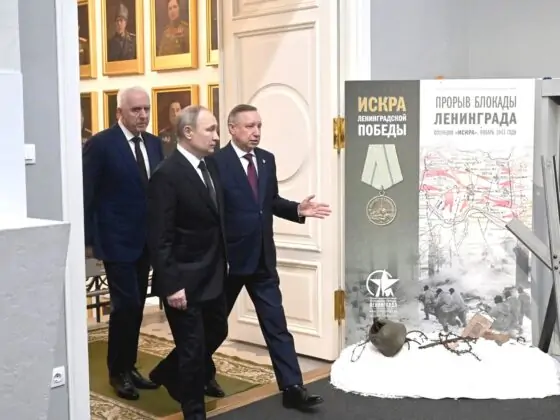
The price of the Russian elections: Easy to achieve, Putin’s victory will have huge costs

  • January 23, 2018
  • Arkady Moshes

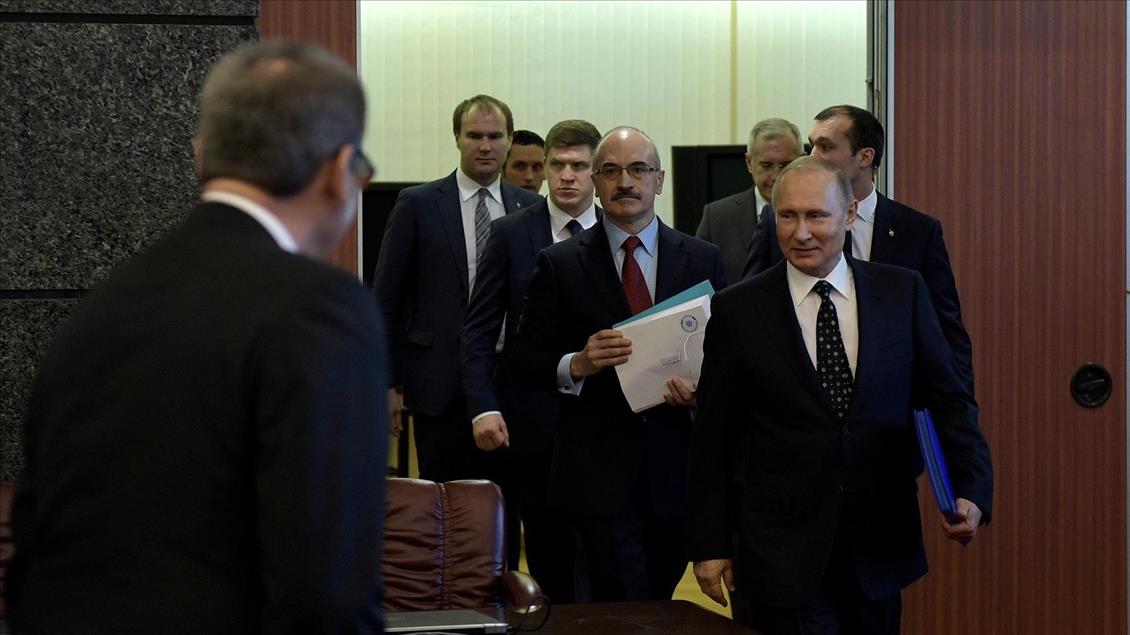
(FIIA) Voters will give Vladimir Putin the mandate to continue great power politics. This does not augur well for any deconfliction between Russia and the West.

The outcome of the Russian presidential race is a foregone conclusion. Vladimir Putin will extend his stay in power for another term. But the details of the process, and the differences from past elections are nevertheless worth following as they reveal the inner logic of Russia’s current political development.

What catches the eye is the Kremlin’s desire to make the campaign as risk-free, dull and “dry”, and devoid of any semblance of competition as possible. Alexei Navalny, a radical opposition frontrunner and proponent of system change who, in recent years, has noticeably strengthened his political positions across the country, has been barred from participating, as anticipated.

To be honest, even if allowed to run, Navalny would not have had much chance of becoming a real challenger to Putin. His platform, mixing liberal and leftist slogans, looks inconsistent and unconvincing to too many. Yet, as a figure, he could have mobilized the opposition-minded voters. In practical terms, that could have set in motion a mechanism of election monitoring, in large cities at least, seriously complicating potential irregularities. Pressure on the “concerned citizens” could have woken up the ghost of the massive protests of winter 2011–2012, whereas tolerating the opposition mobilization could have created a situation in which the winner, Putin, would not have received the majority in Russia’s megapolises, which would have been an embarrassment.

Now the Kremlin can play it safe. Navalny’s appeal to his supporters to boycott the elections, even if successful, cannot be as effective. Putin will not have to explain why with the 85% approval rating that he enjoys, he will actually receive the votes of 30 or 40% of the whole electorate. What will matter is that he will gather 70% or more of all votes cast.

And he simply cannot receive less. Neither Pavel Grudinin, the new face of the Communist Party, nor the veteran of right-wing populism, Vladimir Zhirinovsky, nor the journalist and show-woman Kseniya Sobchak – if she is eventually included in the ballot – can significantly increase their respective voting base in the remaining two months.

That said, however, the 2018 election is not a sham. It is a referendum-like confirmation, an approval of the choice made earlier.

Arguably, if paradoxically, this conclusion may be less true for the elites at large. Their opinion is not really so important. First, unlike in Ukraine for example, big business in Russia has long since lost any independent political role. Second, the new model of relations with the regime has already been imposed upon the elites. Earlier, they comfortably observed the principle of “loyalty in exchange for prosperity”. But when in 2017 the Russian Economy Minister, Alexei Ulyukaev, was sentenced to eight years in prison and 20 governors were fired, some with the prospect of also standing trial, the formula was modified to “loyalty in exchange for personal freedom, for now”. Of course, some individuals will try to stay out of the game or even emigrate, but most have been part and parcel of the system for too long and apparently prefer to throw in their lot whatever happens. Even in the face of personalized Western sanctions, they have more to lose if they try to defect.

But the rest of the population, which has not been a part of the privileged class and does not have that much to lose, needs to be won over. The “social contract” with them has to be renewed through attraction, not coercion.

Rhetoric about “stability” will not do the trick, for the simple reason that, at least in terms of household economics, there is none. The real incomes of Russians have been going down for four consecutive years and are now lower than at the beginning of Putin’s current term. Twenty million people living below the poverty line can hardly appreciate this kind of “stability”.

Putin’s promise of change after 18 years in power would not be credible. Technological progress and digitalization will gradually take place, no doubt, but this has little to do with more effective, less corrupt and more people-friendly governance.

Popular expectations and perceived policy results meet only in the foreign policy field. According to a November 2017 opinion poll by the reputed Levada Center, 82% of respondents believe that Russia should retain the role of a great power in the future, while only 13% disagree with this. And 72% – a record high for Putin’s epoch, compared to 31% in 1999 and 47% in 2011 – think contemporary Russia is a great power. The annexation of Crimea, preventing further NATO enlargement in the post-Soviet space, withstanding the Western economic sanctions, military and political success in Syria and instilling a new sense of mission in the armed forces – are all viewed as proof of Russia’s restored global status. The election date, March 18, the fourth anniversary of the “reunification” with Crimea, will in itself serve as a powerful symbol and reminder.

The problem is that the popular mandate to continue the great power politics will seriously limit Russia’s foreign policy choices after the elections. This implies that the Russian-Western confrontation will continue, defence expenditure will remain high, and conflicts in Ukraine, Syria and possibly elsewhere will drain Russia’s resources, while foreign investment and modern technologies will not be forthcoming.

Electoral victory will be a low-hanging fruit for Vladimir Putin. But it will be anything but cost- and risk-free both for Russia itself and the outside world.

– – – – – –

Read More © Finnish Institute of International Affairs (FIIA)
Related Topics
  • Elections
  • Moshes
  • Russia
Previous Article
  • Commentary | Комментарии

Revisionist Russia Is the Most Nuclearized Power in the World

  • January 23, 2018
  • Pavel Baev
View
Next Article
  • In the News | Hовости

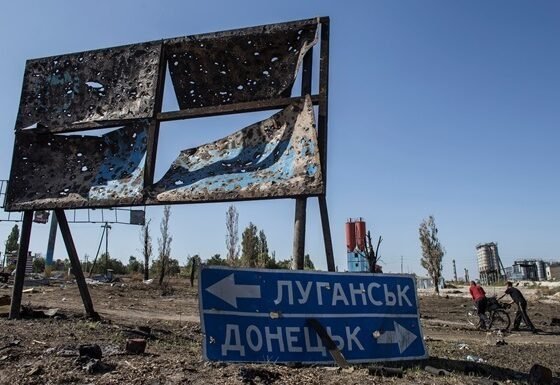
Миротворцы на Донбассе – это хорватский сценарий

  • January 23, 2018
  • Olexiy Haran
View
You May Also Like
View
  • Commentary | Комментарии
  • Recommended | Рекомендуем

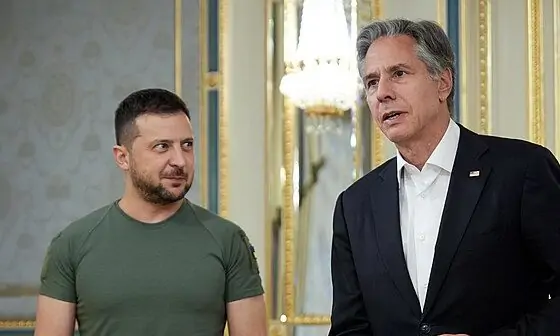
Clearing the Air: Secretary Blinken Visits Ukraine

  • Volodymyr Dubovyk
  • September 19, 2023
View
  • Commentary | Комментарии
  • Recommended | Рекомендуем

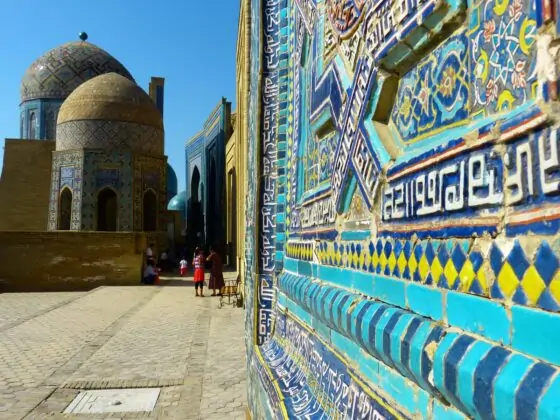
Ensuring Genuine Results? A New Electoral Design in Uzbekistan

  • Akrom Avezov
  • May 19, 2023
View
  • Commentary | Комментарии
  • Recommended | Рекомендуем

Ukraine, Taiwan, and Macron’s “Strategic Autonomy”

  • Maurizio Delli Santi
  • April 30, 2023
View
  • Commentary | Комментарии
  • Recommended | Рекомендуем

Russia’s Regional Governors: Backing the War, Upholding the Status Quo

  • Irina Busygina and Mikhail Filippov
  • April 7, 2023
View
  • Commentary | Комментарии
  • Recommended | Рекомендуем

The Desire to Possess: Russia’s War for Territory

  • Irina Busygina
  • February 8, 2023
View
  • Commentary | Комментарии
  • Recommended | Рекомендуем

Kyiv-Washington Relations in Times of Colossal War: The Ultimate Test of a Strategic Partnership

  • Volodymyr Dubovyk
  • January 11, 2023
View
  • Commentary | Комментарии
  • Recommended | Рекомендуем

Prevailing Soviet Legacies

  • Irina Busygina and Mikhail Filippov
  • December 27, 2022
View
  • Commentary | Комментарии
  • Recommended | Рекомендуем

In Russia’s Nuclear Messaging to West and Ukraine, Putin Plays Both Bad and Good Cop

  • Simon Saradzhyan
  • December 23, 2022

Leave a Reply Cancel reply

Your email address will not be published. Required fields are marked *

PONARS Eurasia
  • About Us
  • Membership
  • Policy Memos
  • Recommended
  • Events
Powered by narva.io

Permissions & Citation Guidelines

Input your search keywords and press Enter.