PONARS Eurasia
  • About Us
    • Contact Us!
    • Membership
      • All Members
      • Core Members
      • Collegium Members
      • Associate Members
      • About Membership
    • Our Ukraine Experts
    • Executive Committee
  • Our Ukraine Experts
  • Policy Memos
    • List of Policy Memos
    • PONARS Eurasia’s Newest eBooks
    • Submissions
  • Online Academy
  • Events
    • Past Events
  • Recommended
  • Task Forces
    • Ukraine
      • PONARS Ukraine Task Force: Incontrovertible Truths
    • Amplifying Voices of Europe, the Caucasus, and Central Asia (AVECCA)
    • Russia in a Changing Climate
  • Podcasts
Contacts

Address
1957 E St NW,
Washington, DC 20052

[email protected]
202.994.5915

NEWSLETTER
Facebook
Twitter
YouTube
Podcast
PONARS Eurasia
PONARS Eurasia
  • About Us
    • Contact Us!
    • Membership
      • All Members
      • Core Members
      • Collegium Members
      • Associate Members
      • About Membership
    • Our Ukraine Experts
    • Executive Committee
  • Our Ukraine Experts
  • Policy Memos
    • List of Policy Memos
    • PONARS Eurasia’s Newest eBooks
    • Submissions
  • Online Academy
  • Events
    • Past Events
  • Recommended
  • Task Forces
    • Ukraine
      • PONARS Ukraine Task Force: Incontrovertible Truths
    • Amplifying Voices of Europe, the Caucasus, and Central Asia (AVECCA)
    • Russia in a Changing Climate
  • Podcasts
DIGITAL RESOURCES
digital resources

Bookstore 📚

Knowledge Hub

Course Syllabi

Point & Counterpoint

Policy Perspectives

RECOMMENDED
  • The ‘Don’t Lose Lukashenko’ Approach: Kyiv’s (Non-) Strategic Ambiguity Toward the Belarusian Opposition

    View
  • Too Much, Too Late? The Impact of Secrecy on Efforts to Mediate an End to the Russia-Ukraine War

    View
  • A Deal with the Devil: Lukashenko Navigates Domestic and External Vulnerabilities in Managing Relations with Russia

    View
  • Peacemaking Russian Style: Negotiations as the Continuation of War by Other Means

    View
  • ‘DIY Warfare’: How Russia Crowdsources the Battlefield in Ukraine

    View
RSS PONARS Eurasia Podcast
  • The Putin-Xi Summit: What's New In Their Joint Communique ? February 23, 2022
    In this week’s PONARS Eurasia Podcast, Maria Lipman speaks with Russian China experts Vita Spivak and Alexander Gabuev about the February meeting between Vladimir Putin and Xi Jinping, and what it may tell us about where the Russian-Chinese relationship is headed.
  • Exploring the Russian Courts' Ruling to Liquidate the Memorial Society January 28, 2022
    In this week’s PONARS Eurasia Podcast, Maria Lipman chats with scholars Kelly Smith and Benjamin Nathans about the history, achievements, and impending shutdown of the Memorial Society, Russia's oldest and most venerable civic organization, and what its imminent liquidation portends for the Russian civil society.
  • Russia's 2021 census and the Kremlin's nationalities policy [Lipman Series 2021] December 9, 2021
    In this week’s PONARS Eurasia Podcast, Maria Lipman chats with social scientist Andrey Shcherbak about the quality of the data collected in the recent population census and the goals of Vladimir Putin's government's nationalities policy
  • Active citizens of any kind are under threat [Lipman Series 2021] November 5, 2021
    In this week’s PONARS Eurasia Podcast, Maria Lipman chats with Alexander Verkhovsky about the Kremlin's ever expanding toolkit against political and civic activists, journalists, and other dissidents.
  • Russia's Legislative Elections followup [Lipman Series 2021] October 4, 2021
    In this week’s PONARS Eurasia Podcast, Maria Lipman chats with Tanya Lokot and Nikolay Petrov about the results of Russia’s legislative elections and about what comes next.
  • Why Is the Kremlin Nervous? [Lipman Series 2021] September 14, 2021
    In this week’s PONARS Eurasia Podcast, Maria Lipman chats with Ben Noble and Nikolay Petrov about Russia’s September 17-19 legislative elections, repressive measures against electoral challengers, and whether to expect anything other than preordained results.
  • Vaccine Hesitancy in Russia, France, and the United States [Lipman Series 2021] August 31, 2021
    In this week's PONARS Eurasia Podcast episode, Maria Lipman chats with Denis Volkov, Naira Davlashyan, and Peter Slevin about why COVID-19 vaccination rates are still so low across the globe, comparing vaccine hesitant constituencies across Russia, France, and the United States.  
  • Is Russia Becoming More Soviet? [Lipman Series 2021] July 26, 2021
      In a new PONARS Eurasia Podcast episode, Maria Lipman chats with Maxim Trudolyubov about the current tightening of the Russian political sphere, asking whether or not it’s helpful to draw comparisons to the late Soviet period.
  • The Evolution of Russia's Political Regime [Lipman Series 2021] June 21, 2021
    In this week's episode of the PONARS Eurasia Podcast, Maria Lipman chats with Grigory Golosov and Henry Hale about the evolution of Russia's political regime, and what to expect in the lead-up to September's Duma elections.
  • Volodymyr Zelensky: Year Two [Lipman Series 2021] May 24, 2021
    In this week's episode of the PONARS Eurasia Podcast, Maria Lipman chats with Sergiy Kudelia and Georgiy Kasianov about Ukrainian President Zelensky's second year in office, and how he has handled the political turbulence of the past year.
  • Commentary | Комментарии

Tips from the Experts: Bridging the Scholarship-Policy Divide

  • November 16, 2017
  • Regina Smyth

How can scholars make significant contributions to policy making? Reflecting on a grant from Carnegie Corporation of New York to strengthen regional studies training at U.S. universities, Indiana University’s Russian Studies Workshop organized a roundtable at last week’s ASEEES conference in Chicago that featured four outstanding scholar/practitioners. Panel chairperson, Michael Kimmage, professor of history at Catholic University and a former member of the U.S. Secretary of State’s Office of Policy Planning for Russia and Eurasia, prompted participants to identify how scholarly and think tank expertise has proven valuable in policy formation, and to highlight critical gaps in regional studies knowledge. 

Panelists approached the questions by identifying Russian regional studies as a community of specialists that spans universities and colleges, government, think tanks, NGOs, the private sector, and foundations. Each speaker stressed the crucial role for networks, skills, and practices that can transcend the boundaries that divide the community and enable broad discussion aimed at more effective, fact-based policy decisions. Panelists unanimously agreed that academics’ greatest contribution to policy relevance lies in their core missions as university and college faculty: deep, original research and training of the next generation of regional specialists.

Dr. Celeste Wallander, president and CEO of the U.S. Russia Foundation and former special assistant to the president and senior director for Russia/Eurasia on the National Security Council, argued that university-based scholars make a profound contribution by preparing the next generation of informed and engaged students at all levels. At the same time, Dr. Wallander emphasized the need for universities to do a better job training students. The urgent demands of global events means that strong prior preparation is essential for effective decision-making as there is little time to stop and consider new research. She stressed that policymakers must have the skills to assess causality with fact-based analysis, and to communicate clearly in sharply argued, brief texts. While each panelist underlined this call for effective writing, Dr. Kimmage added that precision is also essential for oral communication, noting that fifteen-minutes constitutes a long presentation in the government context.

Dr. Jeffrey Mankoff, deputy director and senior fellow at the Russia and Eurasia Program at the Center for Strategic and International Studies (CSIS) and former adviser on U.S.-Russian relations at the U.S. Department of State, reiterated the critical role of university-based training and research in accumulating expertise. He argued that academics can do more to bridge the gap between the scholarly and policy communities. In general, he said, academic work often lacks influence because it is not accessible. He echoed the panel’s call for clearly articulated ideas, stressing that academic work permeates the policy community when it is closely tied to real world puzzles and challenges.

Dr. Mankoff argued that think tanks play an important role in forging networks of D.C-based scholars that inform the international policy community and shift decision-making frames. Echoing Dr. Wallander’s emphasis on the importance of university-based research, he argued that think tanks are distinct from universities in two ways. First, the boundaries between think tanks and government are porous. Ideas generated in think tanks filter into public discussions through personal networks, reports, media appearances, and participation in seminars and conferences. Yet, similar to the dynamics in government, research in think tanks is driven by the urgency of responding to real world problems and demonstrating clear influence in the policy process. The scholarly community works on a different logic, creating lasting knowledge that becomes relevant as real-world challenges shift. With effective communication and deep networks, these are complementary paths to improve policy decisions, inform foreign audiences, and increase popular understanding of Russia beyond the headlines.

Dr. John Slocum, visiting scholar at the Barcelona Center for International Affairs, added the perspective of a long-time program director at the John D. and Catherine T. MacArthur Foundation. For nearly a century, foundations worked to develop regional studies expertise. Initially, they funded policy-relevant research without creating direct linkages across the policy-university divide. This model shifted with the demise of the Soviet Union. Under David Hamburg, former president of the Carnegie Corporation of New York, foundations increasingly brought scholarly attention to critical global problems with the goal of identifying informed policy solutions. They also became more pro-active in constructing platforms for information exchange, interaction, and networks linking specialists in government and academia.

Dr. Slocum emphasized that foundations’ conceptions of policy influence is not limited to U.S. audiences. Foundations endeavor to increase global understanding of U.S. foreign policy goals and policy processes. Foundations also build global policy expertise by providing technical assistance, awarding individual grants, establishing graduate training programs and think tanks, supporting scholarly networks, and promoting outlets, such as journals, to showcase debates.

Dr. Kimmage brought the discussion back to substantive concerns. He identified three critical areas of research that are under-represented in the scholarly community: Russian military affairs and public support for the military, the role of the Russian Orthodox Church in national policy and society, and the complexities of Russian regional politics. Dr. Mankoff added that lack of understanding of U.S. foreign policy beyond the Beltway has emerged as a national security problem that needs to be addressed by a partnership across the regional studies community to educate U.S. citizens how to navigate the complexity of the globalized, international community.

Discussion among these scholars with experience across different regional studies community stressed the importance of continuing to increase the expert influence to produce more effective, fact-based policy decisions. The discussion highlighted steps to meet this challenge:

  • Understand the needs and challenges that face different groups of specialists within the broader regional studies community.

  • Continue to support university-based research and the tools to communicate findings to non-academic specialists.

  • Strengthen student training in essential skills, especially causal inference and clear and focused communication.

  • Sustain networks that link regional studies specialists at universities with those in government, NGOs, think tanks, foundations, and the private sector.

  • Construct a broader definition of relevance that draws on comprehensive research and looks beyond Washington, D.C., to inform non-specialists, and especially ordinary citizens, in the United States, Europe, and the broader global audience.

 

Related Topics
  • Russia
  • Smyth
  • U.S.-Russian Relations
Previous Article
  • In the News | Hовости

Kakachia: When Mattis became head of the Pentagon, it became clear that Georgia was safe

  • November 16, 2017
  • PONARS Eurasia
View
Next Article
  • Policy Memos | Аналитика

Помощь США Средней Азии в обеспечении безопасности: оценка ограничений, поиск возможностей

  • November 17, 2017
  • Mariya Omelicheva
View
You May Also Like
View
  • Commentary | Комментарии
  • Recommended | Рекомендуем

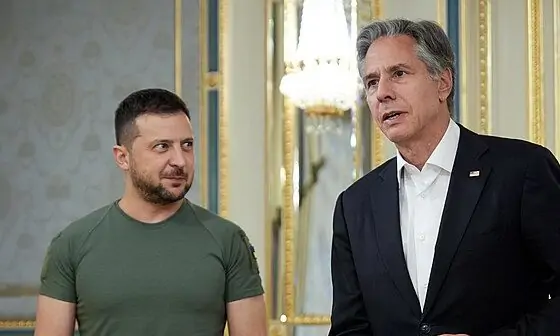
Clearing the Air: Secretary Blinken Visits Ukraine

  • Volodymyr Dubovyk
  • September 19, 2023
View
  • Commentary | Комментарии
  • Recommended | Рекомендуем

Ensuring Genuine Results? A New Electoral Design in Uzbekistan

  • Akrom Avezov
  • May 19, 2023
View
  • Commentary | Комментарии
  • Recommended | Рекомендуем

Ukraine, Taiwan, and Macron’s “Strategic Autonomy”

  • Maurizio Delli Santi
  • April 30, 2023
View
  • Commentary | Комментарии
  • Recommended | Рекомендуем

Russia’s Regional Governors: Backing the War, Upholding the Status Quo

  • Irina Busygina and Mikhail Filippov
  • April 7, 2023
View
  • Commentary | Комментарии
  • Recommended | Рекомендуем

The Desire to Possess: Russia’s War for Territory

  • Irina Busygina
  • February 8, 2023
View
  • Commentary | Комментарии
  • Recommended | Рекомендуем

Kyiv-Washington Relations in Times of Colossal War: The Ultimate Test of a Strategic Partnership

  • Volodymyr Dubovyk
  • January 11, 2023
View
  • Commentary | Комментарии
  • Recommended | Рекомендуем

Prevailing Soviet Legacies

  • Irina Busygina and Mikhail Filippov
  • December 27, 2022
View
  • Commentary | Комментарии
  • Recommended | Рекомендуем

In Russia’s Nuclear Messaging to West and Ukraine, Putin Plays Both Bad and Good Cop

  • Simon Saradzhyan
  • December 23, 2022

Leave a Reply Cancel reply

Your email address will not be published. Required fields are marked *

PONARS Eurasia
  • About Us
  • Membership
  • Policy Memos
  • Recommended
  • Events
Powered by narva.io

Permissions & Citation Guidelines

Input your search keywords and press Enter.