PONARS Eurasia
  • About Us
    • Contact Us!
    • Membership
      • All Members
      • Core Members
      • Collegium Members
      • Associate Members
      • About Membership
    • Our Ukraine Experts
    • Executive Committee
  • Our Ukraine Experts
  • Policy Memos
    • List of Policy Memos
    • PONARS Eurasia’s Newest eBooks
    • Submissions
  • Online Academy
  • Events
    • Past Events
  • Recommended
  • Task Forces
    • Ukraine
      • PONARS Ukraine Task Force: Incontrovertible Truths
    • Amplifying Voices of Europe, the Caucasus, and Central Asia (AVECCA)
    • Russia in a Changing Climate
  • Podcasts
Contacts

Address
1957 E St NW,
Washington, DC 20052

[email protected]
202.994.5915

NEWSLETTER
Facebook
Twitter
YouTube
Podcast
PONARS Eurasia
PONARS Eurasia
  • About Us
    • Contact Us!
    • Membership
      • All Members
      • Core Members
      • Collegium Members
      • Associate Members
      • About Membership
    • Our Ukraine Experts
    • Executive Committee
  • Our Ukraine Experts
  • Policy Memos
    • List of Policy Memos
    • PONARS Eurasia’s Newest eBooks
    • Submissions
  • Online Academy
  • Events
    • Past Events
  • Recommended
  • Task Forces
    • Ukraine
      • PONARS Ukraine Task Force: Incontrovertible Truths
    • Amplifying Voices of Europe, the Caucasus, and Central Asia (AVECCA)
    • Russia in a Changing Climate
  • Podcasts
DIGITAL RESOURCES
digital resources

Bookstore 📚

Knowledge Hub

Course Syllabi

Point & Counterpoint

Policy Perspectives

RECOMMENDED
  • The ‘Don’t Lose Lukashenko’ Approach: Kyiv’s (Non-) Strategic Ambiguity Toward the Belarusian Opposition

    View
  • Too Much, Too Late? The Impact of Secrecy on Efforts to Mediate an End to the Russia-Ukraine War

    View
  • A Deal with the Devil: Lukashenko Navigates Domestic and External Vulnerabilities in Managing Relations with Russia

    View
  • Peacemaking Russian Style: Negotiations as the Continuation of War by Other Means

    View
  • ‘DIY Warfare’: How Russia Crowdsources the Battlefield in Ukraine

    View
RSS PONARS Eurasia Podcast
  • The Putin-Xi Summit: What's New In Their Joint Communique ? February 23, 2022
    In this week’s PONARS Eurasia Podcast, Maria Lipman speaks with Russian China experts Vita Spivak and Alexander Gabuev about the February meeting between Vladimir Putin and Xi Jinping, and what it may tell us about where the Russian-Chinese relationship is headed.
  • Exploring the Russian Courts' Ruling to Liquidate the Memorial Society January 28, 2022
    In this week’s PONARS Eurasia Podcast, Maria Lipman chats with scholars Kelly Smith and Benjamin Nathans about the history, achievements, and impending shutdown of the Memorial Society, Russia's oldest and most venerable civic organization, and what its imminent liquidation portends for the Russian civil society.
  • Russia's 2021 census and the Kremlin's nationalities policy [Lipman Series 2021] December 9, 2021
    In this week’s PONARS Eurasia Podcast, Maria Lipman chats with social scientist Andrey Shcherbak about the quality of the data collected in the recent population census and the goals of Vladimir Putin's government's nationalities policy
  • Active citizens of any kind are under threat [Lipman Series 2021] November 5, 2021
    In this week’s PONARS Eurasia Podcast, Maria Lipman chats with Alexander Verkhovsky about the Kremlin's ever expanding toolkit against political and civic activists, journalists, and other dissidents.
  • Russia's Legislative Elections followup [Lipman Series 2021] October 4, 2021
    In this week’s PONARS Eurasia Podcast, Maria Lipman chats with Tanya Lokot and Nikolay Petrov about the results of Russia’s legislative elections and about what comes next.
  • Why Is the Kremlin Nervous? [Lipman Series 2021] September 14, 2021
    In this week’s PONARS Eurasia Podcast, Maria Lipman chats with Ben Noble and Nikolay Petrov about Russia’s September 17-19 legislative elections, repressive measures against electoral challengers, and whether to expect anything other than preordained results.
  • Vaccine Hesitancy in Russia, France, and the United States [Lipman Series 2021] August 31, 2021
    In this week's PONARS Eurasia Podcast episode, Maria Lipman chats with Denis Volkov, Naira Davlashyan, and Peter Slevin about why COVID-19 vaccination rates are still so low across the globe, comparing vaccine hesitant constituencies across Russia, France, and the United States.  
  • Is Russia Becoming More Soviet? [Lipman Series 2021] July 26, 2021
      In a new PONARS Eurasia Podcast episode, Maria Lipman chats with Maxim Trudolyubov about the current tightening of the Russian political sphere, asking whether or not it’s helpful to draw comparisons to the late Soviet period.
  • The Evolution of Russia's Political Regime [Lipman Series 2021] June 21, 2021
    In this week's episode of the PONARS Eurasia Podcast, Maria Lipman chats with Grigory Golosov and Henry Hale about the evolution of Russia's political regime, and what to expect in the lead-up to September's Duma elections.
  • Volodymyr Zelensky: Year Two [Lipman Series 2021] May 24, 2021
    In this week's episode of the PONARS Eurasia Podcast, Maria Lipman chats with Sergiy Kudelia and Georgiy Kasianov about Ukrainian President Zelensky's second year in office, and how he has handled the political turbulence of the past year.
  • Commentary | Комментарии

Two Experts Apply IR Theory and Historical Analogies to U.S. Policy on Russia’s Use of Force

  • October 19, 2015
  • PONARS Eurasia

Korea, Vietnam, Afghanistan—Georgia, Ukraine, Syria?

Şener Aktürk (Istanbul):

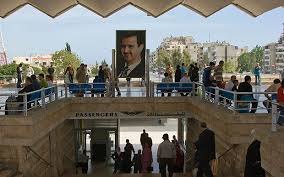
“Russian Military Uses Syria as Proving Ground, and West Takes Notice,” wrote The New York Times. Who would have thought that after pronounced Russian military-political reassertions in Georgia, Crimea, eastern Ukraine, and now Syria, the West would merely “take notice“? I am genuinely surprised. I wonder if all international relations (IR) theories have failed in the case of Russian resurgence in the Caucasus, Ukraine, and the Middle East.

I moved away from IR theory—balance of power, deterrence, international norms, Realism, Constructivism, etc.—in favor of comparative politics. But I am surprised that there hasn’t been a single ‘‘Cuban Missile Crisis”-type of military standoff between the United States and Russia over, say, Crimea, or recent Russian actions in Syria. How can we interpret or think theoretically about what has happened and is happening? Is this simply an agency-based (Western alliance) “failure” to balance or deter Russia, or is some kind of “Munich appeasement” metaphor appropriate? Is there some greater strategic wisdom to allowing Russia to reassert itself in Georgia and Syria and annex what is probably the most strategically-valuable part of Ukraine (Crimea)?  I am really curious as to what IR scholars have to say about the theoretical ramifications of what has happened. 

Mikhail Troitskiy (Moscow):

Realism says you react to the power of other actors or to the threats they pose to your security. You gauge your response depending on how strong you perceive the impending power imbalance or threats to your security to be. Reaction to the breaking of “norms” is not a widespread notion among Realists. The United States reacted harshly to the missiles in Cuba because it was a vital security issue for the United States. Neutralizing that threat was worth the brinksmanship. Georgia, Crimea/eastern Ukraine, and Syria by far do not qualify as vital threats to U.S. security or as a demonstration of a dangerous increase in Russian power.

That said, the U.S./NATO/EU response does look proportionate to the magnitude of the challenge—do not forget about the sanctions, debates about arming Ukraine, harsh notices issued to Russia by Turkey, Saudi Arabia, the United States, and others over Syria—statements I think Moscow takes seriously. So there has indeed been a certain reaction consistent with Realist assumptions, even if not near-nuclear escalation. Whether the kind of Liberalism that talks about the robustness of multilateral norms and institutions will be vindicated remains to be seen. We need time to test this kind of claim using the case of Russia. Neither Liberalism nor Constructivism offer much in terms of quick recipes for action to respond to changes in the status quo.

Şener Aktürk:

True, the annexation of Crimea or increased Russian-Iranian military presence in Syria are not “immediate” security threats to the United States. Perhaps the Cuban Missile Crisis is not the most appropriate analogy. Better analogies may be the Korean, Vietnam, and Afghanistan War of the 1980s — three cases where the Western alliance (and/or the United States) actively tried to contain Communism and/or Soviet expansion far away from U.S. soil. Even the Crimean War of 1853-1856 could be one such analogy. Then again, in the 20th-century examples, there was a global contest between two superpowers, with both fearing domino/demonstration effects and the loss of credibility in the eyes of allies. That difference might account for the relative quiescence of the West today. In the cases of Ukraine and Georgia (and Syrian opposition), I guess the United States does not fear that it would lose credibility or some kind of global contest against Russia, if it does not seek to actively deter the latter and protect seemingly pro-U.S. parties (such as the Kyiv government, Saakashvili, the Free Syrian Army).  I was, of course, thinking of conventional deterrence, not a nuclear stand-off, and that is yet another reason why the Cuban Missile Crisis is a bad analogy. But the Korea, Vietnam, and Afghanistan analogies do seem more appropriate to contrast with Georgia, Ukraine, and Syria.

Mikhail Troitskiy:

I would say Korea, Vietnam, and Afghanistan all fit neatly into the pattern of U.S. and allied reactions to challenges to the status quo. U.S. involvement in the Korean War began when a direct threat materialized to U.S. contingents based in South Korea, which likely happened because former president Kim Il Sung overplayed his hand.

Vietnam was different. There, U.S. engagement escalated gradually and followed the logic of “mission creep” (which will most certainly haunt Russia in Syria). At the stage in the Vietnam War comparable to the current state of conflict in eastern Ukraine (with the rebels stopping short of advancing on the country’s capital), the scale of U.S. involvement seems also to be comparable. Washington already had boots on the ground in Vietnam at that stage, but not too many, considering that the U.S. presence began quite a few years earlier. But of course the stakes to U.S. policymakers seemed to be much higher in Vietnam than today’s Ukraine, perhaps, interestingly, because the Obama administration has much more faith in the Ukrainian government than the United States had in the South Vietnamese regime at the time.

Afghanistan was a proxy war in which the United States did not get seriously involved from the very beginning, if at all. Arms to the mujahideen were being supplied mainly through proxies, and the game-changing Stinger rockets entered the scene only five years into the conflict and as a response to major Soviet battlefield successes (for perspective, we are still only in the second year of the Ukraine conflict). Also remember that the condemnation of the Soviet invasion of Afghanistan by world powers was almost universal. That gave the United States plenty of additional political leverage and confidence. Compare, for example, China’s position on Afghanistan in the 1980s with its position on Crimea now.

Overall, there is no major discrepancy between U.S. reactions to Korea/Vietnam/Afghanistan and Ukraine/Syria. China is another case in point—Afghanistan and, of course, Vietnam were major security concerns for Beijing while Crimea and Syria are too far away and relatively unimportant from the Chinese perspective. So everyone’s reactions have always been commensurate with the extent of the perceived threat.

Finally, on a related subject of alliance commitments, I have seen several publications recently arguing that superpowers have always enjoyed much more freedom of maneuver in responding to allies’ concerns than one may have expected. “Wagging the dog” has essentially been a myth, with the United States being able to drag its feet on defense commitments it was reluctant to honor. But this did not seriously harm U.S. credibility as a security provider—mainly because expectations were not high and there was no alternative to the United States as the main protector. So damage to U.S. credibility as a result of a lack of brisk reaction to allied troubles is likely not to be significant, judging by historical precedents.

The statements made and views expressed are solely the responsibility of the authors.
Related Topics
  • Akturk
  • Russia
  • Syria
  • Troitskiy
  • U.S.-Russian Relations
  • Ukraine
Previous Article
  • In the News | Hовости

Чем закончатся российские игры в Сирии

  • October 19, 2015
  • Pavel Baev
View
Next Article
  • Commentary | Комментарии

Putin’s Desperation Deepens as His Blunders Accumulate

  • October 20, 2015
  • Pavel Baev
View
You May Also Like
View
  • Commentary | Комментарии
  • Recommended | Рекомендуем

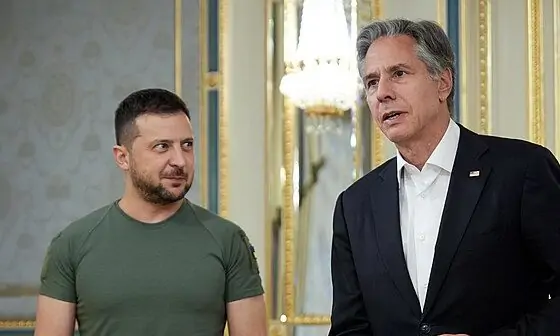
Clearing the Air: Secretary Blinken Visits Ukraine

  • Volodymyr Dubovyk
  • September 19, 2023
View
  • Commentary | Комментарии
  • Recommended | Рекомендуем

Ensuring Genuine Results? A New Electoral Design in Uzbekistan

  • Akrom Avezov
  • May 19, 2023
View
  • Commentary | Комментарии
  • Recommended | Рекомендуем

Ukraine, Taiwan, and Macron’s “Strategic Autonomy”

  • Maurizio Delli Santi
  • April 30, 2023
View
  • Commentary | Комментарии
  • Recommended | Рекомендуем

Russia’s Regional Governors: Backing the War, Upholding the Status Quo

  • Irina Busygina and Mikhail Filippov
  • April 7, 2023
View
  • Commentary | Комментарии
  • Recommended | Рекомендуем

The Desire to Possess: Russia’s War for Territory

  • Irina Busygina
  • February 8, 2023
View
  • Commentary | Комментарии
  • Recommended | Рекомендуем

Kyiv-Washington Relations in Times of Colossal War: The Ultimate Test of a Strategic Partnership

  • Volodymyr Dubovyk
  • January 11, 2023
View
  • Commentary | Комментарии
  • Recommended | Рекомендуем

Prevailing Soviet Legacies

  • Irina Busygina and Mikhail Filippov
  • December 27, 2022
View
  • Commentary | Комментарии
  • Recommended | Рекомендуем

In Russia’s Nuclear Messaging to West and Ukraine, Putin Plays Both Bad and Good Cop

  • Simon Saradzhyan
  • December 23, 2022

Leave a Reply Cancel reply

Your email address will not be published. Required fields are marked *

PONARS Eurasia
  • About Us
  • Membership
  • Policy Memos
  • Recommended
  • Events
Powered by narva.io

Permissions & Citation Guidelines

Input your search keywords and press Enter.