PONARS Eurasia
  • About Us
    • Contact Us!
    • Membership
      • All Members
      • Core Members
      • Collegium Members
      • Associate Members
      • About Membership
    • Our Ukraine Experts
    • Executive Committee
  • Our Ukraine Experts
  • Policy Memos
    • List of Policy Memos
    • PONARS Eurasia’s Newest eBooks
    • Submissions
  • Online Academy
  • Events
    • Past Events
  • Recommended
  • Task Forces
    • Ukraine
      • PONARS Ukraine Task Force: Incontrovertible Truths
    • Amplifying Voices of Europe, the Caucasus, and Central Asia (AVECCA)
    • Russia in a Changing Climate
  • Podcasts
Contacts

Address
1957 E St NW,
Washington, DC 20052

[email protected]
202.994.5915

NEWSLETTER
Facebook
Twitter
YouTube
Podcast
PONARS Eurasia
PONARS Eurasia
  • About Us
    • Contact Us!
    • Membership
      • All Members
      • Core Members
      • Collegium Members
      • Associate Members
      • About Membership
    • Our Ukraine Experts
    • Executive Committee
  • Our Ukraine Experts
  • Policy Memos
    • List of Policy Memos
    • PONARS Eurasia’s Newest eBooks
    • Submissions
  • Online Academy
  • Events
    • Past Events
  • Recommended
  • Task Forces
    • Ukraine
      • PONARS Ukraine Task Force: Incontrovertible Truths
    • Amplifying Voices of Europe, the Caucasus, and Central Asia (AVECCA)
    • Russia in a Changing Climate
  • Podcasts
DIGITAL RESOURCES
digital resources

Bookstore 📚

Knowledge Hub

Course Syllabi

Point & Counterpoint

Policy Perspectives

RECOMMENDED
  • Misconceptions about Eastern Europe, the Caucasus, and Central Asia and Their Impact on Policy

    View
  • Five Years into the War, Ukraine Is Showing Grittiness, Rebounding Confidence in War Fortunes

    View
  • Russia’s Wartime Internet: A Contested Space with the Regime Still Predominant

    View
  • Why Georgians Need to Take Hungarian Lessons

    View
  • The ‘Don’t Lose Lukashenko’ Approach: Kyiv’s (Non-) Strategic Ambiguity Toward the Belarusian Opposition

    View
RSS PONARS Eurasia Podcast
  • The Putin-Xi Summit: What's New In Their Joint Communique ? February 23, 2022
    In this week’s PONARS Eurasia Podcast, Maria Lipman speaks with Russian China experts Vita Spivak and Alexander Gabuev about the February meeting between Vladimir Putin and Xi Jinping, and what it may tell us about where the Russian-Chinese relationship is headed.
  • Exploring the Russian Courts' Ruling to Liquidate the Memorial Society January 28, 2022
    In this week’s PONARS Eurasia Podcast, Maria Lipman chats with scholars Kelly Smith and Benjamin Nathans about the history, achievements, and impending shutdown of the Memorial Society, Russia's oldest and most venerable civic organization, and what its imminent liquidation portends for the Russian civil society.
  • Russia's 2021 census and the Kremlin's nationalities policy [Lipman Series 2021] December 9, 2021
    In this week’s PONARS Eurasia Podcast, Maria Lipman chats with social scientist Andrey Shcherbak about the quality of the data collected in the recent population census and the goals of Vladimir Putin's government's nationalities policy
  • Active citizens of any kind are under threat [Lipman Series 2021] November 5, 2021
    In this week’s PONARS Eurasia Podcast, Maria Lipman chats with Alexander Verkhovsky about the Kremlin's ever expanding toolkit against political and civic activists, journalists, and other dissidents.
  • Russia's Legislative Elections followup [Lipman Series 2021] October 4, 2021
    In this week’s PONARS Eurasia Podcast, Maria Lipman chats with Tanya Lokot and Nikolay Petrov about the results of Russia’s legislative elections and about what comes next.
  • Why Is the Kremlin Nervous? [Lipman Series 2021] September 14, 2021
    In this week’s PONARS Eurasia Podcast, Maria Lipman chats with Ben Noble and Nikolay Petrov about Russia’s September 17-19 legislative elections, repressive measures against electoral challengers, and whether to expect anything other than preordained results.
  • Vaccine Hesitancy in Russia, France, and the United States [Lipman Series 2021] August 31, 2021
    In this week's PONARS Eurasia Podcast episode, Maria Lipman chats with Denis Volkov, Naira Davlashyan, and Peter Slevin about why COVID-19 vaccination rates are still so low across the globe, comparing vaccine hesitant constituencies across Russia, France, and the United States.  
  • Is Russia Becoming More Soviet? [Lipman Series 2021] July 26, 2021
      In a new PONARS Eurasia Podcast episode, Maria Lipman chats with Maxim Trudolyubov about the current tightening of the Russian political sphere, asking whether or not it’s helpful to draw comparisons to the late Soviet period.
  • The Evolution of Russia's Political Regime [Lipman Series 2021] June 21, 2021
    In this week's episode of the PONARS Eurasia Podcast, Maria Lipman chats with Grigory Golosov and Henry Hale about the evolution of Russia's political regime, and what to expect in the lead-up to September's Duma elections.
  • Volodymyr Zelensky: Year Two [Lipman Series 2021] May 24, 2021
    In this week's episode of the PONARS Eurasia Podcast, Maria Lipman chats with Sergiy Kudelia and Georgiy Kasianov about Ukrainian President Zelensky's second year in office, and how he has handled the political turbulence of the past year.
  • Commentary | Комментарии

Why Did the Bear Become so Belligerent? The Meaning of Ukraine for Russia

  • March 3, 2015
  • Polina Sinovets

Last year was a decisive one for Russia. It graciously hosted the Olympic Games only to swiftly annex Crimea and directly intervene in eastern Ukraine. In short order, the friendly Olympic bear became a wild grizzly.

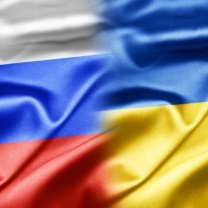
Despite sanctions and the drop of oil prices, Russia continues to aggravate the conflict in Ukraine. Why? Here are the main reasons – ideological, geopolitical, and military-industrial – that make the struggle over Ukraine so important for Russia.

Ukraine as a Mirror and an Appendage

Most obviously, Ukraine is quite close to Russia in political, cultural, and ideological terms. Everything that happens in Ukraine, therefore, is readily projected onto Russia. That is why the Kremlin views a pro-Western, democratic Ukraine as a potential threat to itself.

But there are more layers to it than that. Within Russia, there has always been the sense that Russia and Ukraine were not two separate nations but one, divided through the “mistake” of Ukrainian independence. The political origins of the Russian state lie with the so-called “sobiraniye zemel” (“gathering of lands”), a process based on the conquest of neighboring territories, with the enlarged state held together by a strong central authority. This strategy successfully transformed the weak Muscovy principality into the Russian empire, which then found its place in the Concert of Europe. Russia’s greatness further grew during the Soviet period.

That said, the creation of the original Russian empire was closely preceded by the absorption of Ukraine as an inalienable part of Russia’s “Malorossiya” (“little Russia”). The treaties of 1654-1668 made Ukraine an integral part of Muscovy and laid the foundation for the strong Russian empire of the 1700s.

The concept of the so-called “Russkiy mir” (“Russian world”) is rooted in the idea that “one nation” exists on Russian, Ukrainian, and Belarusian lands. Ukraine’s drift toward the West thus not only threatens the core of Moscow’s imperial aspirations but also signifies the subduing of Russia’s original lands to rival powers.

Geopolitical Connotations

Russian strategic culture is based on two qualities: a deep feeling of insecurity and great power projection. Ukraine plays significant roles in both of these.

Despite the fact that Russian territory is enormous, the strategic depth of its European part is not. Russia has regularly been attacked or invaded by different enemies (Tatars, Poles, French, Germans) and often from the west. Russia thus seeks buffer states, not only from tanks but from NATO. One of the greatest dangers defined by Moscow today is the deployment of NATO troops (and ballistic missile defenses) on the territory of Ukraine, which would reduce Russian strategic depth.

Thus, the Kremlin portrays events in Ukraine not as a national movement within a sovereign state, but as a battle between East and West: the United States vs. Russia, with Russia the keeper of “traditional human values” and the UN-based international system. In such a manner, the events in Ukraine also fit perfectly into Moscow’s self-branding as The Third Rome, which must protect the world from the metaphysical Antichrist, today represented by the West with its “decline of morality” and refusal to respect traditional spheres of influence. So to Moscow, the “liberal West” fights arm-in-arm with “neo-Nazi” Ukrainians, who are really little more than American tools. Russian presidential advisor Sergey Glazyev has insisted that the United States will threaten Russia openly in just a few years, and so Russia should be prepared militarily, socially, economically, and technologically, and in a conservative-based coalition, to stop this aggression.

Technology and Strategic Arms

After the breakup of the Soviet Union, the Russian military industry lost the main source of its ICBM production line, as Soviet missile construction and development facilities were based in Ukraine’s Dnipropetrovsk, Pavlograd, and Kharkiv.

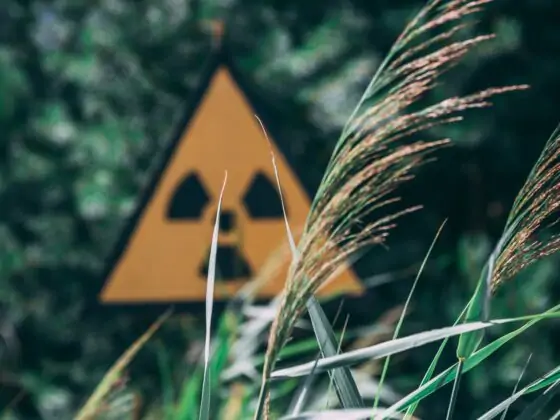
Russia has had to restore its own missile industry (on the basis of the Votkinsky machine-building plant), a process that has taken considerable time and money. Today, about 50 percent of Russia’s land-based ICBMs (which make up more than 80 percent of all Russia’s deployed strategic nuclear forces) remain connected to Ukraine-based industries (which produce the SS-18 “Satan,” SS-19 “Stiletto” navigation systems, and Topol-M targeting systems).[1]

Today, the Russian-Ukrainian conflict has stopped all cooperation based on service contracts across the Russian-Ukrainian border. Moscow has said it will transfer ICBM maintenance responsibilities to Russian companies, but this can be a big headache, including the risk of ineffectiveness, loss, and damage. There is also the risk that Ukrainian industries could start selling technological secrets to the West.

—–

Russia has long regarded Ukraine as indispensable for ideological, geopolitical, and technological reasons. It is the most important sphere of Russian interests outside its own borders, and one which Moscow is prepared to defend through force of arms and considerable sacrifice.


This post is based on extracts from the report “Ukraine and its neighbourhood – How to deal with aggressive Russia,” NATO Defense College, Rome (forthcoming).


[1] Vladimir Voronov,  “Na ukrainskoy raketnoy igle,” Radio Svoboda, 25 March 2014, http://www.svoboda.org/content/article/25308098.html
 

Related Topics
  • Russia
  • Sinovets
  • Ukraine
Previous Article
  • Commentary | Комментарии

What does Boris Nemtsov’s murder mean for Russia?

  • March 2, 2015
  • Joshua Tucker
View
Next Article
  • Commentary | Комментарии

Commemorating Boris Nemtsov

  • March 3, 2015
  • Andrey Makarychev
View
You May Also Like
View
  • Commentary | Комментарии
  • Recommended | Рекомендуем

Clearing the Air: Secretary Blinken Visits Ukraine

  • Volodymyr Dubovyk
  • September 19, 2023
View
  • Commentary | Комментарии
  • Recommended | Рекомендуем

Ensuring Genuine Results? A New Electoral Design in Uzbekistan

  • Akrom Avezov
  • May 19, 2023
View
  • Commentary | Комментарии
  • Recommended | Рекомендуем

Ukraine, Taiwan, and Macron’s “Strategic Autonomy”

  • Maurizio Delli Santi
  • April 30, 2023
View
  • Commentary | Комментарии
  • Recommended | Рекомендуем

Russia’s Regional Governors: Backing the War, Upholding the Status Quo

  • Irina Busygina and Mikhail Filippov
  • April 7, 2023
View
  • Commentary | Комментарии
  • Recommended | Рекомендуем

The Desire to Possess: Russia’s War for Territory

  • Irina Busygina
  • February 8, 2023
View
  • Commentary | Комментарии
  • Recommended | Рекомендуем

Kyiv-Washington Relations in Times of Colossal War: The Ultimate Test of a Strategic Partnership

  • Volodymyr Dubovyk
  • January 11, 2023
View
  • Commentary | Комментарии
  • Recommended | Рекомендуем

Prevailing Soviet Legacies

  • Irina Busygina and Mikhail Filippov
  • December 27, 2022
View
  • Commentary | Комментарии
  • Recommended | Рекомендуем

In Russia’s Nuclear Messaging to West and Ukraine, Putin Plays Both Bad and Good Cop

  • Simon Saradzhyan
  • December 23, 2022

Leave a Reply Cancel reply

Your email address will not be published. Required fields are marked *

PONARS Eurasia
  • About Us
  • Membership
  • Policy Memos
  • Recommended
  • Events
Powered by narva.io

Permissions & Citation Guidelines

Input your search keywords and press Enter.