PONARS Eurasia
  • About Us
    • Contact Us!
    • Membership
      • All Members
      • Core Members
      • Collegium Members
      • Associate Members
      • About Membership
    • Our Ukraine Experts
    • Executive Committee
  • Our Ukraine Experts
  • Policy Memos
    • List of Policy Memos
    • PONARS Eurasia’s Newest eBooks
    • Submissions
  • Online Academy
  • Events
    • Past Events
  • Recommended
  • Task Forces
    • Ukraine
      • PONARS Ukraine Task Force: Incontrovertible Truths
    • Amplifying Voices of Europe, the Caucasus, and Central Asia (AVECCA)
    • Russia in a Changing Climate
  • Podcasts
Contacts

Address
1957 E St NW,
Washington, DC 20052

[email protected]
202.994.5915

NEWSLETTER
Facebook
Twitter
YouTube
Podcast
PONARS Eurasia
PONARS Eurasia
  • About Us
    • Contact Us!
    • Membership
      • All Members
      • Core Members
      • Collegium Members
      • Associate Members
      • About Membership
    • Our Ukraine Experts
    • Executive Committee
  • Our Ukraine Experts
  • Policy Memos
    • List of Policy Memos
    • PONARS Eurasia’s Newest eBooks
    • Submissions
  • Online Academy
  • Events
    • Past Events
  • Recommended
  • Task Forces
    • Ukraine
      • PONARS Ukraine Task Force: Incontrovertible Truths
    • Amplifying Voices of Europe, the Caucasus, and Central Asia (AVECCA)
    • Russia in a Changing Climate
  • Podcasts
DIGITAL RESOURCES
digital resources

Bookstore 📚

Knowledge Hub

Course Syllabi

Point & Counterpoint

Policy Perspectives

RECOMMENDED
  • Misconceptions about Eastern Europe, the Caucasus, and Central Asia and Their Impact on Policy

    View
  • Five Years into the War, Ukraine Is Showing Grittiness, Rebounding Confidence in War Fortunes

    View
  • Russia’s Wartime Internet: A Contested Space with the Regime Still Predominant

    View
  • Why Georgians Need to Take Hungarian Lessons

    View
  • The ‘Don’t Lose Lukashenko’ Approach: Kyiv’s (Non-) Strategic Ambiguity Toward the Belarusian Opposition

    View
RSS PONARS Eurasia Podcast
  • The Putin-Xi Summit: What's New In Their Joint Communique ? February 23, 2022
    In this week’s PONARS Eurasia Podcast, Maria Lipman speaks with Russian China experts Vita Spivak and Alexander Gabuev about the February meeting between Vladimir Putin and Xi Jinping, and what it may tell us about where the Russian-Chinese relationship is headed.
  • Exploring the Russian Courts' Ruling to Liquidate the Memorial Society January 28, 2022
    In this week’s PONARS Eurasia Podcast, Maria Lipman chats with scholars Kelly Smith and Benjamin Nathans about the history, achievements, and impending shutdown of the Memorial Society, Russia's oldest and most venerable civic organization, and what its imminent liquidation portends for the Russian civil society.
  • Russia's 2021 census and the Kremlin's nationalities policy [Lipman Series 2021] December 9, 2021
    In this week’s PONARS Eurasia Podcast, Maria Lipman chats with social scientist Andrey Shcherbak about the quality of the data collected in the recent population census and the goals of Vladimir Putin's government's nationalities policy
  • Active citizens of any kind are under threat [Lipman Series 2021] November 5, 2021
    In this week’s PONARS Eurasia Podcast, Maria Lipman chats with Alexander Verkhovsky about the Kremlin's ever expanding toolkit against political and civic activists, journalists, and other dissidents.
  • Russia's Legislative Elections followup [Lipman Series 2021] October 4, 2021
    In this week’s PONARS Eurasia Podcast, Maria Lipman chats with Tanya Lokot and Nikolay Petrov about the results of Russia’s legislative elections and about what comes next.
  • Why Is the Kremlin Nervous? [Lipman Series 2021] September 14, 2021
    In this week’s PONARS Eurasia Podcast, Maria Lipman chats with Ben Noble and Nikolay Petrov about Russia’s September 17-19 legislative elections, repressive measures against electoral challengers, and whether to expect anything other than preordained results.
  • Vaccine Hesitancy in Russia, France, and the United States [Lipman Series 2021] August 31, 2021
    In this week's PONARS Eurasia Podcast episode, Maria Lipman chats with Denis Volkov, Naira Davlashyan, and Peter Slevin about why COVID-19 vaccination rates are still so low across the globe, comparing vaccine hesitant constituencies across Russia, France, and the United States.  
  • Is Russia Becoming More Soviet? [Lipman Series 2021] July 26, 2021
      In a new PONARS Eurasia Podcast episode, Maria Lipman chats with Maxim Trudolyubov about the current tightening of the Russian political sphere, asking whether or not it’s helpful to draw comparisons to the late Soviet period.
  • The Evolution of Russia's Political Regime [Lipman Series 2021] June 21, 2021
    In this week's episode of the PONARS Eurasia Podcast, Maria Lipman chats with Grigory Golosov and Henry Hale about the evolution of Russia's political regime, and what to expect in the lead-up to September's Duma elections.
  • Volodymyr Zelensky: Year Two [Lipman Series 2021] May 24, 2021
    In this week's episode of the PONARS Eurasia Podcast, Maria Lipman chats with Sergiy Kudelia and Georgiy Kasianov about Ukrainian President Zelensky's second year in office, and how he has handled the political turbulence of the past year.
  • In the News | Hовости

Что страшнее для Греции и ЕС

  • July 8, 2015
  • Konstantin Sonin

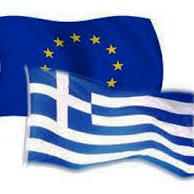
Греческий кризис как политическая проблема единства Европы.  Внимание всего мира приковано сейчас к Греции, в которой вчера прошел референдум по вопросу о том, стоит ли стране оставаться в еврозоне. Сложность состоит в том, что никто не знает, какой именно ответ на вопрос референдума – «да» или «нет» – увеличит шансы на то, что Греция останется в еврозоне, а какой – уменьшит.

Если большинство ответило «да», то премьеру Ципрасу будет легче подписать новое соглашение с кредиторами, в котором страна возьмет на себя жесткие обязательства по выплате долгов, сокращению расходов, увеличению пенсионного возраста и т. п. Однако, как считают многие выдающиеся экономисты, включая нобелевского лауреата Пола Кругмана и Джеффри Сакса из Колумбийского университета, такие обязательства приведут к дальнейшему ухудшению экономической ситуации – спаду ВВП и росту безработицы – и проблема, стоящая перед страной сейчас, встанет через несколько лет снова, только в худших условиях. То есть подписание соглашения будет выбором медленного, мучительного выхода из еврозоны.

Если большинство ответило «нет», то премьеру Ципрасу будет легче занимать жесткую позицию на переговорах с кредиторами. Это поставит кредиторов, среди которых основную роль играют европейский ЦБ, МВФ и представители крупнейшей европейской экономики, Германии, перед простым выбором. Один вариант – согласиться на то, что Греция остается в еврозоне, существенно снизить требования по выплате долга и смягчить условия, на которых эти требования будут снижены. Другой – расстаться.

Вообще-то трудно поверить, что «большая Европа» согласится на выход Греции из зоны евро. Не надо забывать, что Греция может выйти из денежного союза, но никуда не денется с европейского континента. Если после выхода там наступит экономическая катастрофа (вовсе не обязательно, но риск есть, и немалый), если там зашатается демократическая власть (последний раз настоящая военная хунта была там всего 40 лет назад), то Германия и Франция потратят на гуманитарную помощь, устройство беженцев и ликвидацию последствий больше, чем сэкономят сейчас, позволив Греции выйти. Более того, выход страны из единой валютной зоны (даже такой маленькой и экономически незначимой страны, как Греция) покажет, что валютный союз – это не широкий шаг к единому государству, а всего лишь специальная форма фиксированного обменного курса. Отношение к такой валюте будет куда более осторожным, чем к настоящей единой валюте.

С начала финансового кризиса 2008–2009 гг., который – как и предупреждали профессиональные экономисты перед созданием еврозоны – показал невозможность единой денежной политики в отсутствие единой фискальной и, соответственно, без единых политических органов (причина греческого кризиса в двух словах), Европа двигалась в сторону единого государства. Банковская система, например, по существу, стала единой, да и денежный союз стал полноценным только по ходу кризиса. Надо надеяться, что воля к единству возьмет верх и на этот раз.
Читать статью | © Ведомости

Related Topics
  • Греция
  • ЕС
  • Россия
  • Сонин
Previous Article
  • In the News | Hовости

Россия не обречена быть авторитарным государством

  • July 8, 2015
  • Vladimir Gel'man
View
Next Article
  • In the News | Hовости

Туркмения и Грузия: совпадение интересов

  • July 8, 2015
  • Kornely Kakachia
View
You May Also Like
View
  • In the News | Hовости

Вся политика инвестирована в одно-единственное тело

  • Sergei Medvedev
  • August 21, 2020
View
  • In the News | Hовости

Лукашенко отказался уходить и пообещал новую Конституцию вместо выборов

  • Arkady Moshes
  • August 18, 2020
View
  • In the News | Hовости

Кроме науки, он ничем не интересовался: В Минске задержали ученого, изучающего протесты

  • PONARS Eurasia
  • August 13, 2020
View
  • In the News | Hовости

Кимберли Мартен: Действенный шаг Вашингтона против «повара Кремля»

  • Kimberly Marten
  • July 23, 2020
View
  • In the News | Hовости

Laruelle “breaks down Russian nationalism”

  • PONARS Eurasia
  • June 15, 2020
View
  • In the News | Hовости

Война или переговоры: чем закончится конфликт между Ираном и США

  • Mikhail Troitskiy
  • June 27, 2019
View
  • In the News | Hовости

Первый тайм отыгран

  • Konstantin Sonin
  • April 1, 2019
View
  • In the News | Hовости

Только просветительством это не лечится

  • Ivan Kurilla
  • February 5, 2019

Leave a Reply Cancel reply

Your email address will not be published. Required fields are marked *

PONARS Eurasia
  • About Us
  • Membership
  • Policy Memos
  • Recommended
  • Events
Powered by narva.io

Permissions & Citation Guidelines

Input your search keywords and press Enter.