PONARS Eurasia
  • About Us
    • Contact Us!
    • Membership
      • All Members
      • Core Members
      • Collegium Members
      • Associate Members
      • About Membership
    • Our Ukraine Experts
    • Executive Committee
  • Our Ukraine Experts
  • Policy Memos
    • List of Policy Memos
    • PONARS Eurasia’s Newest eBooks
    • Submissions
  • Online Academy
  • Events
    • Past Events
  • Recommended
  • Task Forces
    • Ukraine
      • PONARS Ukraine Task Force: Incontrovertible Truths
    • Amplifying Voices of Europe, the Caucasus, and Central Asia (AVECCA)
    • Russia in a Changing Climate
  • Podcasts
Contacts

Address
1957 E St NW,
Washington, DC 20052

[email protected]
202.994.5915

NEWSLETTER
Facebook
Twitter
YouTube
Podcast
PONARS Eurasia
PONARS Eurasia
  • About Us
    • Contact Us!
    • Membership
      • All Members
      • Core Members
      • Collegium Members
      • Associate Members
      • About Membership
    • Our Ukraine Experts
    • Executive Committee
  • Our Ukraine Experts
  • Policy Memos
    • List of Policy Memos
    • PONARS Eurasia’s Newest eBooks
    • Submissions
  • Online Academy
  • Events
    • Past Events
  • Recommended
  • Task Forces
    • Ukraine
      • PONARS Ukraine Task Force: Incontrovertible Truths
    • Amplifying Voices of Europe, the Caucasus, and Central Asia (AVECCA)
    • Russia in a Changing Climate
  • Podcasts
DIGITAL RESOURCES
digital resources

Bookstore 📚

Knowledge Hub

Course Syllabi

Point & Counterpoint

Policy Perspectives

RECOMMENDED
  • Misconceptions about Eastern Europe, the Caucasus, and Central Asia and Their Impact on Policy

    View
  • Five Years into the War, Ukraine Is Showing Grittiness, Rebounding Confidence in War Fortunes

    View
  • Russia’s Wartime Internet: A Contested Space with the Regime Still Predominant

    View
  • Why Georgians Need to Take Hungarian Lessons

    View
  • The ‘Don’t Lose Lukashenko’ Approach: Kyiv’s (Non-) Strategic Ambiguity Toward the Belarusian Opposition

    View
RSS PONARS Eurasia Podcast
  • The Putin-Xi Summit: What's New In Their Joint Communique ? February 23, 2022
    In this week’s PONARS Eurasia Podcast, Maria Lipman speaks with Russian China experts Vita Spivak and Alexander Gabuev about the February meeting between Vladimir Putin and Xi Jinping, and what it may tell us about where the Russian-Chinese relationship is headed.
  • Exploring the Russian Courts' Ruling to Liquidate the Memorial Society January 28, 2022
    In this week’s PONARS Eurasia Podcast, Maria Lipman chats with scholars Kelly Smith and Benjamin Nathans about the history, achievements, and impending shutdown of the Memorial Society, Russia's oldest and most venerable civic organization, and what its imminent liquidation portends for the Russian civil society.
  • Russia's 2021 census and the Kremlin's nationalities policy [Lipman Series 2021] December 9, 2021
    In this week’s PONARS Eurasia Podcast, Maria Lipman chats with social scientist Andrey Shcherbak about the quality of the data collected in the recent population census and the goals of Vladimir Putin's government's nationalities policy
  • Active citizens of any kind are under threat [Lipman Series 2021] November 5, 2021
    In this week’s PONARS Eurasia Podcast, Maria Lipman chats with Alexander Verkhovsky about the Kremlin's ever expanding toolkit against political and civic activists, journalists, and other dissidents.
  • Russia's Legislative Elections followup [Lipman Series 2021] October 4, 2021
    In this week’s PONARS Eurasia Podcast, Maria Lipman chats with Tanya Lokot and Nikolay Petrov about the results of Russia’s legislative elections and about what comes next.
  • Why Is the Kremlin Nervous? [Lipman Series 2021] September 14, 2021
    In this week’s PONARS Eurasia Podcast, Maria Lipman chats with Ben Noble and Nikolay Petrov about Russia’s September 17-19 legislative elections, repressive measures against electoral challengers, and whether to expect anything other than preordained results.
  • Vaccine Hesitancy in Russia, France, and the United States [Lipman Series 2021] August 31, 2021
    In this week's PONARS Eurasia Podcast episode, Maria Lipman chats with Denis Volkov, Naira Davlashyan, and Peter Slevin about why COVID-19 vaccination rates are still so low across the globe, comparing vaccine hesitant constituencies across Russia, France, and the United States.  
  • Is Russia Becoming More Soviet? [Lipman Series 2021] July 26, 2021
      In a new PONARS Eurasia Podcast episode, Maria Lipman chats with Maxim Trudolyubov about the current tightening of the Russian political sphere, asking whether or not it’s helpful to draw comparisons to the late Soviet period.
  • The Evolution of Russia's Political Regime [Lipman Series 2021] June 21, 2021
    In this week's episode of the PONARS Eurasia Podcast, Maria Lipman chats with Grigory Golosov and Henry Hale about the evolution of Russia's political regime, and what to expect in the lead-up to September's Duma elections.
  • Volodymyr Zelensky: Year Two [Lipman Series 2021] May 24, 2021
    In this week's episode of the PONARS Eurasia Podcast, Maria Lipman chats with Sergiy Kudelia and Georgiy Kasianov about Ukrainian President Zelensky's second year in office, and how he has handled the political turbulence of the past year.
  • Commentary | Комментарии

Чемпионат мира по борьбе с дискриминацией

  • June 15, 2018
  • Konstantin Sonin

События уровня чемпионата мира по футболу – это наш шанс стать более толерантными.

Чемпионат мира по футболу – это не просто спортивное соревнование. Это возможность для миллионов людей прикоснуться к мировой цивилизации – себя показать и других посмотреть. Для России чемпионат мира – шанс стать чуть более толерантным, недискриминационным обществом.

Надо понимать, что в гомофобии, в дискриминации женщин и меньшинств нет ничего, кроме отсталости. Что в российской, что в любой другой. Общество развивается в разных странах по-разному, и отставание в одних вопросах не означает «отставания во всем». Скажем, именно в России впервые в мировой истории были проведены национальные выборы, в которых все взрослые граждане получили право голоса. Крепостное право было ликвидировано поздно по европейским меркам, но раньше, чем рабство в Америке. Хотя в XX в. у нас происходили ужасающие этнические чистки, во второй половине века этнической дискриминации было куда меньше, чем в тех же США. Последний раз бывшего премьер-министра у нас казнили в 1938 г., а во Франции – в 1945 г. Россия бывала мировым лидером и в литературе.

В отношении к гомосексуализму наша задержка – примерно 20 лет. Английские законы о «принудительном лечении», варварские по современным меркам, были отменены только в 1967 г. (а гомосексуальный секс втроем так и вообще оставался криминальным до 2000 г.). В нашей стране уголовная ответственность за мужской гомосексуализм была отменена только в 1991 г. В США четверть века назад прогрессивным делом была политика «не спрашивай, не говори» – т. е. запрет на дискриминацию гомосексуалов в армии, если они не заявляют открыто о своей гомосексуальности. У нас пока такие запреты существуют только в виде общих запретов на дискриминацию, но практической борьбы с дискриминацией не ведется.

Надо понимать, что 20-летнее отставание – это не страшно. Важно, чтобы движение было в правильную сторону. (Именно потому принятие гомофобского закона, запрещающего «пропаганду гомосексуализма», вызвало столь негативную реакцию в мире – это было маленькое отступление по сравнению с десятилетиями прогресса, но тем не менее отступление.) В России на 40 лет позже появилась первая фабрика туалетной бумаги (в 1968 г.). Первые московские небоскребы – сталинские высотки – появились на 30–40 лет позже нью-йоркских и чикагских образцов. С открытием границ в начале 1990-х процесс заимствования и переноса ускорился. Особенно быстро в области технологий: новые смартфоны появляются в Москве одновременно с мировыми столицами. Куда медленнее в отношении к гомосексуалистам.

У этого есть прямая экономическая подоплека. В нашей стране низкая производительность труда – на одного работающего приходится мало рабочего капитала. Или, иными словами, на одну единицу капитала приходится много работающих – т. е. человек дешев по сравнению со странами-лидерами. Это означает, что потери от разного вида дискриминаций – по сексуальности, по гендерному признаку, по этническим – у нас меньше, чем в более богатых странах. Потери меньше, и значит, можно дольше терпеть архаичные гомофобские законы.

Один из лозунгов мирового футбольного сообщества – «Нет дискриминации». Циник скажет, что основные игроки мирового футбола – телекомпании, спонсоры, владельцы клубов – не могут себе позволить дискриминацию. Человек, выключивший трансляцию из-за расистских или гомофобских лозунгов, болельщица, не пришедшая на стадион из-за того, что футбол – это «мужской спорт», читатель, не купивший журнал, потому что любимый футболист соответствует слишком стандартному образу (жена-модель, Bentley), – это потерянные деньги. И прекрасно! Прекрасно, если чье-то стремление к наживе делает тебя лучше.

Безупречно в цивилизационном отношении проведенный чемпионат мира по футболу – это шаг в правильную сторону. Маленький шаг, из которого складывается движение России вперед.
Читать полностью | © Ведомости

Related Topics
  • ЛГБТ
  • Россия
  • Сонин
  • спорт
Previous Article
  • In the News | Hовости

Kassenova: Astana has raised, very diplomatically, the issue of ethnic Kazakhs in Xinjiang re-education camps

  • June 15, 2018
  • PONARS Eurasia
View
Next Article
  • Uncategorized

Who Owns the Past? Conflict Over Memory and History in Russia

  • June 18, 2018
  • PONARS Eurasia
View
You May Also Like
View
  • Commentary | Комментарии
  • Recommended | Рекомендуем

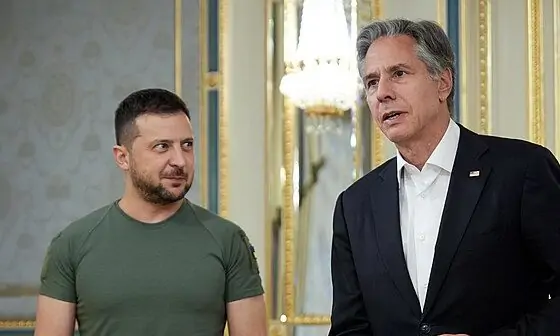
Clearing the Air: Secretary Blinken Visits Ukraine

  • Volodymyr Dubovyk
  • September 19, 2023
View
  • Commentary | Комментарии
  • Recommended | Рекомендуем

Ensuring Genuine Results? A New Electoral Design in Uzbekistan

  • Akrom Avezov
  • May 19, 2023
View
  • Commentary | Комментарии
  • Recommended | Рекомендуем

Ukraine, Taiwan, and Macron’s “Strategic Autonomy”

  • Maurizio Delli Santi
  • April 30, 2023
View
  • Commentary | Комментарии
  • Recommended | Рекомендуем

Russia’s Regional Governors: Backing the War, Upholding the Status Quo

  • Irina Busygina and Mikhail Filippov
  • April 7, 2023
View
  • Commentary | Комментарии
  • Recommended | Рекомендуем

The Desire to Possess: Russia’s War for Territory

  • Irina Busygina
  • February 8, 2023
View
  • Commentary | Комментарии
  • Recommended | Рекомендуем

Kyiv-Washington Relations in Times of Colossal War: The Ultimate Test of a Strategic Partnership

  • Volodymyr Dubovyk
  • January 11, 2023
View
  • Commentary | Комментарии
  • Recommended | Рекомендуем

Prevailing Soviet Legacies

  • Irina Busygina and Mikhail Filippov
  • December 27, 2022
View
  • Commentary | Комментарии
  • Recommended | Рекомендуем

In Russia’s Nuclear Messaging to West and Ukraine, Putin Plays Both Bad and Good Cop

  • Simon Saradzhyan
  • December 23, 2022

Leave a Reply Cancel reply

Your email address will not be published. Required fields are marked *

PONARS Eurasia
  • About Us
  • Membership
  • Policy Memos
  • Recommended
  • Events
Powered by narva.io

Permissions & Citation Guidelines

Input your search keywords and press Enter.