PONARS Eurasia
  • About Us
    • Contact Us!
    • Membership
      • All Members
      • Core Members
      • Collegium Members
      • Associate Members
      • About Membership
    • Our Ukraine Experts
    • Executive Committee
  • Our Ukraine Experts
  • Policy Memos
    • List of Policy Memos
    • PONARS Eurasia’s Newest eBooks
    • Submissions
  • Online Academy
  • Events
    • Past Events
  • Recommended
  • Task Forces
    • Ukraine
      • PONARS Ukraine Task Force: Incontrovertible Truths
    • Amplifying Voices of Europe, the Caucasus, and Central Asia (AVECCA)
    • Russia in a Changing Climate
  • Podcasts
Contacts

Address
1957 E St NW,
Washington, DC 20052

[email protected]
202.994.5915

NEWSLETTER
Facebook
Twitter
YouTube
Podcast
PONARS Eurasia
PONARS Eurasia
  • About Us
    • Contact Us!
    • Membership
      • All Members
      • Core Members
      • Collegium Members
      • Associate Members
      • About Membership
    • Our Ukraine Experts
    • Executive Committee
  • Our Ukraine Experts
  • Policy Memos
    • List of Policy Memos
    • PONARS Eurasia’s Newest eBooks
    • Submissions
  • Online Academy
  • Events
    • Past Events
  • Recommended
  • Task Forces
    • Ukraine
      • PONARS Ukraine Task Force: Incontrovertible Truths
    • Amplifying Voices of Europe, the Caucasus, and Central Asia (AVECCA)
    • Russia in a Changing Climate
  • Podcasts
DIGITAL RESOURCES
digital resources

Bookstore 📚

Knowledge Hub

Course Syllabi

Point & Counterpoint

Policy Perspectives

RECOMMENDED
  • Misconceptions about Eastern Europe, the Caucasus, and Central Asia and Their Impact on Policy

    View
  • Five Years into the War, Ukraine Is Showing Grittiness, Rebounding Confidence in War Fortunes

    View
  • Russia’s Wartime Internet: A Contested Space with the Regime Still Predominant

    View
  • Why Georgians Need to Take Hungarian Lessons

    View
  • The ‘Don’t Lose Lukashenko’ Approach: Kyiv’s (Non-) Strategic Ambiguity Toward the Belarusian Opposition

    View
RSS PONARS Eurasia Podcast
  • The Putin-Xi Summit: What's New In Their Joint Communique ? February 23, 2022
    In this week’s PONARS Eurasia Podcast, Maria Lipman speaks with Russian China experts Vita Spivak and Alexander Gabuev about the February meeting between Vladimir Putin and Xi Jinping, and what it may tell us about where the Russian-Chinese relationship is headed.
  • Exploring the Russian Courts' Ruling to Liquidate the Memorial Society January 28, 2022
    In this week’s PONARS Eurasia Podcast, Maria Lipman chats with scholars Kelly Smith and Benjamin Nathans about the history, achievements, and impending shutdown of the Memorial Society, Russia's oldest and most venerable civic organization, and what its imminent liquidation portends for the Russian civil society.
  • Russia's 2021 census and the Kremlin's nationalities policy [Lipman Series 2021] December 9, 2021
    In this week’s PONARS Eurasia Podcast, Maria Lipman chats with social scientist Andrey Shcherbak about the quality of the data collected in the recent population census and the goals of Vladimir Putin's government's nationalities policy
  • Active citizens of any kind are under threat [Lipman Series 2021] November 5, 2021
    In this week’s PONARS Eurasia Podcast, Maria Lipman chats with Alexander Verkhovsky about the Kremlin's ever expanding toolkit against political and civic activists, journalists, and other dissidents.
  • Russia's Legislative Elections followup [Lipman Series 2021] October 4, 2021
    In this week’s PONARS Eurasia Podcast, Maria Lipman chats with Tanya Lokot and Nikolay Petrov about the results of Russia’s legislative elections and about what comes next.
  • Why Is the Kremlin Nervous? [Lipman Series 2021] September 14, 2021
    In this week’s PONARS Eurasia Podcast, Maria Lipman chats with Ben Noble and Nikolay Petrov about Russia’s September 17-19 legislative elections, repressive measures against electoral challengers, and whether to expect anything other than preordained results.
  • Vaccine Hesitancy in Russia, France, and the United States [Lipman Series 2021] August 31, 2021
    In this week's PONARS Eurasia Podcast episode, Maria Lipman chats with Denis Volkov, Naira Davlashyan, and Peter Slevin about why COVID-19 vaccination rates are still so low across the globe, comparing vaccine hesitant constituencies across Russia, France, and the United States.  
  • Is Russia Becoming More Soviet? [Lipman Series 2021] July 26, 2021
      In a new PONARS Eurasia Podcast episode, Maria Lipman chats with Maxim Trudolyubov about the current tightening of the Russian political sphere, asking whether or not it’s helpful to draw comparisons to the late Soviet period.
  • The Evolution of Russia's Political Regime [Lipman Series 2021] June 21, 2021
    In this week's episode of the PONARS Eurasia Podcast, Maria Lipman chats with Grigory Golosov and Henry Hale about the evolution of Russia's political regime, and what to expect in the lead-up to September's Duma elections.
  • Volodymyr Zelensky: Year Two [Lipman Series 2021] May 24, 2021
    In this week's episode of the PONARS Eurasia Podcast, Maria Lipman chats with Sergiy Kudelia and Georgiy Kasianov about Ukrainian President Zelensky's second year in office, and how he has handled the political turbulence of the past year.
  • Commentary | Комментарии

Parliamentary Elections: A New Ukrainian Chance for Change

  • October 30, 2014
  • Oleksandr Sushko

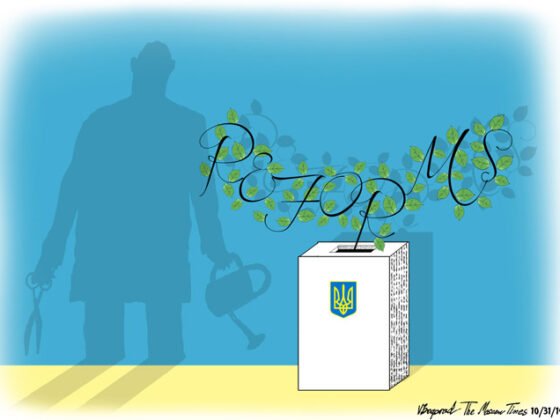
Ukraine’s voting outcome might be interpreted as conditional confidence in the post-Euromaidan government. “Conditional” because the winning political actors will face challenges of unity when it comes to reform and security legislation. None of the parties can run the country without an alliance – at least three parties are needed to form a coalition. The efficiency and success of the government now depends on the ability of the political winners not to repeat the mistakes of the Orange revolution, when leaders wasted their historic chance by engaging in disruptive conflicts with each other. Here is my analysis of this election.

First, society proved unwilling to concentrate power in one person’s hands.

President Petro Poroshenko’s block, which was the frontrunner in all pre-election polls, lost at least 10% of the expected votes – it obtained 22% instead of the 30-35% that was projected. The newly created party People’s Front led by Primer Minister Arseniy Yatsenyuk received twice more than expected – 22% instead of 10-12%. Both of these “winning” parties can claim victory though both will need to prove their ability to build consensus, limit personal ambitions, and create sustainable, effective coalitions.

Second, society declared that they seek real reforms, not “business as usual.” This brought the Samopomich (“self-reliance”) party into the foreground as a winner, with 11% of the vote. Samopomich was founded and chaired by the Mayor of Lviv, Andriy Sadovy. Samopomich represents a new, post-Euromaidan, political face. It has no former MPs or governmental officials. The party list is mostly composed of young civic activists, in particular, a pro-reformist expert network that has developed dozens of draft legal bills aimed at anti-corruption, transparency, judiciary reform, public administration reform, etc. Samopomich started the campaign with just 2% support ratings, but came to symbolize the demands of society for a new generation of politicians who are seriously committed to reforms.

Third, the populist parties flopped. Two weeks before the election, pollster agencies predicted a second-tier result for the populist Radical party, but voters put it in fifth position (7.5%).

Fourth, traditional nationalists failed. Both far-right parties, Svoboda and Right Sector did not reach the 5% threshold (they received 4.7% and 1.8%, respectively). They will not have factions in the new parliament. Only a few individuals from these parties won in single-mandate constituencies (6 people and 2 poeple, respectively). This development substantially undermines Russian efforts to portray Ukraine’s current development as dominated by the far-right, fascists, and nationalists.

Fifth, Ukrainians said their ultimate “Good-bye to Lenin.” The Communists are out with just 3.8% of the vote, which has symbolic importance.

The electoral success of pro-Western reformist parties was impressive, but it does not guarantee the automatic success of Ukraine. Coalition talks will not be easy and the final composition of the government is still hard to predict. Hopefully, the sad lessons of the 2004-10 Orange era, when Ukraine wasted enormous opportunities, should serve as powerful reminders for the winners today. They must be determined to consolidate efforts to build sustainable democratic institutions that are based on the rule of law.

————

Also see Volodymyr Dubovyk’s Oct. 28 comment: An Overview of the Make-up of the New Ukrainian Parliament

Also see Henry E. Hale’s Oct. 26 comment: Ukraine's Election: Hope and Concern

Related Topics
  • Elections
  • Sushko
  • Ukraine
Previous Article
  • Recommended | Рекомендуем

Policy Memo: Exceptions Prove the Rule: Ukraine, Iraq, and the Fate of International Borders

  • October 30, 2014
  • George Gavrilis
View
Next Article
  • Commentary | Комментарии

After Elections, What’s Next for Ukraine?

  • October 30, 2014
  • Robert Orttung
View
You May Also Like
View
  • Commentary | Комментарии
  • Recommended | Рекомендуем

Clearing the Air: Secretary Blinken Visits Ukraine

  • Volodymyr Dubovyk
  • September 19, 2023
View
  • Commentary | Комментарии
  • Recommended | Рекомендуем

Ensuring Genuine Results? A New Electoral Design in Uzbekistan

  • Akrom Avezov
  • May 19, 2023
View
  • Commentary | Комментарии
  • Recommended | Рекомендуем

Ukraine, Taiwan, and Macron’s “Strategic Autonomy”

  • Maurizio Delli Santi
  • April 30, 2023
View
  • Commentary | Комментарии
  • Recommended | Рекомендуем

Russia’s Regional Governors: Backing the War, Upholding the Status Quo

  • Irina Busygina and Mikhail Filippov
  • April 7, 2023
View
  • Commentary | Комментарии
  • Recommended | Рекомендуем

The Desire to Possess: Russia’s War for Territory

  • Irina Busygina
  • February 8, 2023
View
  • Commentary | Комментарии
  • Recommended | Рекомендуем

Kyiv-Washington Relations in Times of Colossal War: The Ultimate Test of a Strategic Partnership

  • Volodymyr Dubovyk
  • January 11, 2023
View
  • Commentary | Комментарии
  • Recommended | Рекомендуем

Prevailing Soviet Legacies

  • Irina Busygina and Mikhail Filippov
  • December 27, 2022
View
  • Commentary | Комментарии
  • Recommended | Рекомендуем

In Russia’s Nuclear Messaging to West and Ukraine, Putin Plays Both Bad and Good Cop

  • Simon Saradzhyan
  • December 23, 2022

Leave a Reply Cancel reply

Your email address will not be published. Required fields are marked *

PONARS Eurasia
  • About Us
  • Membership
  • Policy Memos
  • Recommended
  • Events
Powered by narva.io

Permissions & Citation Guidelines

Input your search keywords and press Enter.