PONARS Eurasia
  • About Us
    • Contact Us!
    • Membership
      • All Members
      • Core Members
      • Collegium Members
      • Associate Members
      • About Membership
    • Our Ukraine Experts
    • Executive Committee
  • Our Ukraine Experts
  • Policy Memos
    • List of Policy Memos
    • PONARS Eurasia’s Newest eBooks
    • Submissions
  • Online Academy
  • Events
    • Past Events
  • Recommended
  • Task Forces
    • Ukraine
      • PONARS Ukraine Task Force: Incontrovertible Truths
    • Amplifying Voices of Europe, the Caucasus, and Central Asia (AVECCA)
    • Russia in a Changing Climate
  • Podcasts
Contacts

Address
1957 E St NW,
Washington, DC 20052

[email protected]
202.994.5915

NEWSLETTER
Facebook
Twitter
YouTube
Podcast
PONARS Eurasia
PONARS Eurasia
  • About Us
    • Contact Us!
    • Membership
      • All Members
      • Core Members
      • Collegium Members
      • Associate Members
      • About Membership
    • Our Ukraine Experts
    • Executive Committee
  • Our Ukraine Experts
  • Policy Memos
    • List of Policy Memos
    • PONARS Eurasia’s Newest eBooks
    • Submissions
  • Online Academy
  • Events
    • Past Events
  • Recommended
  • Task Forces
    • Ukraine
      • PONARS Ukraine Task Force: Incontrovertible Truths
    • Amplifying Voices of Europe, the Caucasus, and Central Asia (AVECCA)
    • Russia in a Changing Climate
  • Podcasts
DIGITAL RESOURCES
digital resources

Bookstore 📚

Knowledge Hub

Course Syllabi

Point & Counterpoint

Policy Perspectives

RECOMMENDED
  • Misconceptions about Eastern Europe, the Caucasus, and Central Asia and Their Impact on Policy

    View
  • Five Years into the War, Ukraine Is Showing Grittiness, Rebounding Confidence in War Fortunes

    View
  • Russia’s Wartime Internet: A Contested Space with the Regime Still Predominant

    View
  • Why Georgians Need to Take Hungarian Lessons

    View
  • The ‘Don’t Lose Lukashenko’ Approach: Kyiv’s (Non-) Strategic Ambiguity Toward the Belarusian Opposition

    View
RSS PONARS Eurasia Podcast
  • The Putin-Xi Summit: What's New In Their Joint Communique ? February 23, 2022
    In this week’s PONARS Eurasia Podcast, Maria Lipman speaks with Russian China experts Vita Spivak and Alexander Gabuev about the February meeting between Vladimir Putin and Xi Jinping, and what it may tell us about where the Russian-Chinese relationship is headed.
  • Exploring the Russian Courts' Ruling to Liquidate the Memorial Society January 28, 2022
    In this week’s PONARS Eurasia Podcast, Maria Lipman chats with scholars Kelly Smith and Benjamin Nathans about the history, achievements, and impending shutdown of the Memorial Society, Russia's oldest and most venerable civic organization, and what its imminent liquidation portends for the Russian civil society.
  • Russia's 2021 census and the Kremlin's nationalities policy [Lipman Series 2021] December 9, 2021
    In this week’s PONARS Eurasia Podcast, Maria Lipman chats with social scientist Andrey Shcherbak about the quality of the data collected in the recent population census and the goals of Vladimir Putin's government's nationalities policy
  • Active citizens of any kind are under threat [Lipman Series 2021] November 5, 2021
    In this week’s PONARS Eurasia Podcast, Maria Lipman chats with Alexander Verkhovsky about the Kremlin's ever expanding toolkit against political and civic activists, journalists, and other dissidents.
  • Russia's Legislative Elections followup [Lipman Series 2021] October 4, 2021
    In this week’s PONARS Eurasia Podcast, Maria Lipman chats with Tanya Lokot and Nikolay Petrov about the results of Russia’s legislative elections and about what comes next.
  • Why Is the Kremlin Nervous? [Lipman Series 2021] September 14, 2021
    In this week’s PONARS Eurasia Podcast, Maria Lipman chats with Ben Noble and Nikolay Petrov about Russia’s September 17-19 legislative elections, repressive measures against electoral challengers, and whether to expect anything other than preordained results.
  • Vaccine Hesitancy in Russia, France, and the United States [Lipman Series 2021] August 31, 2021
    In this week's PONARS Eurasia Podcast episode, Maria Lipman chats with Denis Volkov, Naira Davlashyan, and Peter Slevin about why COVID-19 vaccination rates are still so low across the globe, comparing vaccine hesitant constituencies across Russia, France, and the United States.  
  • Is Russia Becoming More Soviet? [Lipman Series 2021] July 26, 2021
      In a new PONARS Eurasia Podcast episode, Maria Lipman chats with Maxim Trudolyubov about the current tightening of the Russian political sphere, asking whether or not it’s helpful to draw comparisons to the late Soviet period.
  • The Evolution of Russia's Political Regime [Lipman Series 2021] June 21, 2021
    In this week's episode of the PONARS Eurasia Podcast, Maria Lipman chats with Grigory Golosov and Henry Hale about the evolution of Russia's political regime, and what to expect in the lead-up to September's Duma elections.
  • Volodymyr Zelensky: Year Two [Lipman Series 2021] May 24, 2021
    In this week's episode of the PONARS Eurasia Podcast, Maria Lipman chats with Sergiy Kudelia and Georgiy Kasianov about Ukrainian President Zelensky's second year in office, and how he has handled the political turbulence of the past year.
  • In the News | Hовости

Radnitz: To expel 60 diplomats and to close a consulate is actually a pretty surprisingly large response from the US

  • March 28, 2018
  • PONARS Eurasia

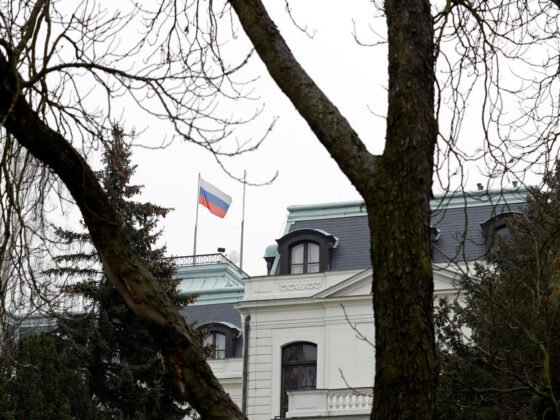
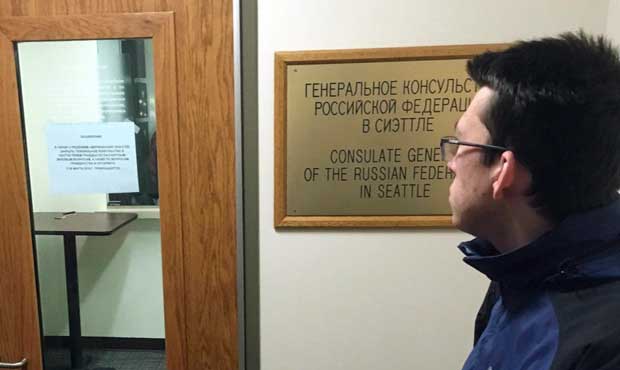
(MyNorthwest) When the Trump administration on Monday said the Russian Consulate in Seattle would close along with the expulsion of its staff, experts on the two countries’ perpetually tense relationship immediately predicted one certain outcome: Russian retaliation.

“I expected they’ll expel an equivalent number of American diplomats,” said Scott Radnitz, a Russia expert and an associate professor at the University of Washington. “The Russian government actually put out a poll on Twitter (Monday) asking people which American consulate they should shut down.”

The winner so far: Vladivostok.

The announcement of the closure of the local Russian Consulate and the expulsion of 60 members of the country’s diplomatic staff came after the country was accused of poisoning a former Russian spy who was living in London. The British government immediately expelled a host of Russian diplomats and other European countries soon followed suit.

The move by the U.S. — and the recent provocation by the Russians — slid the countries’ diplomatic relationship into Cold War status.

But cold doesn’t mean frozen, Radnitz explained. The Seattle Consulate, while important to Russian nationals across the western United States, is considered a second-tier diplomatic outpost. It isn’t nearly the same gesture as closing the Russian Embassy in Washington D.C. or the large consulate in New York City, he said.

Even so, shuttering it and kicking staff out of the country is designed to send a message.

“I think what is surprising about this is the magnitude of the response — especially from the U.S.,” Radnitz said. “Trump had mostly been seen as kind of weak and unassertive in his response to the things Russia has been doing.

“And so to expel 60 diplomats and to close a consulate is actually a pretty surprisingly large response from the U.S.”

Locally, and in the western United States, the closed consulate is going to create headaches for the sizable Russian population. Approximately 15,000 Russians live in Washington state and another 66,000 live in California.

Since last August, when the Trump Administration closed the San Francisco Russian Consulate, Russians living in the western U.S. have depended on the Seattle office for passports and other matters.

But with the closure of the office in another six days, that work will be handled by the Houston or New York consulates. As for the Russian staff at the Seattle office, they are now deemed “persona non grata” in diplomatic terms and must leave the country.

“We’ll likely see the same number of American diplomats returning from Russia shortly,” Radnitz said.

See the original © MyNorthwest


Related Topics
  • Radnitz
  • Russia
Previous Article
  • In the News | Hовости

Перед встречей с Путиным Трампу следует усвоить уроки холодной войны

  • March 27, 2018
  • Nikolai Sokov
View
Next Article
  • In the News | Hовости

Kurilla: It is not the Cold War that can explain events but Russia’s first revolutionary regime

  • March 28, 2018
  • PONARS Eurasia
View
You May Also Like
View
  • In the News | Hовости

Вся политика инвестирована в одно-единственное тело

  • Sergei Medvedev
  • August 21, 2020
View
  • In the News | Hовости

Лукашенко отказался уходить и пообещал новую Конституцию вместо выборов

  • Arkady Moshes
  • August 18, 2020
View
  • In the News | Hовости

Кроме науки, он ничем не интересовался: В Минске задержали ученого, изучающего протесты

  • PONARS Eurasia
  • August 13, 2020
View
  • In the News | Hовости

Кимберли Мартен: Действенный шаг Вашингтона против «повара Кремля»

  • Kimberly Marten
  • July 23, 2020
View
  • In the News | Hовости

Laruelle “breaks down Russian nationalism”

  • PONARS Eurasia
  • June 15, 2020
View
  • In the News | Hовости

Война или переговоры: чем закончится конфликт между Ираном и США

  • Mikhail Troitskiy
  • June 27, 2019
View
  • In the News | Hовости

Первый тайм отыгран

  • Konstantin Sonin
  • April 1, 2019
View
  • In the News | Hовости

Только просветительством это не лечится

  • Ivan Kurilla
  • February 5, 2019

Leave a Reply Cancel reply

Your email address will not be published. Required fields are marked *

PONARS Eurasia
  • About Us
  • Membership
  • Policy Memos
  • Recommended
  • Events
Powered by narva.io

Permissions & Citation Guidelines

Input your search keywords and press Enter.