PONARS Eurasia
  • About Us
    • Contact Us!
    • Membership
      • All Members
      • Core Members
      • Collegium Members
      • Associate Members
      • About Membership
    • Our Ukraine Experts
    • Executive Committee
  • Our Ukraine Experts
  • Policy Memos
    • List of Policy Memos
    • PONARS Eurasia’s Newest eBooks
    • Submissions
  • Online Academy
  • Events
    • Past Events
  • Recommended
  • Task Forces
    • Ukraine
      • PONARS Ukraine Task Force: Incontrovertible Truths
    • Amplifying Voices of Europe, the Caucasus, and Central Asia (AVECCA)
    • Russia in a Changing Climate
  • Podcasts
Contacts

Address
1957 E St NW,
Washington, DC 20052

[email protected]
202.994.5915

NEWSLETTER
Facebook
Twitter
YouTube
Podcast
PONARS Eurasia
PONARS Eurasia
  • About Us
    • Contact Us!
    • Membership
      • All Members
      • Core Members
      • Collegium Members
      • Associate Members
      • About Membership
    • Our Ukraine Experts
    • Executive Committee
  • Our Ukraine Experts
  • Policy Memos
    • List of Policy Memos
    • PONARS Eurasia’s Newest eBooks
    • Submissions
  • Online Academy
  • Events
    • Past Events
  • Recommended
  • Task Forces
    • Ukraine
      • PONARS Ukraine Task Force: Incontrovertible Truths
    • Amplifying Voices of Europe, the Caucasus, and Central Asia (AVECCA)
    • Russia in a Changing Climate
  • Podcasts
DIGITAL RESOURCES
digital resources

Bookstore 📚

Knowledge Hub

Course Syllabi

Point & Counterpoint

Policy Perspectives

RECOMMENDED
  • Misconceptions about Eastern Europe, the Caucasus, and Central Asia and Their Impact on Policy

    View
  • Five Years into the War, Ukraine Is Showing Grittiness, Rebounding Confidence in War Fortunes

    View
  • Russia’s Wartime Internet: A Contested Space with the Regime Still Predominant

    View
  • Why Georgians Need to Take Hungarian Lessons

    View
  • The ‘Don’t Lose Lukashenko’ Approach: Kyiv’s (Non-) Strategic Ambiguity Toward the Belarusian Opposition

    View
RSS PONARS Eurasia Podcast
  • The Putin-Xi Summit: What's New In Their Joint Communique ? February 23, 2022
    In this week’s PONARS Eurasia Podcast, Maria Lipman speaks with Russian China experts Vita Spivak and Alexander Gabuev about the February meeting between Vladimir Putin and Xi Jinping, and what it may tell us about where the Russian-Chinese relationship is headed.
  • Exploring the Russian Courts' Ruling to Liquidate the Memorial Society January 28, 2022
    In this week’s PONARS Eurasia Podcast, Maria Lipman chats with scholars Kelly Smith and Benjamin Nathans about the history, achievements, and impending shutdown of the Memorial Society, Russia's oldest and most venerable civic organization, and what its imminent liquidation portends for the Russian civil society.
  • Russia's 2021 census and the Kremlin's nationalities policy [Lipman Series 2021] December 9, 2021
    In this week’s PONARS Eurasia Podcast, Maria Lipman chats with social scientist Andrey Shcherbak about the quality of the data collected in the recent population census and the goals of Vladimir Putin's government's nationalities policy
  • Active citizens of any kind are under threat [Lipman Series 2021] November 5, 2021
    In this week’s PONARS Eurasia Podcast, Maria Lipman chats with Alexander Verkhovsky about the Kremlin's ever expanding toolkit against political and civic activists, journalists, and other dissidents.
  • Russia's Legislative Elections followup [Lipman Series 2021] October 4, 2021
    In this week’s PONARS Eurasia Podcast, Maria Lipman chats with Tanya Lokot and Nikolay Petrov about the results of Russia’s legislative elections and about what comes next.
  • Why Is the Kremlin Nervous? [Lipman Series 2021] September 14, 2021
    In this week’s PONARS Eurasia Podcast, Maria Lipman chats with Ben Noble and Nikolay Petrov about Russia’s September 17-19 legislative elections, repressive measures against electoral challengers, and whether to expect anything other than preordained results.
  • Vaccine Hesitancy in Russia, France, and the United States [Lipman Series 2021] August 31, 2021
    In this week's PONARS Eurasia Podcast episode, Maria Lipman chats with Denis Volkov, Naira Davlashyan, and Peter Slevin about why COVID-19 vaccination rates are still so low across the globe, comparing vaccine hesitant constituencies across Russia, France, and the United States.  
  • Is Russia Becoming More Soviet? [Lipman Series 2021] July 26, 2021
      In a new PONARS Eurasia Podcast episode, Maria Lipman chats with Maxim Trudolyubov about the current tightening of the Russian political sphere, asking whether or not it’s helpful to draw comparisons to the late Soviet period.
  • The Evolution of Russia's Political Regime [Lipman Series 2021] June 21, 2021
    In this week's episode of the PONARS Eurasia Podcast, Maria Lipman chats with Grigory Golosov and Henry Hale about the evolution of Russia's political regime, and what to expect in the lead-up to September's Duma elections.
  • Volodymyr Zelensky: Year Two [Lipman Series 2021] May 24, 2021
    In this week's episode of the PONARS Eurasia Podcast, Maria Lipman chats with Sergiy Kudelia and Georgiy Kasianov about Ukrainian President Zelensky's second year in office, and how he has handled the political turbulence of the past year.
  • Commentary | Комментарии

Will Eastern Ukraine Turn Into Northern Ireland?

  • July 28, 2014
  • Sergiy Kudelia

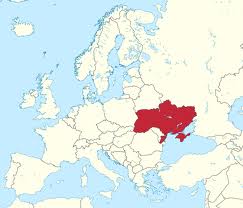
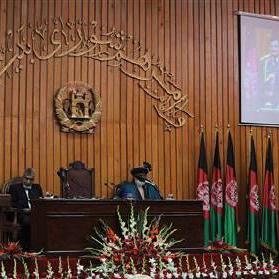
Since the downing of MH-17 the Ukrainian government has intensified its military campaign against the separatists in Ukraine’s east. In short order, the military was able to recapture a dozen towns and villages on the outskirts of the two largest rebel-held cities – Donetsk and Luhansk. This came at a cost of at least 100 civilians and Ukrainian soldiers killed over the last week. Given the complexity of urban warfare and Ukraine’s reliance on Grad rockets, taking these densely populated insurgent strongholds without collateral damage is next to impossible. This, in turn, could produce an upsurge of new revenge-seeking rebel recruits. However, even if the Ukrainian government succeeds in establishing control over the rest of the country militarily, the insurgency is likely to persist. There are at least five reasons why reliance on military force may not necessarily lead to a quick settlement of the conflict. [See the original post at The Monkey Cage blog.]

1) Local Support. The insurgency in Donbas started as a movement demanding broader political autonomy, but quickly transformed into an armed secessionist insurrection capturing at least a third of the region’s territory. Local public support for full separation of Donbas from Ukraine has hovered around 30% since the start of the conflict in April. The latest polling from the region indicates that in early July 37% of respondents in Donbas endorsed secession. As one study shows, it is quite difficult to turn the population against rebels; neither coercion nor the provision of benefits are typically successful. Reestablishing military control may lead to passive collaboration with separatist sympathizers. Locals could still provide support to the insurgency in numerous smaller towns and villages beyond the reach of an overstretched Ukrainian military. This will allow the insurgents to adopt a more flexible hit-and-run guerilla tactics using small groups capable of blending in with civilian population.

2) External Sanctuaries. Decentralized guerilla campaign in Donbas will rely not only on domestic areas of support, but also on external military and political support from across the Russian-Ukrainian border. Recent evidence indicates that Russia has offered its border territories to store military equipment for the insurgents and provide training to new recruits. If the Ukrainian government pursues the strategy of attrition in dealing with the insurgency, the Russian authorities will most likely maintain its sanctuaries for the rebel fighters. As Idean Salehyan shows, the availability of extraterritorial bases for the rebel groups substantially prolongs the duration of conflicts.

3) Weak State Capacity. In order to gain the support of the wavering local majority, Ukrainian authorities will need to provide security and public goods to the residents of government-controlled areas. However, there are both financial and political constraints that will weaken the government’s capacity to deliver. The IMF forecasts that Ukraine’s annual GDP will drop by 6.5% this year, while the government deficit is projected at 10.1% of GDP. This week the government announced that it would need at least 800 million dollars to continue its counterinsurgency operation and asked the parliament to further increase taxes and cut public spending. The deputies’ refusal to appropriate needed funds yesterday triggered Prime Minister Arseniy Yatsenyuk’s resignation as he recognized that soldiers would receive no pay next month. The reconstruction of Donbas is even more uncertain as the government promised to turn to foreign donors for funds in the coming fall.

In addition, the provision of basic security on the ground may also prove challenging. The official reports from the incumbent controlled areas of Donbas mention continued looting and robberies by the groups in camouflage uniforms. On July 21, for example, one group of paramilitaries took possession of a KAMAZ truck in Mariupol, while another group in the Volnovakha area stole a family’s car, electronics, savings and coercively recruited their young son. Both incidents occurred deep in government-controlled areas and, hence, are likely the work of pro-government paramilitary battalions. They rely on private funds, operate outside of direct government control and often include far-right activists. One report documented how a former presidential candidate Oleh Liashko roamed through one Eastern Ukrainian town with his armed private security force hunting for someone he considered a separatist sympathizer. Restraining these private militias, however, will prove difficult for the government since they form a backbone of the counterinsurgent forces. If the roving pro-government militias keep harassing and plundering, local guerrilla groups will step in to offer protection.

4) Political Marginalization. The long-term settlement of the conflict also requires addressing the region’s central demand for greater autonomy. However, the new authorities reneged on their initial promise to decentralize power. The president’s draft law in effect strengthens his leverage over local governments, giving him a veto on local decision-making. This will make Donbas even more dependent on Kyiv’s will than before. There is also a growing obstruction of politicians from the East opposed to the government’s use of force. One opposition MP was physically expelled from the parliament for accusing the government of killing its own citizens during counterinsurgency operations. Similarly, nationalist MPs attacked a communist party leader, Petro Symonenko, for criticizing the government’s neglect of civilian casualties.  All of this may signal to the region that the new ruling elite is not interested in political reconciliation and genuine power-sharing.


5) Interstate War. Given that Russia views the conflict through the prism of the interests of its co-ethnics in Ukraine, there is also a possibility that continued insurgency will provoke a broader regional war. One study finds that a rebellion by an ethnic minority is more likely to provoke a militarized interstate dispute (MID) if it happens next to a state where this ethnic group is in majority. It shows that the probability of military dispute between such states increases by over 500%. The latest reports of missile attacks against Ukrainian targets from the Russian side of the border may be the first salvos of a broader and more deadly conflict into which Russia, Ukraine and potentially other states could be drawn.


If insurgents are pushed out of big cities, the ongoing asymmetric warfare in Donbas that will be fought largely by conventional means is likely to take the form of an underground guerrilla movement. Similar to the PKK in Turkey, ETA in Spain or the IRA in the Northern Ireland, it will rely on sporadic attacks on government and military installations to exhaust the incumbent and damage its governing capacity rather than establish control over a territory. And like Hezbollah in Lebanon or FARC in Colombia, it will rely on outside powers for provision of arms, funds and training. In its new form, guerrilla attacks will likely spill over to other Ukrainian regions, particularly Western Ukraine. According to the latest poll, most Donbas residents (39%) blame radical nationalist organizations for the ongoing conflict, with Western intelligence services being close second (34%).


The path to solving the current conflict in Donbas goes not only through Brussels or Washington, but also through Moscow. While Russia has become an active participant in the conflict, it is also the only actor with real leverage over the insurgents. By denying them sanctuaries on its territory and ending arms supplies, it will effectively cut their main lifeline. However, the Kremlin will not acquiesce to an outcome that ignores what it views as its legitimate interests in the region with a large ethnic Russian presence. While Russia’s immediate commitment to peace is doubtful, the prospect of a protracted conflict on its border, growing international isolation and risks of regional war is also hardly appealing for Putin. All the sides – Ukraine, Russia and the West – should in principle be interested in finding a sustainable resolution to the conflict. One thing that prevents them from negotiating in earnest now is the belief that their interests will be better served by continued fighting. However, as the recent study of war duration shows, irregular wars last much longer than conventional or symmetric non-conventional wars (113.32 months on average). So if guerrilla war begins there may not be an end to violence in sight.


See the original post at The Monkey Cage.
Related Topics
  • Kudelia
  • Ukraine
Previous Article
  • In the News | Hовости

The Political Crisis in Afghanistan and its Implications for Russia

  • July 28, 2014
  • Ekaterina Stepanova
View
Next Article
  • In the News | Hовости

Putin Held Personally Responsible for a War He Is Losing

  • July 29, 2014
  • Pavel Baev
View
You May Also Like
View
  • Commentary | Комментарии
  • Recommended | Рекомендуем

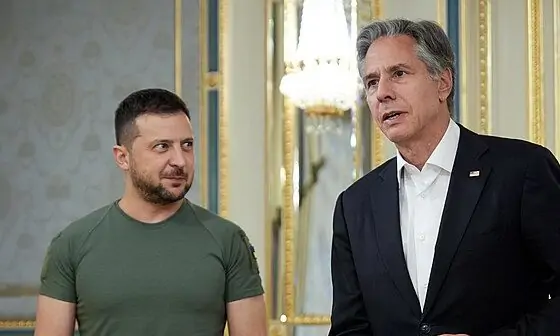
Clearing the Air: Secretary Blinken Visits Ukraine

  • Volodymyr Dubovyk
  • September 19, 2023
View
  • Commentary | Комментарии
  • Recommended | Рекомендуем

Ensuring Genuine Results? A New Electoral Design in Uzbekistan

  • Akrom Avezov
  • May 19, 2023
View
  • Commentary | Комментарии
  • Recommended | Рекомендуем

Ukraine, Taiwan, and Macron’s “Strategic Autonomy”

  • Maurizio Delli Santi
  • April 30, 2023
View
  • Commentary | Комментарии
  • Recommended | Рекомендуем

Russia’s Regional Governors: Backing the War, Upholding the Status Quo

  • Irina Busygina and Mikhail Filippov
  • April 7, 2023
View
  • Commentary | Комментарии
  • Recommended | Рекомендуем

The Desire to Possess: Russia’s War for Territory

  • Irina Busygina
  • February 8, 2023
View
  • Commentary | Комментарии
  • Recommended | Рекомендуем

Kyiv-Washington Relations in Times of Colossal War: The Ultimate Test of a Strategic Partnership

  • Volodymyr Dubovyk
  • January 11, 2023
View
  • Commentary | Комментарии
  • Recommended | Рекомендуем

Prevailing Soviet Legacies

  • Irina Busygina and Mikhail Filippov
  • December 27, 2022
View
  • Commentary | Комментарии
  • Recommended | Рекомендуем

In Russia’s Nuclear Messaging to West and Ukraine, Putin Plays Both Bad and Good Cop

  • Simon Saradzhyan
  • December 23, 2022

Leave a Reply Cancel reply

Your email address will not be published. Required fields are marked *

PONARS Eurasia
  • About Us
  • Membership
  • Policy Memos
  • Recommended
  • Events
Powered by narva.io

Permissions & Citation Guidelines

Input your search keywords and press Enter.