PONARS Eurasia
  • About Us
    • Contact Us!
    • Membership
      • All Members
      • Core Members
      • Collegium Members
      • Associate Members
      • About Membership
    • Our Ukraine Experts
    • Executive Committee
  • Our Ukraine Experts
  • Policy Memos
    • List of Policy Memos
    • PONARS Eurasia’s Newest eBooks
    • Submissions
  • Online Academy
  • Events
    • Past Events
  • Recommended
  • Task Forces
    • Ukraine
      • PONARS Ukraine Task Force: Incontrovertible Truths
    • Amplifying Voices of Europe, the Caucasus, and Central Asia (AVECCA)
    • Russia in a Changing Climate
  • Podcasts
Contacts

Address
1957 E St NW,
Washington, DC 20052

[email protected]
202.994.5915

NEWSLETTER
Facebook
Twitter
YouTube
Podcast
PONARS Eurasia
PONARS Eurasia
  • About Us
    • Contact Us!
    • Membership
      • All Members
      • Core Members
      • Collegium Members
      • Associate Members
      • About Membership
    • Our Ukraine Experts
    • Executive Committee
  • Our Ukraine Experts
  • Policy Memos
    • List of Policy Memos
    • PONARS Eurasia’s Newest eBooks
    • Submissions
  • Online Academy
  • Events
    • Past Events
  • Recommended
  • Task Forces
    • Ukraine
      • PONARS Ukraine Task Force: Incontrovertible Truths
    • Amplifying Voices of Europe, the Caucasus, and Central Asia (AVECCA)
    • Russia in a Changing Climate
  • Podcasts
DIGITAL RESOURCES
digital resources

Bookstore 📚

Knowledge Hub

Course Syllabi

Point & Counterpoint

Policy Perspectives

RECOMMENDED
  • Misconceptions about Eastern Europe, the Caucasus, and Central Asia and Their Impact on Policy

    View
  • Five Years into the War, Ukraine Is Showing Grittiness, Rebounding Confidence in War Fortunes

    View
  • Russia’s Wartime Internet: A Contested Space with the Regime Still Predominant

    View
  • Why Georgians Need to Take Hungarian Lessons

    View
  • The ‘Don’t Lose Lukashenko’ Approach: Kyiv’s (Non-) Strategic Ambiguity Toward the Belarusian Opposition

    View
RSS PONARS Eurasia Podcast
  • The Putin-Xi Summit: What's New In Their Joint Communique ? February 23, 2022
    In this week’s PONARS Eurasia Podcast, Maria Lipman speaks with Russian China experts Vita Spivak and Alexander Gabuev about the February meeting between Vladimir Putin and Xi Jinping, and what it may tell us about where the Russian-Chinese relationship is headed.
  • Exploring the Russian Courts' Ruling to Liquidate the Memorial Society January 28, 2022
    In this week’s PONARS Eurasia Podcast, Maria Lipman chats with scholars Kelly Smith and Benjamin Nathans about the history, achievements, and impending shutdown of the Memorial Society, Russia's oldest and most venerable civic organization, and what its imminent liquidation portends for the Russian civil society.
  • Russia's 2021 census and the Kremlin's nationalities policy [Lipman Series 2021] December 9, 2021
    In this week’s PONARS Eurasia Podcast, Maria Lipman chats with social scientist Andrey Shcherbak about the quality of the data collected in the recent population census and the goals of Vladimir Putin's government's nationalities policy
  • Active citizens of any kind are under threat [Lipman Series 2021] November 5, 2021
    In this week’s PONARS Eurasia Podcast, Maria Lipman chats with Alexander Verkhovsky about the Kremlin's ever expanding toolkit against political and civic activists, journalists, and other dissidents.
  • Russia's Legislative Elections followup [Lipman Series 2021] October 4, 2021
    In this week’s PONARS Eurasia Podcast, Maria Lipman chats with Tanya Lokot and Nikolay Petrov about the results of Russia’s legislative elections and about what comes next.
  • Why Is the Kremlin Nervous? [Lipman Series 2021] September 14, 2021
    In this week’s PONARS Eurasia Podcast, Maria Lipman chats with Ben Noble and Nikolay Petrov about Russia’s September 17-19 legislative elections, repressive measures against electoral challengers, and whether to expect anything other than preordained results.
  • Vaccine Hesitancy in Russia, France, and the United States [Lipman Series 2021] August 31, 2021
    In this week's PONARS Eurasia Podcast episode, Maria Lipman chats with Denis Volkov, Naira Davlashyan, and Peter Slevin about why COVID-19 vaccination rates are still so low across the globe, comparing vaccine hesitant constituencies across Russia, France, and the United States.  
  • Is Russia Becoming More Soviet? [Lipman Series 2021] July 26, 2021
      In a new PONARS Eurasia Podcast episode, Maria Lipman chats with Maxim Trudolyubov about the current tightening of the Russian political sphere, asking whether or not it’s helpful to draw comparisons to the late Soviet period.
  • The Evolution of Russia's Political Regime [Lipman Series 2021] June 21, 2021
    In this week's episode of the PONARS Eurasia Podcast, Maria Lipman chats with Grigory Golosov and Henry Hale about the evolution of Russia's political regime, and what to expect in the lead-up to September's Duma elections.
  • Volodymyr Zelensky: Year Two [Lipman Series 2021] May 24, 2021
    In this week's episode of the PONARS Eurasia Podcast, Maria Lipman chats with Sergiy Kudelia and Georgiy Kasianov about Ukrainian President Zelensky's second year in office, and how he has handled the political turbulence of the past year.
  • Commentary | Комментарии

Will the Malaysia Airlines tragedy change the trajectory of events in Ukraine?

  • July 21, 2014
  • Oxana Shevel

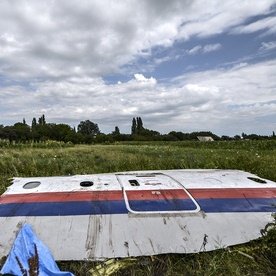
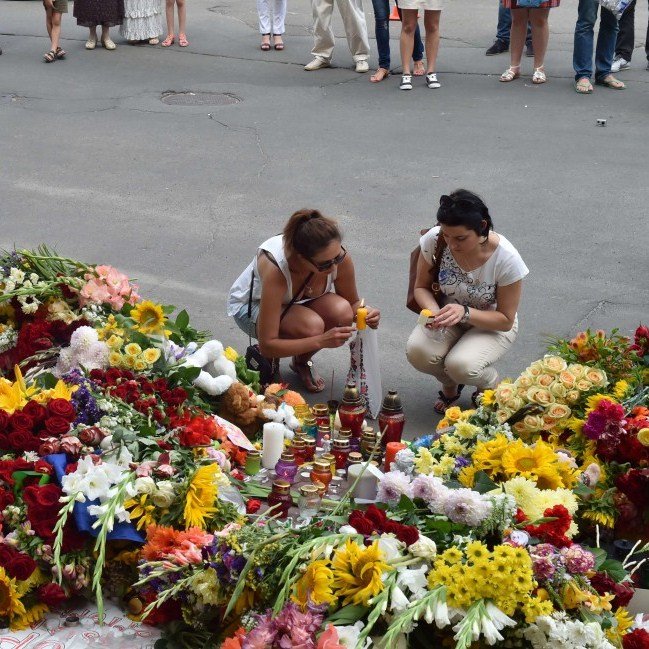
The crash of Malaysia Airlines flight MH17 over rebel-controlled area of eastern Ukraine thrust the conflict between the Ukrainian government and the Russia-backed rebels into renewed international focus.  The three months-long conflict has been retreating to the backburner of the international news coverage, even as the humanitarian crisis in the region engulfed by the rebellion and the death toll has been growing. The MH17 tragedy draws renewed western attention to the conflict in Eastern Ukraine and has all the potential to further aggravate relations between Russia and Ukraine and Russia and the West. The investigation of the plane crash is also sure to raise broader questions than the crash itself, such as what kind of heavy armaments the separatists possess and how they acquired it, Russia’s role in supplying the separatists, and even whether Russia’s own regular forces have engaged in attacks against the Ukrainian side.  Just the day before the plane crash, videos of Grad rocket launchers firing from the Russian side of the border in the direction of Ukraine appeared on YouTube, and the precise location has of the rockets has been identified as the north-west section of the Russian border town of Gukovo.  The issue of whether and to what extent the Ukrainian forces are taking sufficient measures to avoid civilian deaths when battling with the pro-Russian separatists is also likely to draw increased attention.

While the exact causes of the crash remain to be determined, Ukraine, Russia, and the rebels have been trading accusations with no apparent limit to the audacity of some of the claims. Russia’s President Putin blamed the Ukrainian side for the crash, while the Russian state-controlled media posted links to the Twitter account allegedly belonging to a Spanish air traffic controller who said that two Ukrainian fighter jets were spotted near the MH17 plane before it went down.  Other Russian media went as far as to claim that the intended target of the missile that brought down the plane was none other than Vladimir Putin, whose jet looks similar and was allegedly traveling almost the same route as the Malaysian Airlines jet shortly before the crash.

The Ukrainian President Petro Poroshenko has called the downing of the plane an “act of terrorism,” and other Ukrainian officials claimed that the jet was downed by the pro-Russian rebels using a Buk surface-to-air missile system.  The available evidence so far suggests that this is the most likely reason of the crash, although any definitive conclusions would be premature at this point. The pieces of evidence pointing to the rebel responsibility also offer insights into the larger dynamics of conflict in eastern Ukraine, including relations among different groups of the pro-Russian rebels and between the rebels and Russia.  It also goes to show how conflicting claims in the information war leave even seemingly simple factual questions without clear answers.

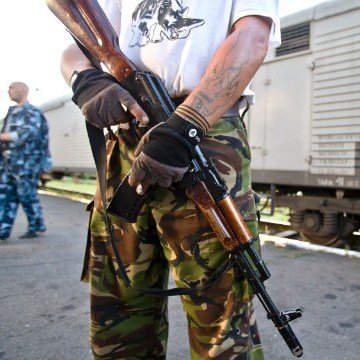
Since the beginning of June, the separatists have shot down several Ukrainian military aircrafts, including two earlier this week.  The Malaysian jet, flying at the altitude of some 10,000 meters, likely could be brought down only by a sophisticated weapons system such as the Russian-made Buk surface-to-air missile system.  Ukrainska Pravda Web site posted a collection of links, screen shots, and Twitter posts in support of a theory that the plane was shot by the pro-Russian rebels who likely mistook it for a Ukrainian military transport plane.  On June 29, separatist Web sites reported that the rebels have acquired an unknown number of Buk surface-to-air missile systems after taking over a Ukrainian anti-aircraft defense military base in Donesk.  On July 14, after a Ukrainian AN-26 plane was shot down in eastern Ukraine, the separatists claimed that they had shot down a plane with the Buk system they captured at the end of June and have since repaired.  On Thursday, hours before the Malaysian jet went down, Twitter users reported seeing a Buk system in the rebel-held town of Torez, about 20 kilometers south of the site of the MH17 crash, moving in the direction of the neighboring town of Snizhne.  The Associated Press reported that its journalist also saw on Thursday a launcher similar to the Buk missile system near Snizhne. Shortly before the crash was announced, separatist commander Igor Girkin (Strelkov) posted on his vkontakte page that rebel forces shot down Ukrainian AN-26 plane near Torez (the post has since been deleted).  Later on Thursday, the Ukrainian Security Service released what it claimed was an intercepted phone conversation, in which a separatist militant nicknamed “Major” is saying the plane was shot down by “Cossacks from the Chernukhino roadblock.”  Chernukhino is a village about 20 kilometers northwest of the village of Hrabove where the plane came down, and about 35 kilometers northwest of Torez where Buk system was spotted earlier in the day.

Separatist forces fighting the Ukrainian army in the eastern Donbas region include various groups of local, Crimean, and Russian fighters, including the self-styled Cossacks. In a recent report on who’s who among the fighters in Donbas, the Insider Web site stated that the area of Luhanks region where the plane came down (Hrabove village lies on the border of the Luhansk and Donetsk regions) is controlled by the Russian and Ukrainian Cossacks under the command of a Cossack “ottoman,” Russian citizen Nikolai Kozytsyn.  According to the Insider, Kozytsyn is in a perpetual feud with the leaders of the self-proclaimed Luhanks and Donetsk “people’s republics” such as Valeriy Bolotov and Igor Strelkov, who have accused Kozytsyn of insubordination among other things.  Kozytsyn is also heard in the recording released by the Ukrainian SBU where he says that the downed plane “was transporting spies into Ukraine.”  If the Cossacks indeed have strained relations with the separatist republics’ formal leadership, it is possible that they shot at the plane at their own initiative, although it remains to be determined how they came to be in possession of the Buk missile launcher and had the know-how to operate it.

While the fact that the separatists do possess a Buk system is clear, where they got it is less so. The Ukrainian Defense Ministry has denied that the separatists captured Buk systems when they took over the air defense military base in Donetsk at the end of June, claiming that all military equipment had been relocated elsewhere and only broken down cars were left.  Since a substantial section of the Ukrainian-Russian border in the Donbas region is not controlled by the Ukrainian forces, the Buk systems could have also been supplied by Russia and sent over the border, although there is no definitive information as to whether this happened and if so when.

With the downing of the plane coming on the heels of the U.S. expanding sanctions against Russia for its support of separatists in Ukraine, targeting major banks, energy and defense companies, as well as individuals, some analysts have suggested that another theory that needs to be considered is that the downing of the plane is Russia’s response to sanctions:  stepping up support for separatists is Russia’s response to tougher western sanctions.

For Ukraine, fully committing to and actively enabling a full international investigation would be the best course of action to clear its military of any suspicions and to earn greater international support.  Russia will most likely continue to deny that it had anything to do with the shooting of the plane and, if the separatists get further implicated in the shooting, will likely maintain that the equipment they used was captured by them from the Ukrainian military rather than supplied by Russia.  But after this tragic loss of life and the very sudden and very personal internationalization of the conflict in Eastern Ukraine, international and especially European patience with Putin may finally start to wear thin.  The EU has been unwilling to impose deeper sanctions aimed against Russia for supporting separatists in Ukraine, but if Russia-backed and Russia-armed rebels are found to be responsible for ending more than a hundred of European lives, this might change the political calculus in European capitals.

Prospects for lasting peace and the end of conflict in Ukraine remain elusive, although it is possible to imagine a scenario whereby this incident reduced the level of fighting in Ukraine.  Such a scenario would likely involve a truce to allow investigators access to the crash site, a gradual transformation of this truce into a lasting cease-fire; the decisive end of Russia’s support for the separatists in exchange of avoiding further sanctions; the return of Russian fighters to Russia and broad amnesty offered to Ukrainian citizens who participated in the insurgency; a more comprehensive decentralization initiative that would give more autonomy to Ukraine’s regions than the one unveiled by President Poroshenko recently; and snap local legislative elections to give the people of the Donbas (and other Ukrainian regions) legitimate representatives who can speak for their interests in the post-Yanukovych era.  This is a scenario under which none of the parties in the conflict would get their ultimate preference, but in which violence would begin to recede.  Whether any of this is possible as long as the key actors in the conflict continue to think they can win outright, though, remains to be seen.

See the original post © The Monkey Cage
Related Topics
  • Russia
  • Shevel
  • Ukraine
Previous Article
  • In the News | Hовости

Act now, or face war in Ukraine

  • July 21, 2014
  • Andrew Kuchins
View
Next Article
  • Commentary | Комментарии

Who Shot Down MH17?

  • July 21, 2014
  • Dmitry Gorenburg
View
You May Also Like
View
  • Commentary | Комментарии
  • Recommended | Рекомендуем

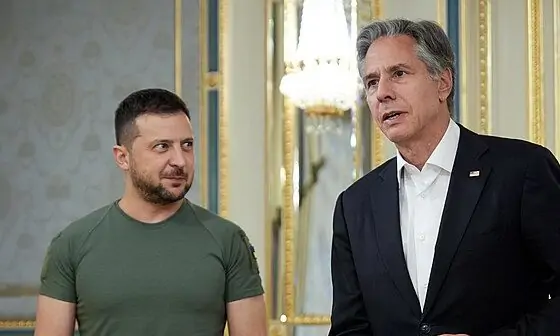
Clearing the Air: Secretary Blinken Visits Ukraine

  • Volodymyr Dubovyk
  • September 19, 2023
View
  • Commentary | Комментарии
  • Recommended | Рекомендуем

Ensuring Genuine Results? A New Electoral Design in Uzbekistan

  • Akrom Avezov
  • May 19, 2023
View
  • Commentary | Комментарии
  • Recommended | Рекомендуем

Ukraine, Taiwan, and Macron’s “Strategic Autonomy”

  • Maurizio Delli Santi
  • April 30, 2023
View
  • Commentary | Комментарии
  • Recommended | Рекомендуем

Russia’s Regional Governors: Backing the War, Upholding the Status Quo

  • Irina Busygina and Mikhail Filippov
  • April 7, 2023
View
  • Commentary | Комментарии
  • Recommended | Рекомендуем

The Desire to Possess: Russia’s War for Territory

  • Irina Busygina
  • February 8, 2023
View
  • Commentary | Комментарии
  • Recommended | Рекомендуем

Kyiv-Washington Relations in Times of Colossal War: The Ultimate Test of a Strategic Partnership

  • Volodymyr Dubovyk
  • January 11, 2023
View
  • Commentary | Комментарии
  • Recommended | Рекомендуем

Prevailing Soviet Legacies

  • Irina Busygina and Mikhail Filippov
  • December 27, 2022
View
  • Commentary | Комментарии
  • Recommended | Рекомендуем

In Russia’s Nuclear Messaging to West and Ukraine, Putin Plays Both Bad and Good Cop

  • Simon Saradzhyan
  • December 23, 2022

Leave a Reply Cancel reply

Your email address will not be published. Required fields are marked *

PONARS Eurasia
  • About Us
  • Membership
  • Policy Memos
  • Recommended
  • Events
Powered by narva.io

Permissions & Citation Guidelines

Input your search keywords and press Enter.