PONARS Eurasia
  • About Us
    • Contact Us!
    • Membership
      • All Members
      • Core Members
      • Collegium Members
      • Associate Members
      • About Membership
    • Our Ukraine Experts
    • Executive Committee
  • Our Ukraine Experts
  • Policy Memos
    • List of Policy Memos
    • PONARS Eurasia’s Newest eBooks
    • Submissions
  • Online Academy
  • Events
    • Past Events
  • Recommended
  • Task Forces
    • Ukraine
      • PONARS Ukraine Task Force: Incontrovertible Truths
    • Amplifying Voices of Europe, the Caucasus, and Central Asia (AVECCA)
    • Russia in a Changing Climate
  • Podcasts
Contacts

Address
1957 E St NW,
Washington, DC 20052

[email protected]
202.994.5915

NEWSLETTER
Facebook
Twitter
YouTube
Podcast
PONARS Eurasia
PONARS Eurasia
  • About Us
    • Contact Us!
    • Membership
      • All Members
      • Core Members
      • Collegium Members
      • Associate Members
      • About Membership
    • Our Ukraine Experts
    • Executive Committee
  • Our Ukraine Experts
  • Policy Memos
    • List of Policy Memos
    • PONARS Eurasia’s Newest eBooks
    • Submissions
  • Online Academy
  • Events
    • Past Events
  • Recommended
  • Task Forces
    • Ukraine
      • PONARS Ukraine Task Force: Incontrovertible Truths
    • Amplifying Voices of Europe, the Caucasus, and Central Asia (AVECCA)
    • Russia in a Changing Climate
  • Podcasts
DIGITAL RESOURCES
digital resources

Bookstore 📚

Knowledge Hub

Course Syllabi

Point & Counterpoint

Policy Perspectives

RECOMMENDED
  • Misconceptions about Eastern Europe, the Caucasus, and Central Asia and Their Impact on Policy

    View
  • Five Years into the War, Ukraine Is Showing Grittiness, Rebounding Confidence in War Fortunes

    View
  • Russia’s Wartime Internet: A Contested Space with the Regime Still Predominant

    View
  • Why Georgians Need to Take Hungarian Lessons

    View
  • The ‘Don’t Lose Lukashenko’ Approach: Kyiv’s (Non-) Strategic Ambiguity Toward the Belarusian Opposition

    View
RSS PONARS Eurasia Podcast
  • The Putin-Xi Summit: What's New In Their Joint Communique ? February 23, 2022
    In this week’s PONARS Eurasia Podcast, Maria Lipman speaks with Russian China experts Vita Spivak and Alexander Gabuev about the February meeting between Vladimir Putin and Xi Jinping, and what it may tell us about where the Russian-Chinese relationship is headed.
  • Exploring the Russian Courts' Ruling to Liquidate the Memorial Society January 28, 2022
    In this week’s PONARS Eurasia Podcast, Maria Lipman chats with scholars Kelly Smith and Benjamin Nathans about the history, achievements, and impending shutdown of the Memorial Society, Russia's oldest and most venerable civic organization, and what its imminent liquidation portends for the Russian civil society.
  • Russia's 2021 census and the Kremlin's nationalities policy [Lipman Series 2021] December 9, 2021
    In this week’s PONARS Eurasia Podcast, Maria Lipman chats with social scientist Andrey Shcherbak about the quality of the data collected in the recent population census and the goals of Vladimir Putin's government's nationalities policy
  • Active citizens of any kind are under threat [Lipman Series 2021] November 5, 2021
    In this week’s PONARS Eurasia Podcast, Maria Lipman chats with Alexander Verkhovsky about the Kremlin's ever expanding toolkit against political and civic activists, journalists, and other dissidents.
  • Russia's Legislative Elections followup [Lipman Series 2021] October 4, 2021
    In this week’s PONARS Eurasia Podcast, Maria Lipman chats with Tanya Lokot and Nikolay Petrov about the results of Russia’s legislative elections and about what comes next.
  • Why Is the Kremlin Nervous? [Lipman Series 2021] September 14, 2021
    In this week’s PONARS Eurasia Podcast, Maria Lipman chats with Ben Noble and Nikolay Petrov about Russia’s September 17-19 legislative elections, repressive measures against electoral challengers, and whether to expect anything other than preordained results.
  • Vaccine Hesitancy in Russia, France, and the United States [Lipman Series 2021] August 31, 2021
    In this week's PONARS Eurasia Podcast episode, Maria Lipman chats with Denis Volkov, Naira Davlashyan, and Peter Slevin about why COVID-19 vaccination rates are still so low across the globe, comparing vaccine hesitant constituencies across Russia, France, and the United States.  
  • Is Russia Becoming More Soviet? [Lipman Series 2021] July 26, 2021
      In a new PONARS Eurasia Podcast episode, Maria Lipman chats with Maxim Trudolyubov about the current tightening of the Russian political sphere, asking whether or not it’s helpful to draw comparisons to the late Soviet period.
  • The Evolution of Russia's Political Regime [Lipman Series 2021] June 21, 2021
    In this week's episode of the PONARS Eurasia Podcast, Maria Lipman chats with Grigory Golosov and Henry Hale about the evolution of Russia's political regime, and what to expect in the lead-up to September's Duma elections.
  • Volodymyr Zelensky: Year Two [Lipman Series 2021] May 24, 2021
    In this week's episode of the PONARS Eurasia Podcast, Maria Lipman chats with Sergiy Kudelia and Georgiy Kasianov about Ukrainian President Zelensky's second year in office, and how he has handled the political turbulence of the past year.
  • In the News | Hовости

Putin’s Balancing Act: Interview with Kimberly Marten

  • July 8, 2014
  • PONARS Eurasia

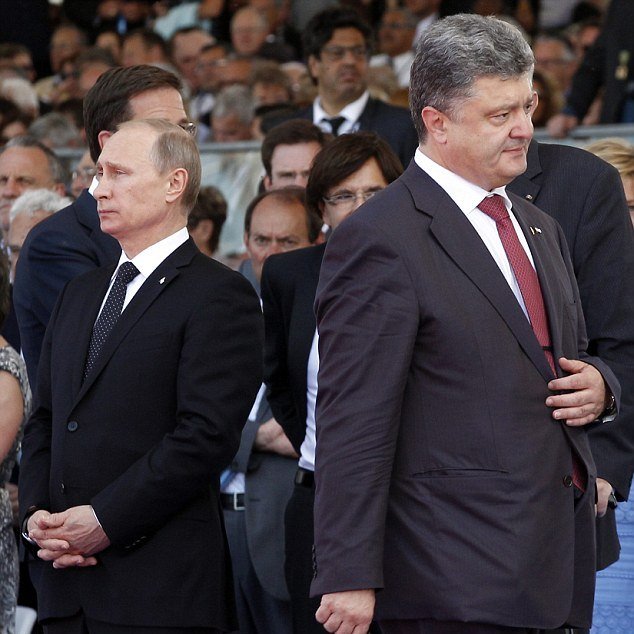
(Council on Foreign Relations) President Vladimir Putin is in many ways a "great balancer," trying to maintain the support of various factions in Russia, explains long-time Russia expert Kimberly Marten. On the one hand, he cannot risk a "major Ukrainian war" that would draw new international sanctions and further dent Russia's economy. On the other, "he has to deal with Russian ethnic nationalists who are begging for blood" in Ukraine, she says. Marten points out that both Putin and President Petro Poroshenko of Ukraine are skilled negotiators who have worked together in the past, and she holds out hope that they might be able to work out something "that satisfies everybody sufficiently so that there can be some kind of an end to the fighting and some kind of economic deal."

After the newly-elected president of Ukraine, Petro Poroshenko, called on his forces to end a week-long cease-fire and attack pro-Russian forces in eastern Ukraine, President Vladimir Putin of Russia compared himself with a great figure from the past in a speech to Russian diplomats in Moscow. What's going on with President Putin?

In many ways, Putin has to appeal to different audiences. He's had a history of being the great balancer, of trying to keep all the various factions that surround the Kremlin behind him so that he maintains his authority and the ability to give out resources to his supporters; and he maintains popular support. Part of the reason his speeches are getting more and more complex is that he's trying to balance various audiences who are demanding things from him.

Does he want a Ukrainian war?

On the one hand, he doesn't really want to commit more economic resources to a major Ukrainian war. He knows that it would not be successful and would be extraordinarily costly. It's already clear that the annexation of Crimea is going to put a big dent in the Russian budget at a time when the economy is already in decline. So that's one audience that he has to please and show that he's not actually going to take aggressive actions that would put Russian resources at risk.

But at the same time, he has to deal with Russian ethnic nationalists who are begging for blood. This is the opportunity they've been waiting for. There's a history of ethnic conflict throughout Russia that has been getting worse in recent times. Last October, there was a major riot between Central Asians and Russians just outside of Moscow. The police seemed to be supporting the Russian side in that riot. So this is sort of another group that he has to be very concerned about.

We have a tendency in the West sometimes to think about Putin as if he is an individual in absolute control of the country, but that's not the way that Russia has ever worked. There has never been absolute control even inside Moscow; there have always been various competing factions, and the further away you get from Moscow, the harder it is for the authorities in Moscow to maintain control. And so he's in sort of a tough position where he has to balance all of these various people, and at the same time, try to avoid having more international sanctions come down on his head. […]

Read the full interview © Council on Foreign Relations
Related Topics
  • Marten
  • Russia
  • Ukraine
Previous Article
  • In the News | Hовости

Тбилиси может, но не провалит евразийскую интеграцию Еревана

  • July 7, 2014
View
Next Article
  • In the News | Hовости

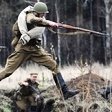
Боевое фэнтези: как историческая реконструкция стала жанром российской политики

  • July 8, 2014
  • Sergei Medvedev
View
You May Also Like
View
  • In the News | Hовости

Вся политика инвестирована в одно-единственное тело

  • Sergei Medvedev
  • August 21, 2020
View
  • In the News | Hовости

Лукашенко отказался уходить и пообещал новую Конституцию вместо выборов

  • Arkady Moshes
  • August 18, 2020
View
  • In the News | Hовости

Кроме науки, он ничем не интересовался: В Минске задержали ученого, изучающего протесты

  • PONARS Eurasia
  • August 13, 2020
View
  • In the News | Hовости

Кимберли Мартен: Действенный шаг Вашингтона против «повара Кремля»

  • Kimberly Marten
  • July 23, 2020
View
  • In the News | Hовости

Laruelle “breaks down Russian nationalism”

  • PONARS Eurasia
  • June 15, 2020
View
  • In the News | Hовости

Война или переговоры: чем закончится конфликт между Ираном и США

  • Mikhail Troitskiy
  • June 27, 2019
View
  • In the News | Hовости

Первый тайм отыгран

  • Konstantin Sonin
  • April 1, 2019
View
  • In the News | Hовости

Только просветительством это не лечится

  • Ivan Kurilla
  • February 5, 2019

Leave a Reply Cancel reply

Your email address will not be published. Required fields are marked *

PONARS Eurasia
  • About Us
  • Membership
  • Policy Memos
  • Recommended
  • Events
Powered by narva.io

Permissions & Citation Guidelines

Input your search keywords and press Enter.