PONARS Eurasia
  • About Us
    • Contact Us!
    • Membership
      • All Members
      • Core Members
      • Collegium Members
      • Associate Members
      • About Membership
    • Our Ukraine Experts
    • Executive Committee
  • Our Ukraine Experts
  • Policy Memos
    • List of Policy Memos
    • PONARS Eurasia’s Newest eBooks
    • Submissions
  • Online Academy
  • Events
    • Past Events
  • Recommended
  • Task Forces
    • Ukraine
      • PONARS Ukraine Task Force: Incontrovertible Truths
    • Amplifying Voices of Europe, the Caucasus, and Central Asia (AVECCA)
    • Russia in a Changing Climate
  • Podcasts
Contacts

Address
1957 E St NW,
Washington, DC 20052

[email protected]
202.994.5915

NEWSLETTER
Facebook
Twitter
YouTube
Podcast
PONARS Eurasia
PONARS Eurasia
  • About Us
    • Contact Us!
    • Membership
      • All Members
      • Core Members
      • Collegium Members
      • Associate Members
      • About Membership
    • Our Ukraine Experts
    • Executive Committee
  • Our Ukraine Experts
  • Policy Memos
    • List of Policy Memos
    • PONARS Eurasia’s Newest eBooks
    • Submissions
  • Online Academy
  • Events
    • Past Events
  • Recommended
  • Task Forces
    • Ukraine
      • PONARS Ukraine Task Force: Incontrovertible Truths
    • Amplifying Voices of Europe, the Caucasus, and Central Asia (AVECCA)
    • Russia in a Changing Climate
  • Podcasts
DIGITAL RESOURCES
digital resources

Bookstore 📚

Knowledge Hub

Course Syllabi

Point & Counterpoint

Policy Perspectives

RECOMMENDED
  • Misconceptions about Eastern Europe, the Caucasus, and Central Asia and Their Impact on Policy

    View
  • Five Years into the War, Ukraine Is Showing Grittiness, Rebounding Confidence in War Fortunes

    View
  • Russia’s Wartime Internet: A Contested Space with the Regime Still Predominant

    View
  • Why Georgians Need to Take Hungarian Lessons

    View
  • The ‘Don’t Lose Lukashenko’ Approach: Kyiv’s (Non-) Strategic Ambiguity Toward the Belarusian Opposition

    View
RSS PONARS Eurasia Podcast
  • The Putin-Xi Summit: What's New In Their Joint Communique ? February 23, 2022
    In this week’s PONARS Eurasia Podcast, Maria Lipman speaks with Russian China experts Vita Spivak and Alexander Gabuev about the February meeting between Vladimir Putin and Xi Jinping, and what it may tell us about where the Russian-Chinese relationship is headed.
  • Exploring the Russian Courts' Ruling to Liquidate the Memorial Society January 28, 2022
    In this week’s PONARS Eurasia Podcast, Maria Lipman chats with scholars Kelly Smith and Benjamin Nathans about the history, achievements, and impending shutdown of the Memorial Society, Russia's oldest and most venerable civic organization, and what its imminent liquidation portends for the Russian civil society.
  • Russia's 2021 census and the Kremlin's nationalities policy [Lipman Series 2021] December 9, 2021
    In this week’s PONARS Eurasia Podcast, Maria Lipman chats with social scientist Andrey Shcherbak about the quality of the data collected in the recent population census and the goals of Vladimir Putin's government's nationalities policy
  • Active citizens of any kind are under threat [Lipman Series 2021] November 5, 2021
    In this week’s PONARS Eurasia Podcast, Maria Lipman chats with Alexander Verkhovsky about the Kremlin's ever expanding toolkit against political and civic activists, journalists, and other dissidents.
  • Russia's Legislative Elections followup [Lipman Series 2021] October 4, 2021
    In this week’s PONARS Eurasia Podcast, Maria Lipman chats with Tanya Lokot and Nikolay Petrov about the results of Russia’s legislative elections and about what comes next.
  • Why Is the Kremlin Nervous? [Lipman Series 2021] September 14, 2021
    In this week’s PONARS Eurasia Podcast, Maria Lipman chats with Ben Noble and Nikolay Petrov about Russia’s September 17-19 legislative elections, repressive measures against electoral challengers, and whether to expect anything other than preordained results.
  • Vaccine Hesitancy in Russia, France, and the United States [Lipman Series 2021] August 31, 2021
    In this week's PONARS Eurasia Podcast episode, Maria Lipman chats with Denis Volkov, Naira Davlashyan, and Peter Slevin about why COVID-19 vaccination rates are still so low across the globe, comparing vaccine hesitant constituencies across Russia, France, and the United States.  
  • Is Russia Becoming More Soviet? [Lipman Series 2021] July 26, 2021
      In a new PONARS Eurasia Podcast episode, Maria Lipman chats with Maxim Trudolyubov about the current tightening of the Russian political sphere, asking whether or not it’s helpful to draw comparisons to the late Soviet period.
  • The Evolution of Russia's Political Regime [Lipman Series 2021] June 21, 2021
    In this week's episode of the PONARS Eurasia Podcast, Maria Lipman chats with Grigory Golosov and Henry Hale about the evolution of Russia's political regime, and what to expect in the lead-up to September's Duma elections.
  • Volodymyr Zelensky: Year Two [Lipman Series 2021] May 24, 2021
    In this week's episode of the PONARS Eurasia Podcast, Maria Lipman chats with Sergiy Kudelia and Georgiy Kasianov about Ukrainian President Zelensky's second year in office, and how he has handled the political turbulence of the past year.
  • Commentary | Комментарии

Russia’s Stealth Invasion of Ukraine

  • August 27, 2014
  • Dmitry Gorenburg

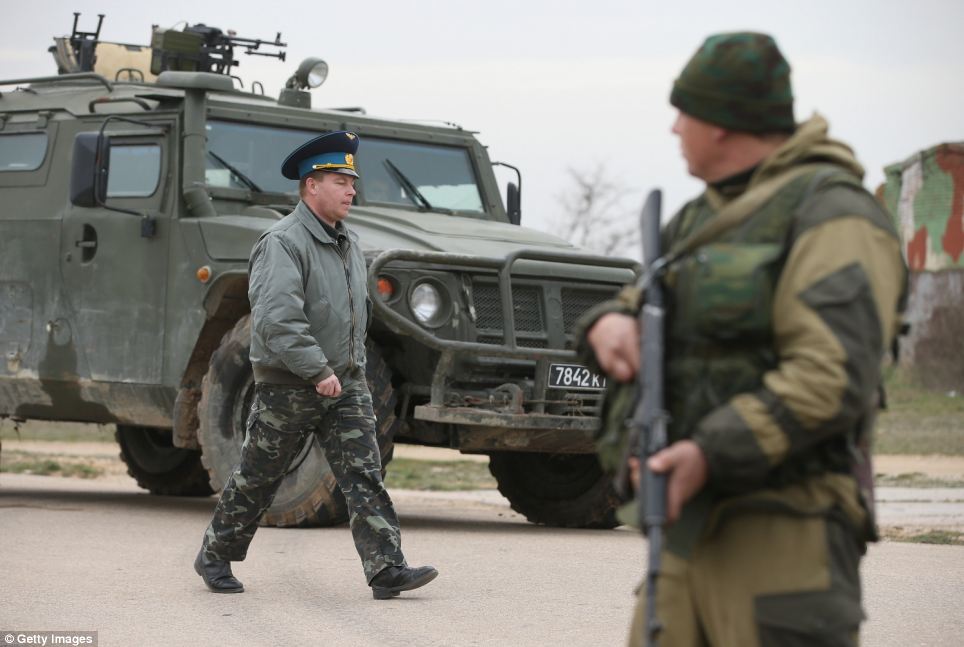
It appears that the Russian invasion of Ukraine that I have feared since March has now begun in earnest, with the opening of a new front in the vicinity of Mariupol on the shores of the Azov Sea and a major counterattack in Luhansk Oblast leading to the retreat of Ukrainian forces from positions they have occupied (in some cases) since before the June ceasefire. This separatist counter-offensive has generated a lot of discussion among analysts and commentators about whether the forces attacking Novoazovsk and Mariupol belong to regular Russian units or irregular forces, as part of an effort to determine whether or not these new developments amount to a Russian invasion or just a new escalation by separatist forces.

I would argue that the specific provenance of the fighters involved doesn't actually matter very much in this context. There is no doubt that the forces attacking in the south, near Novoazovsk and Mariupol came directly from Russia, not from territory already controlled by the separatists farther north. To do so, they had to be allowed through the border by Russian border guards. Furthermore, there is also no doubt that they are using weapons and equipment supplied by the Russian government, since they are no longer even trying to claim that the equipment they are using was captured from defeated Ukrainian forces.

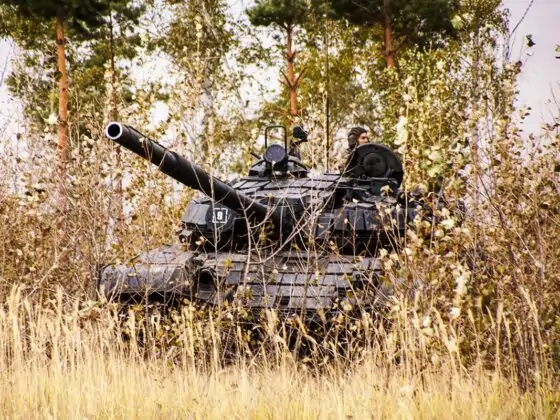
In these circumstances, why does it matter which specific people are sitting in the tanks? 

And if it did matter, there is now more and more evidence being uncovered in Russian social media and in independent reporting that active duty Russian personnel ARE fighting in Ukraine. This includes the 10 Russian soldiers that the Ukrainian government has claimed to have captured on Ukrainian territory, as well as the various Russian soldiers from units such as the 76th Airborne Division based in Pskov who have been reported to have died recently in unexplained circumstances. 

One can invade a country through a direct frontal assault. Or one can do it in secret, a little bit at a time. The Russian government has chosen the second path. It doesn't make it any less of an invasion.

It also means that the Minsk talks are almost certainly a diversion, meant to distract Western leaders from the reality of what is happening on the ground. The idea is that as long as world leaders think there is a chance at successful peace talks, they will refrain from strong words or actions condemning what Russia is doing in Ukraine. This seems to be working out for Russia so far, but it should not distract us from events on the ground. 

I should be clear that I don't think Russia is currently planning a full takeover of any part of eastern Ukraine. The goal remains what it has been for months now: to ensure that Ukraine remains unstable and weak. For now, in order to accomplish this goal, Russia needs to make sure the separatists are not defeated and remain a viable force. Both the escalation in assistance and the opening of the new front are a response to the losses that the separatists had suffered in recent weeks.

In the long run, the only acceptable end to the conflict for Russia is one that would either freeze the current situation in place with separatists in control of significant territory in eastern Ukraine (the Transnistria variant) or the removal of the pro-Western Ukrainian government and its replacement by a pro-Russian one. Participants in peace talks have to understand that this is essentially a red line for Moscow. Putin will not allow the restoration of control over eastern Ukraine by the current Ukrainian government by peaceful means and is clearly willing to directly involve Russian forces in military action to ensure that it doesn't happen through a Ukrainian military victory. 

Given Russia's superior military capabilities this is a war that Ukraine cannot win, at least not by military means. The alternatives are to make a deal with whatever terms are possible or to continue the struggle for a long time, hoping that inflicting a high cost on Russian forces will eventually turn Russians against their government's adventure. The former will lead to the collapse of the Ukrainian government. The latter will take a very long time at best and result in huge numbers of civilian casualties.

This comment also appeared on Russian Military Reform.

Related Topics
  • Gorenburg
  • Russia
  • Ukraine
Previous Article
  • In the News | Hовости

А что «déjà», когда уже — ни слёз, ни звёзд в душе?

  • August 27, 2014
  • Konstantin Sonin
View
Next Article
  • Commentary | Комментарии

Finland Meeting: Building Trust? Or Mistrust?

  • August 28, 2014
  • Arkady Moshes
View
You May Also Like
View
  • Commentary | Комментарии
  • Recommended | Рекомендуем

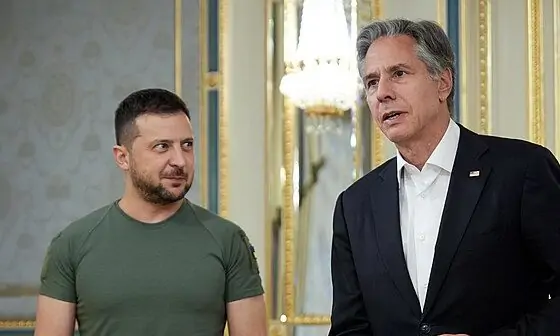
Clearing the Air: Secretary Blinken Visits Ukraine

  • Volodymyr Dubovyk
  • September 19, 2023
View
  • Commentary | Комментарии
  • Recommended | Рекомендуем

Ensuring Genuine Results? A New Electoral Design in Uzbekistan

  • Akrom Avezov
  • May 19, 2023
View
  • Commentary | Комментарии
  • Recommended | Рекомендуем

Ukraine, Taiwan, and Macron’s “Strategic Autonomy”

  • Maurizio Delli Santi
  • April 30, 2023
View
  • Commentary | Комментарии
  • Recommended | Рекомендуем

Russia’s Regional Governors: Backing the War, Upholding the Status Quo

  • Irina Busygina and Mikhail Filippov
  • April 7, 2023
View
  • Commentary | Комментарии
  • Recommended | Рекомендуем

The Desire to Possess: Russia’s War for Territory

  • Irina Busygina
  • February 8, 2023
View
  • Commentary | Комментарии
  • Recommended | Рекомендуем

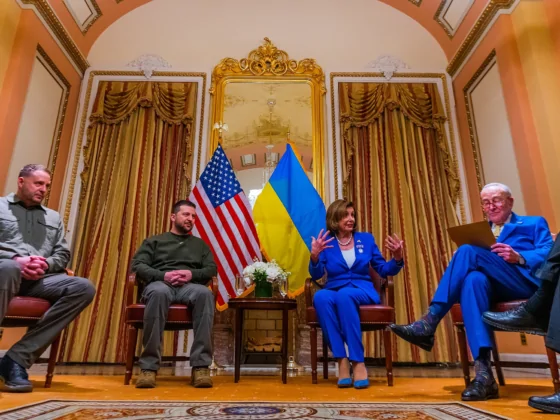
Kyiv-Washington Relations in Times of Colossal War: The Ultimate Test of a Strategic Partnership

  • Volodymyr Dubovyk
  • January 11, 2023
View
  • Commentary | Комментарии
  • Recommended | Рекомендуем

Prevailing Soviet Legacies

  • Irina Busygina and Mikhail Filippov
  • December 27, 2022
View
  • Commentary | Комментарии
  • Recommended | Рекомендуем

In Russia’s Nuclear Messaging to West and Ukraine, Putin Plays Both Bad and Good Cop

  • Simon Saradzhyan
  • December 23, 2022

Leave a Reply Cancel reply

Your email address will not be published. Required fields are marked *

PONARS Eurasia
  • About Us
  • Membership
  • Policy Memos
  • Recommended
  • Events
Powered by narva.io

Permissions & Citation Guidelines

Input your search keywords and press Enter.