PONARS Eurasia
  • About Us
    • Contact Us!
    • Membership
      • All Members
      • Core Members
      • Collegium Members
      • Associate Members
      • About Membership
    • Our Ukraine Experts
    • Executive Committee
  • Our Ukraine Experts
  • Policy Memos
    • List of Policy Memos
    • PONARS Eurasia’s Newest eBooks
    • Submissions
  • Online Academy
  • Events
    • Past Events
  • Recommended
  • Task Forces
    • Ukraine
      • PONARS Ukraine Task Force: Incontrovertible Truths
    • Amplifying Voices of Europe, the Caucasus, and Central Asia (AVECCA)
    • Russia in a Changing Climate
  • Podcasts
Contacts

Address
1957 E St NW,
Washington, DC 20052

[email protected]
202.994.5915

NEWSLETTER
Facebook
Twitter
YouTube
Podcast
PONARS Eurasia
PONARS Eurasia
  • About Us
    • Contact Us!
    • Membership
      • All Members
      • Core Members
      • Collegium Members
      • Associate Members
      • About Membership
    • Our Ukraine Experts
    • Executive Committee
  • Our Ukraine Experts
  • Policy Memos
    • List of Policy Memos
    • PONARS Eurasia’s Newest eBooks
    • Submissions
  • Online Academy
  • Events
    • Past Events
  • Recommended
  • Task Forces
    • Ukraine
      • PONARS Ukraine Task Force: Incontrovertible Truths
    • Amplifying Voices of Europe, the Caucasus, and Central Asia (AVECCA)
    • Russia in a Changing Climate
  • Podcasts
DIGITAL RESOURCES
digital resources

Bookstore 📚

Knowledge Hub

Course Syllabi

Point & Counterpoint

Policy Perspectives

RECOMMENDED
  • Misconceptions about Eastern Europe, the Caucasus, and Central Asia and Their Impact on Policy

    View
  • Five Years into the War, Ukraine Is Showing Grittiness, Rebounding Confidence in War Fortunes

    View
  • Russia’s Wartime Internet: A Contested Space with the Regime Still Predominant

    View
  • Why Georgians Need to Take Hungarian Lessons

    View
  • The ‘Don’t Lose Lukashenko’ Approach: Kyiv’s (Non-) Strategic Ambiguity Toward the Belarusian Opposition

    View
RSS PONARS Eurasia Podcast
  • The Putin-Xi Summit: What's New In Their Joint Communique ? February 23, 2022
    In this week’s PONARS Eurasia Podcast, Maria Lipman speaks with Russian China experts Vita Spivak and Alexander Gabuev about the February meeting between Vladimir Putin and Xi Jinping, and what it may tell us about where the Russian-Chinese relationship is headed.
  • Exploring the Russian Courts' Ruling to Liquidate the Memorial Society January 28, 2022
    In this week’s PONARS Eurasia Podcast, Maria Lipman chats with scholars Kelly Smith and Benjamin Nathans about the history, achievements, and impending shutdown of the Memorial Society, Russia's oldest and most venerable civic organization, and what its imminent liquidation portends for the Russian civil society.
  • Russia's 2021 census and the Kremlin's nationalities policy [Lipman Series 2021] December 9, 2021
    In this week’s PONARS Eurasia Podcast, Maria Lipman chats with social scientist Andrey Shcherbak about the quality of the data collected in the recent population census and the goals of Vladimir Putin's government's nationalities policy
  • Active citizens of any kind are under threat [Lipman Series 2021] November 5, 2021
    In this week’s PONARS Eurasia Podcast, Maria Lipman chats with Alexander Verkhovsky about the Kremlin's ever expanding toolkit against political and civic activists, journalists, and other dissidents.
  • Russia's Legislative Elections followup [Lipman Series 2021] October 4, 2021
    In this week’s PONARS Eurasia Podcast, Maria Lipman chats with Tanya Lokot and Nikolay Petrov about the results of Russia’s legislative elections and about what comes next.
  • Why Is the Kremlin Nervous? [Lipman Series 2021] September 14, 2021
    In this week’s PONARS Eurasia Podcast, Maria Lipman chats with Ben Noble and Nikolay Petrov about Russia’s September 17-19 legislative elections, repressive measures against electoral challengers, and whether to expect anything other than preordained results.
  • Vaccine Hesitancy in Russia, France, and the United States [Lipman Series 2021] August 31, 2021
    In this week's PONARS Eurasia Podcast episode, Maria Lipman chats with Denis Volkov, Naira Davlashyan, and Peter Slevin about why COVID-19 vaccination rates are still so low across the globe, comparing vaccine hesitant constituencies across Russia, France, and the United States.  
  • Is Russia Becoming More Soviet? [Lipman Series 2021] July 26, 2021
      In a new PONARS Eurasia Podcast episode, Maria Lipman chats with Maxim Trudolyubov about the current tightening of the Russian political sphere, asking whether or not it’s helpful to draw comparisons to the late Soviet period.
  • The Evolution of Russia's Political Regime [Lipman Series 2021] June 21, 2021
    In this week's episode of the PONARS Eurasia Podcast, Maria Lipman chats with Grigory Golosov and Henry Hale about the evolution of Russia's political regime, and what to expect in the lead-up to September's Duma elections.
  • Volodymyr Zelensky: Year Two [Lipman Series 2021] May 24, 2021
    In this week's episode of the PONARS Eurasia Podcast, Maria Lipman chats with Sergiy Kudelia and Georgiy Kasianov about Ukrainian President Zelensky's second year in office, and how he has handled the political turbulence of the past year.
  • Commentary | Комментарии

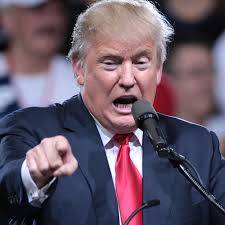
Trump’s Extreme Pragmatism and U.S.-Russian Relations

  • December 30, 2016
  • Henry Hale

Will incoming U.S. President Donald Trump usher in a new era of US-Russia cooperation? Many in Russia think so, as do some in the US. But early signs warn the time ahead could become more volatile than before and cooperation could come at a high price.

Is it within Trump’s power to change US-Russia relations? Certainly, and he is unlikely to feel constrained by public opinion or Congress. Going against the “conventional wisdom” was the hallmark of his successful campaign, making the unthinkable thinkable by giving it voice. And while Congress will likely not be happy with a radical shift on Russia, this body has few effective teeth for stopping it. And a European Union in crisis is also poorly positioned to constrain the new American president.

So what might the president-elect do? Despite his tendency to change stance and contradictory views among key administration picks, one thing seems clear: Trump is a pragmatist to the extreme whose focus is mainly domestic. This is important: It means “normalization with Russia” is unlikely to be a policy end in itself. Instead, Russia will be engaged instrumentally where Trump feels it could be useful for the domestic policies he prioritizes.

Will an instrumental Russia policy promote US-Russia cooperation? In some areas, yes. Scaling down American commitments worldwide to focus on domestic issues will offer an ambitious Russia new chances to play a larger role in world politics–potentially even with Trump’s blessing if it means getting Russia to do his “dirty work” abroad with no cost to the budget. Moreover, a Trump who expresses little concern about the niceties of democracy and human rights abroad is unlikely to bother with them when dealing with Russian President Vladimir Putin. This will suit the latter just fine.

Russia also has the good fortune not to be a major trade partner for the US, so it will not be the object of the trade warring that may loom with China. In fact, Trump’s choice for secretary of state suggests he may seek to open up business opportunities in Russia. The international economic sanctions on Russia are by no means locked in, and they involve bearing tangible short-run costs for the sake of a less tangible, uncertain goal: deterring future moves by Russia and other countries to annex their neighbors’ territories. Indeed, Trump has already signaled he would consider removing the biggest current sticking point in US-Russia relations by accepting Russia’s annexation of Crimea.

Such cooperation, however, could come at a high price. The costs would be borne by democracy, human rights, Ukraine, and civilians in Syria. Also at risk could be the long run stability of international borders–especially those separating militarily powerful countries from their most succulent neighbors.

Trump’s inward-looking realpolitik is likely to rub Russia the wrong way in other spheres, however. A more hostile approach to Iran on anti-terrorism grounds devalues Russia as a partner who can deliver its cooperation. A unilateral military (including nuclear) modernization is likely to spark new insecurities in Moscow, nurturing doubts about the true intentions of Russia’s new DC “partner.” And Putin wants strong international constraints on American behavior in the world whereas Trump wants to free America from what he sees as the shackles that bind it–this is perhaps the most fundamental future source of future tension between the US and Russia.

How rough will the rough spots get? Clearly, both Putin and Trump thrive domestically on appearing strong, and do not want to be seen as backing down from a fight. If one “strongman” perceives a stab in the back, the result could be a very dangerous blow-up of relations. Both also control vast media and other levers capable of inflaming public opinion at home and abroad. Russia’s best weapon so far has been selective hacking. But Trump will also have his own levers to pull. Recall how badly Putin’s machine took the tweeting of a single Ambassador (Michael McFaul) on issues like human rights that displeased the Kremlin. Now think how the Kremlin might feel about deliberately provocative tweets coming from the very president of the United States on Putin’s personal sore spots.

We should not overemphasize emotions when it comes to extreme pragmatists, however. Both Trump and Putin can move on from conflict when their other goals demand it. The Turkey of Recep Tayyip Erdoğan, a leader of a similar type, went so far as even to shoot down a Russian plane but, after enduring a few months of Russian fury, quickly normalized relations with Russia less than a year later. Similarly, Trump has made a point of reconciling with his former competitors for the Republican nomination and even now professes a good personal relationship with Barack Obama.

Most likely, therefore, the Trump-Putin era is likely to be a time of volatility, with periods of pragmatic cooperation punctuated by periods of pragmatic conflict linked to the domestic agendas of each president, including the drive to stay in power. Historically in the post-Soviet era, US-Russia relations have tended to be good during the early years of U.S. administrations only to generate disillusionment as time passes, but the ruthless pragmatism of Putin and Trump indicates cycles of conflict and reconciliation may be shorter.

Actually becoming president, however, is an opportunity to rethink one’s priorities. One hopes that the incoming president thinks hard and about the long run before he acts and that new cooperation with Russia will focus on issues of mutual benefit (for example, see policy memos by Ekaterina Stepanova and Mikhail Troitskiy) while not leaving out democracy, human rights, and the values of peoples like Ukrainians, not to mention the importance of world norms against forcible territorial annexation and military destabilization of neighboring states.

 

Related Topics
  • Hale
  • U.S.-Russian Relations
Previous Article
  • Commentary | Комментарии

Почему Савченко исключили из делегации в ПАСЕ

  • December 29, 2016
  • Olexiy Haran
View
Next Article
  • Commentary | Комментарии

Почему Трампу не выгодно отменять новые санкции против России?

  • December 30, 2016
  • Mikhail Troitskiy
View
You May Also Like
View
  • Commentary | Комментарии
  • Recommended | Рекомендуем

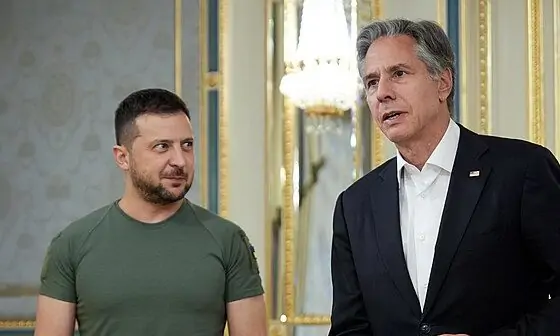
Clearing the Air: Secretary Blinken Visits Ukraine

  • Volodymyr Dubovyk
  • September 19, 2023
View
  • Commentary | Комментарии
  • Recommended | Рекомендуем

Ensuring Genuine Results? A New Electoral Design in Uzbekistan

  • Akrom Avezov
  • May 19, 2023
View
  • Commentary | Комментарии
  • Recommended | Рекомендуем

Ukraine, Taiwan, and Macron’s “Strategic Autonomy”

  • Maurizio Delli Santi
  • April 30, 2023
View
  • Commentary | Комментарии
  • Recommended | Рекомендуем

Russia’s Regional Governors: Backing the War, Upholding the Status Quo

  • Irina Busygina and Mikhail Filippov
  • April 7, 2023
View
  • Commentary | Комментарии
  • Recommended | Рекомендуем

The Desire to Possess: Russia’s War for Territory

  • Irina Busygina
  • February 8, 2023
View
  • Commentary | Комментарии
  • Recommended | Рекомендуем

Kyiv-Washington Relations in Times of Colossal War: The Ultimate Test of a Strategic Partnership

  • Volodymyr Dubovyk
  • January 11, 2023
View
  • Commentary | Комментарии
  • Recommended | Рекомендуем

Prevailing Soviet Legacies

  • Irina Busygina and Mikhail Filippov
  • December 27, 2022
View
  • Commentary | Комментарии
  • Recommended | Рекомендуем

In Russia’s Nuclear Messaging to West and Ukraine, Putin Plays Both Bad and Good Cop

  • Simon Saradzhyan
  • December 23, 2022

Leave a Reply Cancel reply

Your email address will not be published. Required fields are marked *

PONARS Eurasia
  • About Us
  • Membership
  • Policy Memos
  • Recommended
  • Events
Powered by narva.io

Permissions & Citation Guidelines

Input your search keywords and press Enter.